
Can a diabetic use bee pollen?
Bee pollen has for years enjoyed a reputation as a natural "superfood", as it is one of the most concentrated plant-derived products available in nature. It is made from microscopic pollen grains collected by bees from flowers, which are then formed by them into small granules. Thanks to this, it preserves a wealth of nutrients derived from various plants.
But can a person with diabetes safely include it in their diet? You will find the answer to this question in the blog below.
Table of contents:
1. What actually is bee pollen?
2. Bee pollen and diabetes – what is worth knowing?
3. Does bee pollen raise sugar levels?
4. Potential benefits for people with diabetes
5. When should a diabetic not use pollen?
6. How to safely introduce pollen into the diet?
1. What actually is bee pollen?
Bee pollen is a fully natural product collected by bees from the flowers of various plants. Each grain of pollen contains concentrated nutrients that the plant produces to enable its reproduction – which is why it is so rich in valuable biologically active substances. After being collected by bees and formed into characteristic granules, it becomes one of the most nutritious products of natural origin.
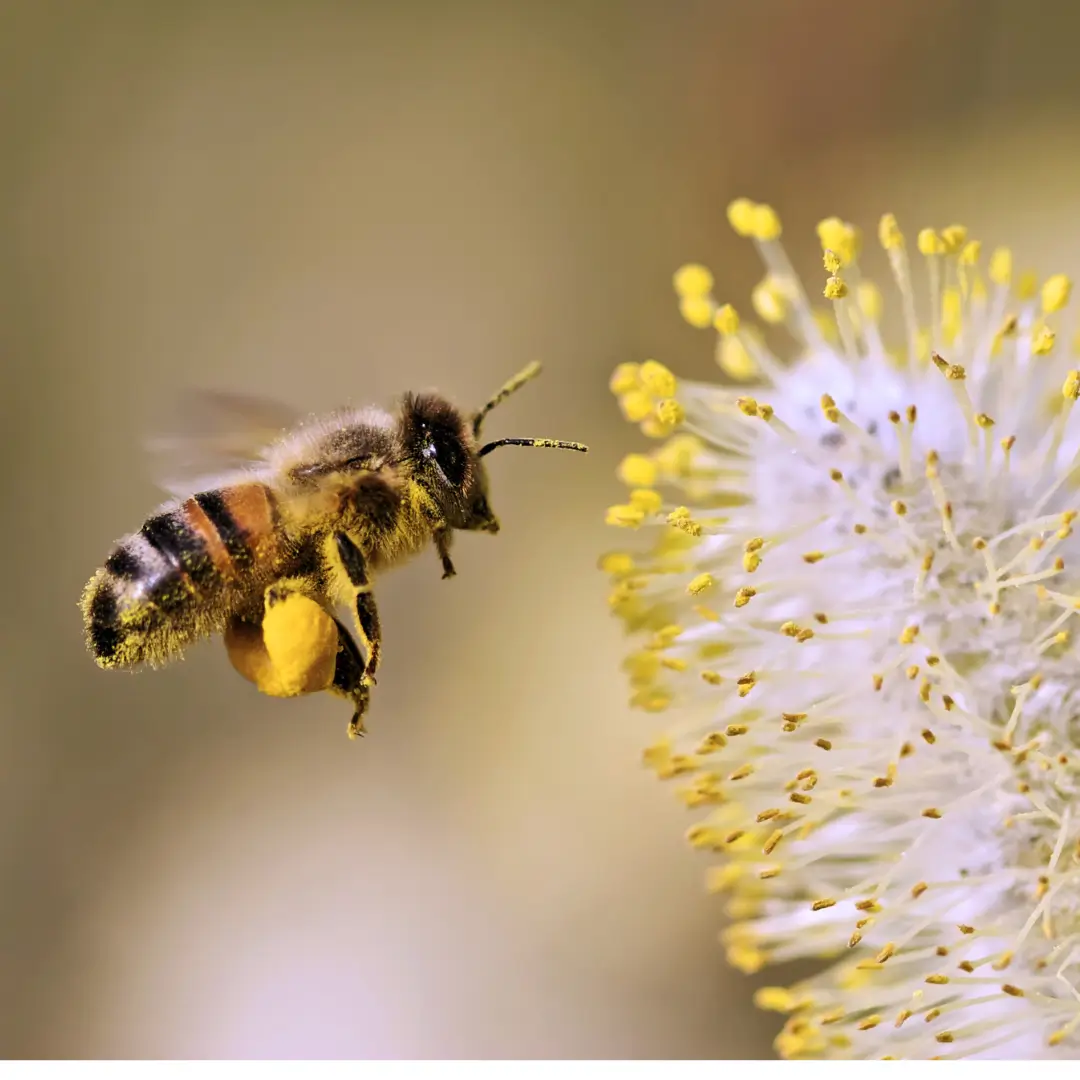
Its uniqueness stems from its diverse and complex composition.
Wealth of vitamins - bee pollen contains B vitamins, which play a key role in energy metabolism. They support the proper functioning of the nervous system, help maintain concentration, and contribute to reducing the feeling of fatigue. This is particularly important for people living on the go, exposed to stress and intense mental work. The vitamin C present in it supports the body's natural defense mechanisms and helps protect cells from oxidative stress. In turn, vitamin E has a beneficial effect on skin condition and supports cell protection against free radicals.
Natural source of protein and amino acids - pollen also contains plant protein, including essential amino acids that the body cannot produce on its own. Thanks to this, it can be a valuable dietary supplement for physically active people, during convalescence, or periods of increased effort.
Enzymes and digestive support - the enzymes contained in pollen support natural digestive processes and may influence better absorption of nutrients from the daily diet. Regular, moderate consumption is often linked to an improvement in general well-being.
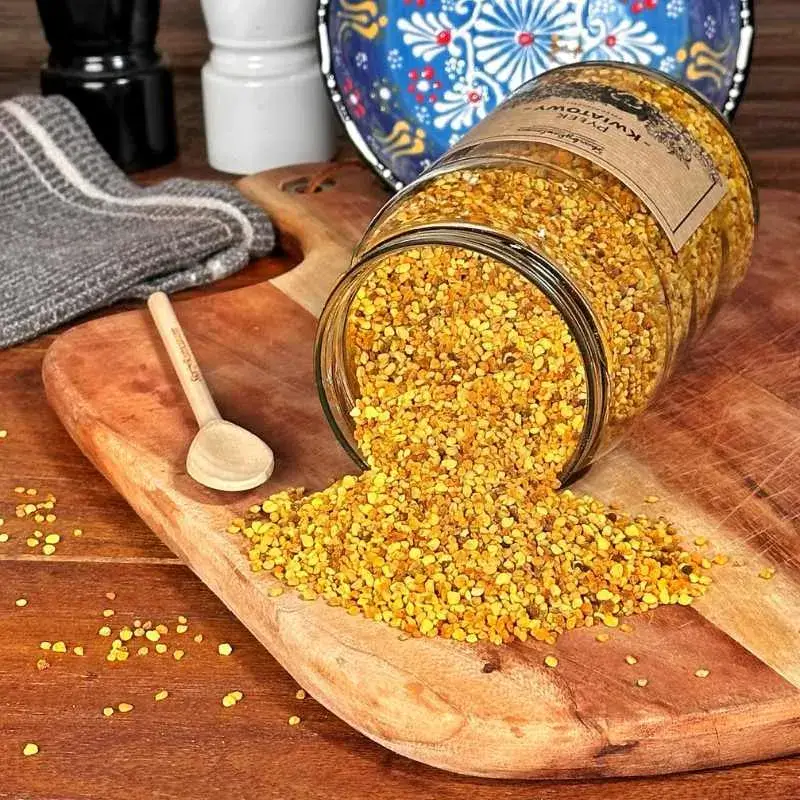
Valuable microelements – the composition of pollen also includes important microelements, such as:
-
zinc – supports immunity and healthy skin,
-
magnesium – helps in the proper functioning of muscles and the nervous system,
-
iron – participates in the production of red blood cells and oxygen transport in the body.
It is the presence of these ingredients that makes pollen a popular choice during periods of weakness or increased demand for minerals.
Strong antioxidants - bee pollen also contains flavonoids and other antioxidants that help neutralize free radicals. Thanks to this, they support cell protection against oxidative stress and premature ageing.
2. Bee pollen and diabetes – what is worth knowing?
The most important issue for people with diabetes is the content of simple sugars in bee pollen. Data regarding the composition of pollen loads show that total sugars account for an average of about 32–33% of the product, while this range can vary from 23 to even 40% – depending on the plants the pollen comes from, the time of year, or environmental conditions.
What sugars are found in pollen?
The largest quantities are reducing sugars, which are primarily:
-
glucose,
-
fructose,
-
turanose,
which together make up an average of about 25% of the composition. It is glucose and fructose that are most significant from the point of view of a person with carbohydrate metabolism disorders, as they are absorbed relatively quickly from the digestive tract and can influence an increase in blood glucose levels.
Besides these, pollen also contains:
-
sucrose and trehalose (approx. 3–4%) – non-reducing sugars,
-
storage polysaccharides (starch, dextrins – average approx. 4%),
-
building and structural carbohydrates (cellulose, pollenin, arabinogalactan) – in amounts from 6 to even 25%.
The latter perform fiber and structural functions, which may partially slow down the rate of absorption of simple sugars. However, this does not change the fact that the total carbohydrate content in pollen is significant.
What does this mean for people with diabetes?
For people suffering from:
-
Type 1 diabetes
-
Type 2 diabetes
this means the necessity of exercising particular caution.
In the case of type 1 diabetes, every additional portion of carbohydrates must be taken into account when calculating carbohydrate exchanges and possible insulin dose adjustments. Pollen – even though natural – is still a source of simple sugars.
In type 2 diabetes, where insulin resistance often coexists, excessive consumption of products containing glucose and fructose can lead to temporary spikes in glycaemia. It is worth remembering that fructose, although it has a lower glycaemic index than glucose, is also not metabolically neutral in excess.
Does the presence of polysaccharides change the situation?
The polysaccharides and structural components (e.g. cellulose) contained in pollen may somewhat slow down the absorption of sugars, but they do not eliminate their impact on blood glucose levels. The final reaction of the body depends on:
-
individual insulin sensitivity,
-
the degree of diabetes control,
-
the amount of pollen consumed,
-
the method of administration (on an empty stomach or with a meal containing fat and protein).
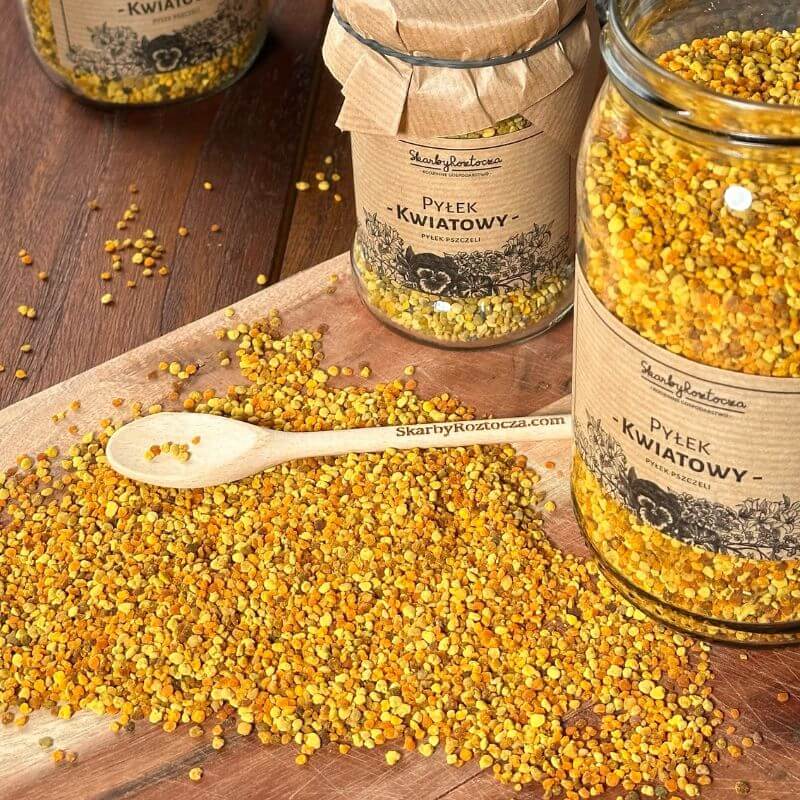
*Practical conclusions
For a person with diabetes, bee pollen is not a forbidden product, but it requires:
-
treating it as a source of carbohydrates,
-
starting with very small amounts (e.g. ½ teaspoon),
-
monitoring glycaemia after consumption,
-
consultation with a doctor or clinical dietitian.
The natural origin of the product does not automatically mean that it is neutral for blood sugar levels. In the case of diabetes, the total amount and type of carbohydrates consumed is of key importance – including those from products considered "pro-health".
3. Does bee pollen raise sugar levels?
Yes – bee pollen can influence an increase in blood glucose levels because it contains naturally occurring carbohydrates. The degree of this impact is not the same for everyone, however, and depends on several important metabolic factors.
What does the body's reaction depend on?
Amount of product consumed - the larger the portion, the greater the carbohydrate load delivered to the body. A small amount (e.g. 1 teaspoon) usually causes a smaller glycaemic response than 1–2 tablespoons added to a smoothie or porridge.
Time of consumption - consuming pollen on an empty stomach may cause a faster rise in glycaemia than taking it together with a meal containing protein, fat, and fiber. These ingredients slow down gastric emptying and the absorption of sugars.
Individual insulin sensitivity - people with good metabolic control and stable sugar levels often react more mildly than people with large glycaemic fluctuations.
Form of administration - Soaking pollen in water before consumption (a practice often recommended in phytotherapy) can facilitate its digestion, but at the same time, it can speed up the availability of the sugars contained in it.
4. Potential benefits for people with diabetes
Although bee pollen contains natural sugars, its composition also includes many biologically active substances that can support the body of a person with carbohydrate metabolism disorders. This is not about a curative effect, but about possible support resulting from the presence of specific nutritional compounds.
One of the important elements are:
Antioxidants - substances that help neutralize free radicals. In people with diabetes, there is often an intensification of oxidative stress, which can contribute to damage to cells and blood vessels. Long-term excess of free radicals is associated with an increased risk of cardiovascular complications. The flavonoids, polyphenols, and vitamins with antioxidant properties present in pollen can support the body's natural defense mechanisms and help maintain a balance between oxidation processes and cell regeneration.
Ingredients supporting metabolism - pollen provides B vitamins, amino acids, and minerals involved in energy transformation. B vitamins participate in the metabolism of carbohydrates and fats, helping the body use energy from food more effectively. Magnesium influences the proper functioning of the nervous system and muscles, and also participates in processes related to glucose management. Zinc plays a role in the functioning of the immune system and in the enzymatic processes that take place in cells.
Natural compounds with potential anti-inflammatory effects - type 2 diabetes is often associated with chronic low-grade inflammation, which can influence the worsening of insulin resistance. Bioactive substances present in bee products can support the body in maintaining inflammatory balance, which is one of the elements of broadly understood metabolic prevention.
Bee products can have a beneficial effect on lipid metabolism, meaning cholesterol and triglyceride levels. This is important because lipid disorders often coexist with diabetes and increase the risk of cardiovascular diseases. However, it should be emphasized that such an effect is supportive and does not replace pharmacological treatment or dietary recommendations established by a doctor.
5. When should a diabetic not use pollen?
People who should refrain from using bee pollen include those:
-
with unstable diabetes,
-
with frequent glycaemic spikes,
-
with an allergy to bee products,
-
while simultaneously using medications that require strict control of sugar levels – without medical consultation.
6. How to safely introduce pollen into the diet?
If a doctor gives consent:
-
Start with 1/2 teaspoon daily.
-
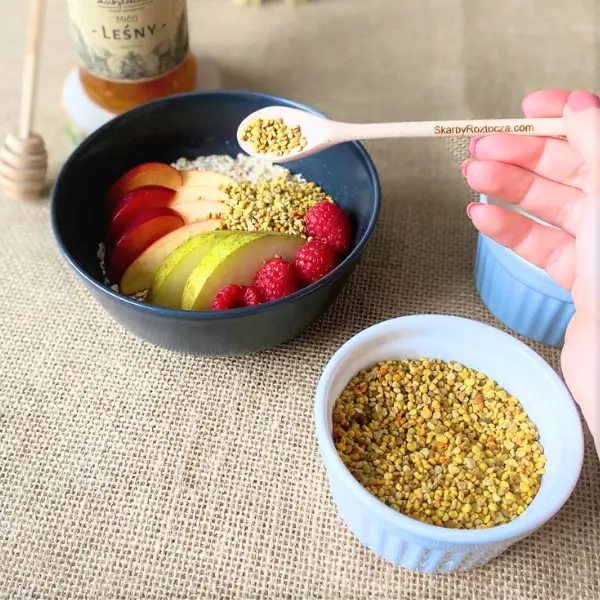
Consume it accompanied by protein or fat (e.g. with natural yogurt) to slow down the absorption of sugars.
-
Monitor glucose levels for several hours after consumption.
-
Do not exceed recommended amounts.
7. Summary
Bee pollen can be a valuable addition to the diet, also for people with diabetes, but it is not a neutral product for sugar levels. It contains natural carbohydrates that can raise glycaemia, especially with larger portions, so it should be treated as a source of sugars and the body's reaction should be monitored. At the same time, it provides ingredients with potential supportive effects – antioxidants, vitamins, and microelements – which can beneficially affect overall condition and metabolic processes. The key is moderation, introducing small doses, and consulting a doctor or dietitian to adjust the use of pollen to individual health status and diabetes control.
Source/Bibliography:
- Kędzia B., Hołderna - Kędzia E. Composition and biological properties of bee pollen collected by bees with particular emphasis on its potential use in cosmetics Borgis Post Fitoter 2016; 17(2): 130-138
- Trzybiński S. All about pollen and its harvesting Pasieka24
- Kurek-Górecka A., Balwierz R., Marciniak D., and others The use of bee pollen in the prevention and treatment of many diseases Lek Roślinny Vol 74 · No 3 · 2018 Medical University of Silesia