Can bee bread and bee pollen go bad?
This question is asked by many people who reach for these natural bee products for the first time. Although bee bread and pollen are famous for their long shelf life and extraordinary properties, like any food product, they require proper storage to avoid losing their qualities.
Do you want to find out more about whether bee bread and bee pollen can go bad? We encourage you to read this post!
Table of contents:
1. What exactly are bee bread and bee pollen?
2. Can bee bread and pollen go bad?
3. What to look out for to store bee bread and pollen correctly?
4. How long can bee bread and pollen be stored?
1. What exactly is bee bread and bee pollen?
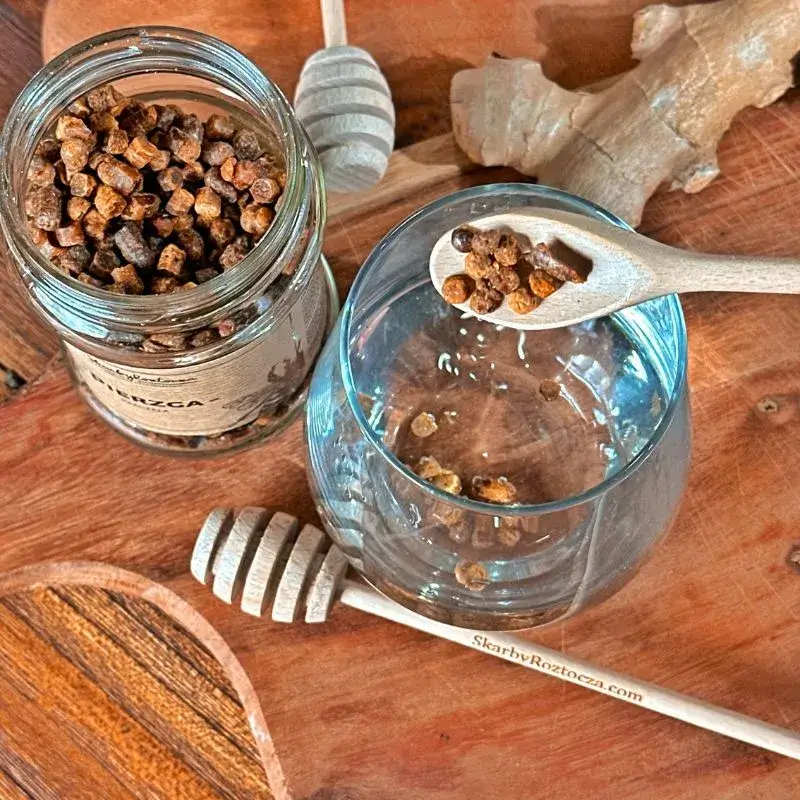
Bee bread is fermented bee pollen that bees pack into honeycomb cells and cover with a thin layer of honey. In such conditions, natural lactic fermentation occurs – a process that not only preserves the pollen, but also enriches it biologically and makes the ingredients contained in it much easier for the human body to absorb. Thanks to this, bee bread gains exceptional durability and resistance to spoilage, and its health-promoting effect is even stronger than in the case of pollen alone.
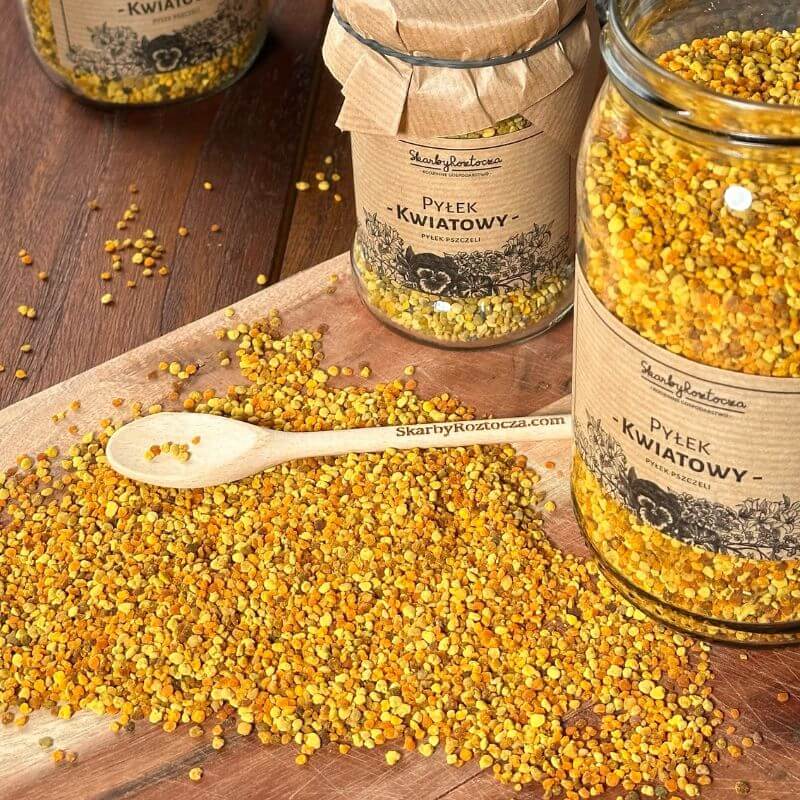
To better understand what bee bread is, it is worth first taking a look at bee pollen itself – the raw material from which it is made. Pollen consists of small grains produced by flowers for reproductive purposes. For bees, it is the main source of protein – essential for the development of the brood and maintaining the health of the entire bee family. While collecting pollen, bees form small balls from it, which they attach to special baskets on their hind legs and bring to the hive.
Bee pollen is a true nutritional bomb – it contains over 200 biologically active substances. Its composition includes B vitamins (B1, B2, B3, B5, B6, B9), vitamin C, E, A, as well as minerals such as iron, magnesium, calcium, zinc, selenium, potassium, and phosphorus. Additionally, pollen provides valuable enzymes, flavonoids, antioxidants, and all the essential exogenous amino acids that the body cannot synthesise on its own. It is also a source of dietary fibre, fatty acids, and natural phytohormones.
In the hive pollen is converted into bee bread – this process is much more complex than it might seem. Bees not only pack the pollen into the honeycomb cells, but also add digestive enzymes and trace amounts of honey and royal jelly. Then they cover the surface of the mixture with honey, which cuts off the access of oxygen and creates conditions for anaerobic fermentation. Thanks to this, bee bread not only does not go mouldy, but also matures and gains unique probiotic properties, supporting the intestinal bacterial flora and improving the absorption of nutrients.
The result is one of the most valuable bee products – bee bread. Its composition is extremely rich: we find vitamins, enzymes, microelements, polyphenols, proteins, natural sugars, and organic acids in it. Importantly, all these substances occur in a natural, balanced form, which makes bee bread a perfectly absorbable and safe dietary supplement.
2. Can bee bread and pollen go bad?
Yes – both bee bread, and bee pollen, even though they are natural products and usually have a relatively long shelf life, can go bad if they are not stored properly. Both of these products are very sensitive to external factors, such as high temperature, light, or excessive access to air. Although beekeepers often describe them as "durable", in unsuitable conditions they lose their valuable nutritional properties, taste, and can even start to grow mould or ferment in an undesirable way.
Bee bread is resistant to many microorganisms thanks to natural lactic fermentation, however, its delicate structure and composition mean that long-term exposure to heat or light leads to the breakdown of vitamins, enzymes, and antioxidants that are responsible for its beneficial properties. As a result, bee bread may lose its biological activity and its taste and aroma may change to something less pleasant.
Bee pollen is, in turn, a less processed product, without natural fermentation, making it more susceptible to oxidation and degradation processes under the influence of air and light. Too much exposure to these factors can cause loss of colour, aroma, and valuable ingredients such as vitamins and enzymes. Furthermore, pollen can start to ferment or grow mould, which significantly reduces its quality and makes it unsafe for consumption.
Therefore, even though both products are naturally durable and exceptionally valuable, maintaining their optimal quality requires attention and appropriate storage conditions. Improper handling of bee bread and pollen leads not only to the loss of their health-promoting properties, but also to a change in taste and smell, and in extreme cases to spoilage, which prevents their further use.
3. What to look out for to store bee bread and pollencorrectly?
Moisture – this is the greatest enemy of bee bread and pollen. Even a small amount of moisture can cause it to start growing mould. Therefore, bee bread should be stored in a tightly closed container, preferably glass, in a dry place.
Temperature – too high can reduce the quality of bee products. The ideal storage temperature is about 5–15°C, for example in a cool pantry or on the bottom shelf of the refrigerator.
Light – long-term exposure to daylight can also negatively affect bee bread and pollen. It is best to keep them in a dark place.
Smell and colour – fresh bee bread has a slightly acidic smell and a dark yellow-brown colour. If you notice a clearly unpleasant smell, the presence of mould, or a change in colour, the bee bread may have already gone bad.
4. How long can bee bread and pollen be stored?
Under the right conditions, bee bread can be stored for even 2–3 years, however, to maintain its full nutritional value, it is best to consume it within 24 months from the date of purchase. You will always find the relevant date marked on the packaging of our products. The lactic fermentation process that bee bread undergoes gives it exceptional durability and resistance to spoilage. Over time, even when maintaining optimal conditions, some valuable ingredients may gradually decompose, and the taste and aroma may slightly change.
It is similar with bee pollen, which can also be stored for up to 24 months. You will always find the relevant date marked on the packaging of our products. Although pollen does not go through a fermentation process, if it is stored correctly, it retains its nutritional properties and taste for about two years. Over time, however, it may lose the intensity of its aroma, colour, and nutritional value, so it is worth consuming it within this optimal time to fully benefit from its health-promoting properties.
5. Summary
Bee bread and bee pollen are natural products with high nutritional value, valued for their numerous health-promoting properties. Although both products are characterised by a relatively long shelf life, they can go bad if they are not stored in the right conditions. Improper storage, especially exposure to high temperature, light, or air access, can lead to the loss of valuable nutrients, changes in taste, and even the appearance of mould.
To enjoy the full health benefits, it is best to consume bee bread and pollen within approximately 24 months from the date of purchase. Taking care of the proper storage conditions allows their taste, aroma, and biological activity to be preserved for a long time. Thanks to this, bee bread and pollen remain a safe and effective support for health, which is worth having always at hand.
Sources/Bibliography:
- Laskowska E., Borawska M., Socha K., Health properties of bee bread and bee pollen, Repository of Medical University of Bialystok
- Górecka-Kurek A., Balwierz R., Dzierżewicz Z., Dietary aspects of the use of bee pollen, Faculty of Health Care of the Silesian Higher Medical School in Katowice