
Can honey ferment?
Honey fermentation is a natural phenomenon and, paradoxically, one of the confirmations of its living structure. Fermentation most often occurs as a result of storing honey at a higher temperature (above 18°C) and in a sunny place. Under such conditions, yeasts naturally occurring in honey become active, digesting glucose and converting it into alcohol. A side effect of this reaction is carbon dioxide, which visibly aerates the honey, causing it to "escape from the jar" and creating a specific yeast-vinegar-alcohol smell.
Want to know more about this, can honey ferment? We invite you to read our post, where we will clear up all doubts!
Table of contents:
2. How to prevent honey fermentation.
3. What to do with fermented honey.
4. Meads - intentional fermentation.
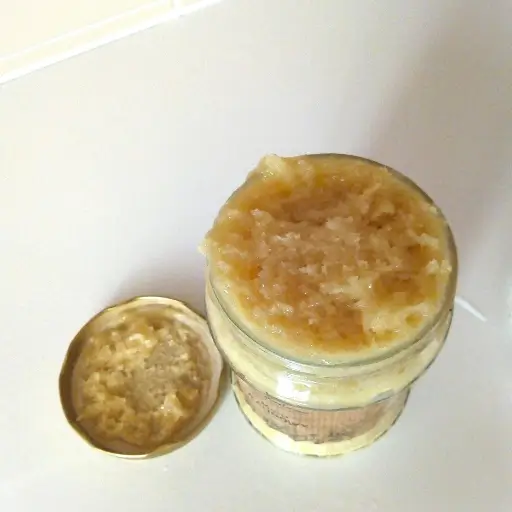
The photo shows honey that has fermented due to poor storage conditions (sunny windowsill above a radiator in the kitchen).
1. Causes of fermentation.
Honey fermentation is caused by the presence of yeasts, which are natural microorganisms occurring in honey.
- This process is intensified by:
High temperature - storing honey at a temperature above 18°C promotes yeast activation. Yeasts, like other microorganisms, are more active in a warmer environment. Higher temperatures increase their metabolism, leading to a faster breakdown of the glucose contained in honey into alcohol and carbon dioxide. That is why it is so important to store honey in a cool place, away from heat sources, to minimise the risk of fermentation.
Sunlight - exposure to sunlight accelerates honey fermentation. UV rays from sunlight can affect the structure of honey, leading to its overheating and thus promoting fermentation. Light can also affect the breakdown of some nutrients in honey, which can change its properties and accelerate the fermentation process. Therefore, it is best to store honey in dark, opaque containers or in places where direct sunlight does not reach.
Humidity - honey is hygroscopic, which means it easily absorbs moisture from the environment. Air humidity can lead to an increase in the water content in honey, which in turn promotes yeast activity. High humidity creates ideal conditions for microorganisms, as a larger amount of water in honey facilitates their reproduction and metabolism. To prevent this, honey should be stored in tightly closed containers, in a dry place with low humidity.
2. How to prevent honey fermentation?
Cellars or cool garages, where stable conditions prevail, are ideally suited for this.
3. What to do with fermented honey?
Fermented honey, although it may lose its characteristic properties and taste, does not have to be thrown away immediately. There are methods thanks to which it can still be used in the kitchen.
Heating fermented honey to a temperature above 80°C is one of the most effective methods of stopping fermentation processes. High temperature kills yeasts and other microorganisms responsible for fermentation, which makes the honey stable and prevents it from fermenting further. However, it should be remembered that during heating, honey loses most of its nutritional value, such as enzymes, vitamins, and antioxidants. As a result of this process, honey becomes so-called industrial honey, which, although sweet, no longer possesses the health properties typical of raw honey.
Heated honey, despite the loss of nutritional value, can find application in the kitchen. It is great for baking cakes, cookies, or other baked goods, where its sweetness and consistency are desired. It can also be used to sweeten dishes such as oatmeal, yogurts, cocktails, or teas. Because the fermentation process is stopped, the honey will not negatively affect the taste of the dishes, but only sweeten them.
For those who value natural products, fermented honey can also be an inspiration for home experiments. You can try to create homemade mead using natural fermentation processes. Mead, popular in many cultures, is a tasty and traditional drink that can be prepared independently.
4. Meads – intentional fermentation.
Meads, also known as honey alcohols, are one of the oldest types of alcoholic beverages. The production of meads is an art that requires precise management of the fermentation process to obtain a drink that has a unique taste, aroma, and character. This process differs significantly from accidental fermentation, which can occur under inappropriate honey storage conditions.
Controlled fermentation
In contrast to uncontrolled fermentation, which can occur in fermented honey, in the case of meads, fermentation is an intentional and strictly controlled process. Mead fermentation involves adding appropriate yeasts to the honey, which are carefully selected for their properties and fermentation capabilities. These yeasts convert the sugars contained in the honey into alcohol and carbon dioxide, under controlled conditions of temperature and time.
Types of meads
Meads are divided into various categories, depending on the alcohol content and the type of honey used.
Here are the most popular types:
- Dwójniaki – These are meads that have a relatively low alcohol content, usually in the range of 5-7%. They are characterised by a milder taste and aroma, and their production requires a shorter fermentation time.
- Trójniaki – They contain a higher alcohol content, usually 8-12%. They are more complex in taste and require a longer period of fermentation and maturation to obtain a full flavour profile.
Fermentation conditions
The fermentation process of meads takes place under controlled conditions. Maintaining the appropriate temperature is key – too high can lead to undesirable flavours, while too low can slow down fermentation. Also, the humidity level and air access are strictly monitored so that the yeasts can work effectively and the fermentation process proceeds according to plan.
Maturation and bottling
After fermentation is complete, mead usually goes through a maturation period, which allows for the development of full flavours and aromas. Maturation time can vary depending on the type of mead and the intended taste effects. After maturation, the mead is filtered and bottled, and then it can be further aged to obtain an even more complex bouquet of flavours.
Significance of meads in culture
Meads have a long history and were valued in various cultures around the world. In antiquity, they were often used in religious ceremonies, feasts, and as a gift to the gods. Today they are valued both by drink enthusiasts and by connoisseurs who appreciate their rich taste and traditional production methods.
It is worth noting that the production of meads is not only the art of fermentation, but also knowledge about appropriate techniques to obtain a drink of ideal quality. Proper management of this process is key to creating a drink that combines the natural properties of honey with a subtle, alcoholic aroma, offering exceptional taste experiences.
5. Summary.
Honey is valued not only for its taste but also for its numerous health properties. It is rich in enzymes, vitamins, minerals, and antioxidants that support health on many levels. It acts as an antibacterial, anti-inflammatory, and antiviral agent. Regular consumption of honey can support the immune system, improve digestion, and contribute to better sleep.
In summary, honey fermentation is a natural process that can be controlled through appropriate storage conditions. Even if honey ferments, it can still be useful in the kitchen, although it loses its health-promoting properties. It is also worth remembering the numerous health benefits of consuming honey in the daily diet.
Paradoxically, even though fermented honey is not suitable for direct consumption, the course of the process proves the living structure of the honey and its natural origin, and the occurrence of the fermentation process itself is most often due to improper storage by the consumer.