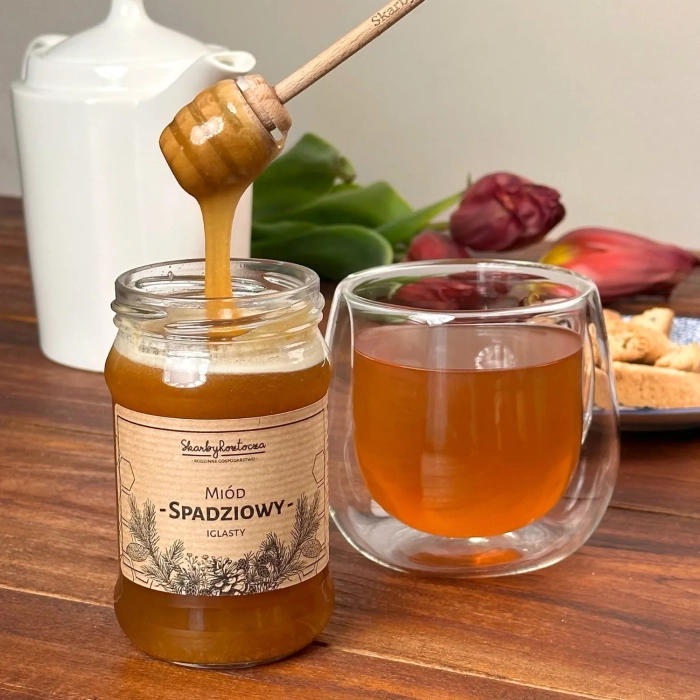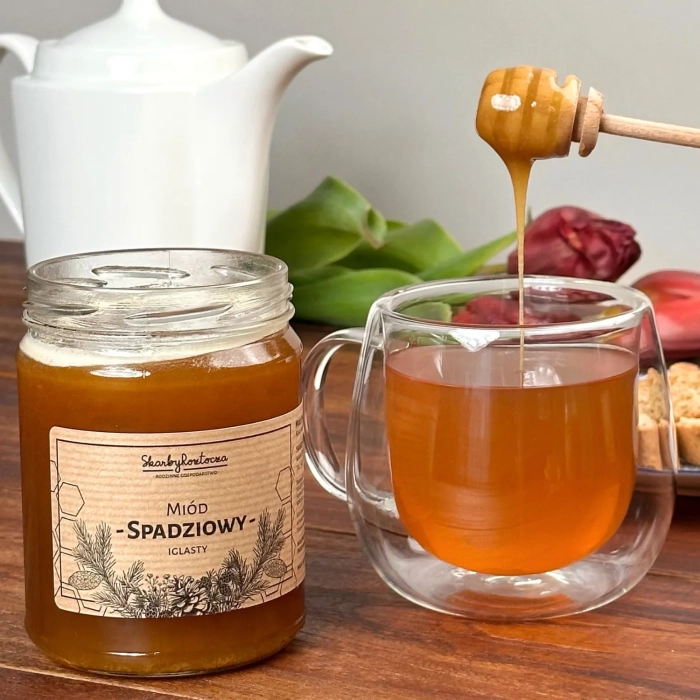

Coffee syrup – which one to choose?
Coffee is for many people not only a daily ritual, but also a moment of pleasure and experimentation with flavour. One of the most popular ways to diversify coffee is through flavoured syrups.
Check out what types of coffee syrups there are and why it is worth considering natural sweeteners instead of syrup as well. We invite you to read on.
Table of contents:
1. Why do we add syrups to coffee?
2. Most popular types of coffee syrups
4. Honey – a natural alternative to syrups and sugars
5. An interesting alternative to flavoured syrups
6. How to add honey to coffee?
1. Why do we add syrups to coffee?
Coffee syrups allow you to change the character of your drink in a very simple way and adjust it to your own taste preferences. Even a small amount – just a few millilitres – can completely transform the aroma and taste of coffee. Thanks to this, an ordinary espresso, cappuccino, or latte can turn into a drink resembling a coffee dessert served in a café. Just one addition is enough for notes of vanilla, caramel, chocolate, or nuts to appear in the coffee.
Additionally, syrups dissolve very easily and quickly combine with hot coffee or milk, which is why their use does not require any special barista skills. This is one of the reasons why they are so eagerly used in home kitchens. They allow you to prepare an interesting coffee in a few moments, without the need for many ingredients or complicated recipes.
Coffee syrups are most often chosen by people who:
- Like sweeter coffee - for many people, classic black coffee is too intense or bitter. Syrup allows you to both sweeten the drink and enrich it with additional flavour, making the coffee milder and more dessert-like.
- Want to give the drink a specific aroma - syrups enable the quick introduction of new flavour notes to coffee. Depending on the chosen addition, you can obtain a vanilla, caramel, chocolate, or nutty aroma. This is a simple way to create many coffee variants from one type of bean.
- Are inspired by café coffees - many popular drinks served in cafés are made precisely using flavoured syrups. People who want to recreate the taste of their favourite latte or cappuccino at home often reach for similar additions.
- Like to experiment with home drinks - coffee syrups encourage culinary experiments. You can combine different flavours, create your own compositions, and adjust the intensity of the aroma to your liking. Thanks to this, daily coffee does not always have to taste the same.
It is worth remembering, however, that while syrups are a convenient addition, many of them contain large amounts of sugar. Therefore, more and more people are also looking for more natural ways to sweeten coffee – for example, using honey, which, in addition to sweetness, brings a natural aroma and nutritional properties to the drink.
2. Most popular types of coffee syrups
There are many flavours of syrups available on the market.
The most common ones can be divided into several categories.
Classic sweetening syrups - these are the basic syrups that primarily sweeten coffee.
The most popular are:
-
sugar syrup,
-
vanilla syrup,
-
caramel syrup.
Dessert syrups - these additions make the coffee resemble a dessert.
This category includes, among others:
-
chocolate,
-
toffee,
-
coconut,
-
nutty.
Spicy and seasonal syrups - often appear in autumn and winter.
Popular flavours are:
-
cinnamon,
-
gingerbread,
-
pumpkin,
-
spices.

3. Are coffee syrups healthy?
Coffee syrups are primarily a flavour addition intended to enrich the aroma of the drink and give it sweetness. However, it is worth knowing what they are most often produced from.
Most syrups available in shops are made based on sugar, water, and flavourings. In many cases, glucose-fructose syrupis also used, which is cheap to produce and sweetens very intensely.
In addition to the sweetness itself, you can often find additional ingredients in the composition of coffee syrups, such as:
-
flavourings – natural or synthetic, responsible for the taste, e.g. vanilla, caramel, or nut,
-
colourings – giving the syrup a characteristic colour,
-
preservatives – allowing the product to remain fresh for a long time,
-
thickeners or stabilisers, which affect the consistency of the syrup.
This does not mean, of course, that using coffee syrups is something wrong. For many people, it is a convenient way to quickly prepare an aromatic drink at home. However, it is worth being aware that these are highly processedproducts that largely base themselves on sugar and technological additions.
Additionally, coffee syrups are usually very concentrated. Even a small portion can contain a significant amount of sugar, which means that using them regularly significantly increases the calorie count of the drink. In practice, a cup of coffee, which in itself has very few calories, can turn into a sweet dessert drink after adding syrup.
For this reason, more and more people are paying attention to the composition of products and trying to limit the amount of processed sugar in their daily diet. As a result, interest in more natural ways of sweetening coffeeis growing. Instead of ready-made syrups, many people choose additions such as honey, maple syrup, or natural spices (e.g. cinnamon or vanilla).

4. Honey – a natural alternative to syrups and sugar
One of the most interesting natural additions to coffee is honey. For centuries, it has been used not only as a sweetener but also as an ingredient in various drinks – both hot and cold. In many cultures, it was added to herbal infusions, milk, or coffee to enrich the taste and give the drink a pleasant, natural sweetness. Thanks to this, coffee can gain a completely new character without the need to reach for highly processed additions.
In contrast to classic sugar, honey is not just a source of sweet taste. It is a product with a complex aroma that can significantly influence the character of the drink. Depending on the type of honey, coffee can gain floral, herbal, slightly caramel, or even distinctly intense and spicy notes.

Why is it worth trying coffee with honey? Our Customers most often cite these reasons as advantages over traditional sugar:
- Natural origin - honey is a natural product produced by bees from flower nectar or honeydew. Unlike many ready-made flavoured syrups, it does not require intensive processing or the addition of artificial flavourings. This makes it a simple and more natural way to sweeten coffee.
- Rich taste and aroma - one of the greatest advantages of honey is its flavour diversity. Each type of honey has a slightly different aroma, depending on the plants from which the bees collected the nectar. Thanks to this, one cup of coffee can taste completely different depending on the chosen type of honey. This is a great opportunity for culinary experiments and discovering new flavour combinations.
- Less need for sweetening - honey has a more intense aroma and a clearer sweetness than ordinary sugar. In practice, this means that a small amount is often enough – for example, half or one teaspoon – to give the coffee a pleasant, slightly sweet taste. This makes it easier to control the level of sweetness in the drink.
5. An interesting alternative to flavoured syrups
By adding different types of honey to coffee, you can obtain subtle flavour notes without reaching for ready-made syrups. This solution is particularly appreciated by people who like natural products and simple compositions.
What honeys go well with coffee?
Not every honey tastes the same, so it is worth testing different varieties and checking which ones pair best with your favourite coffee. Some honeys are very delicate, while others have an intense aroma that clearly changes the character of the drink.
The most recommended for coffee are:
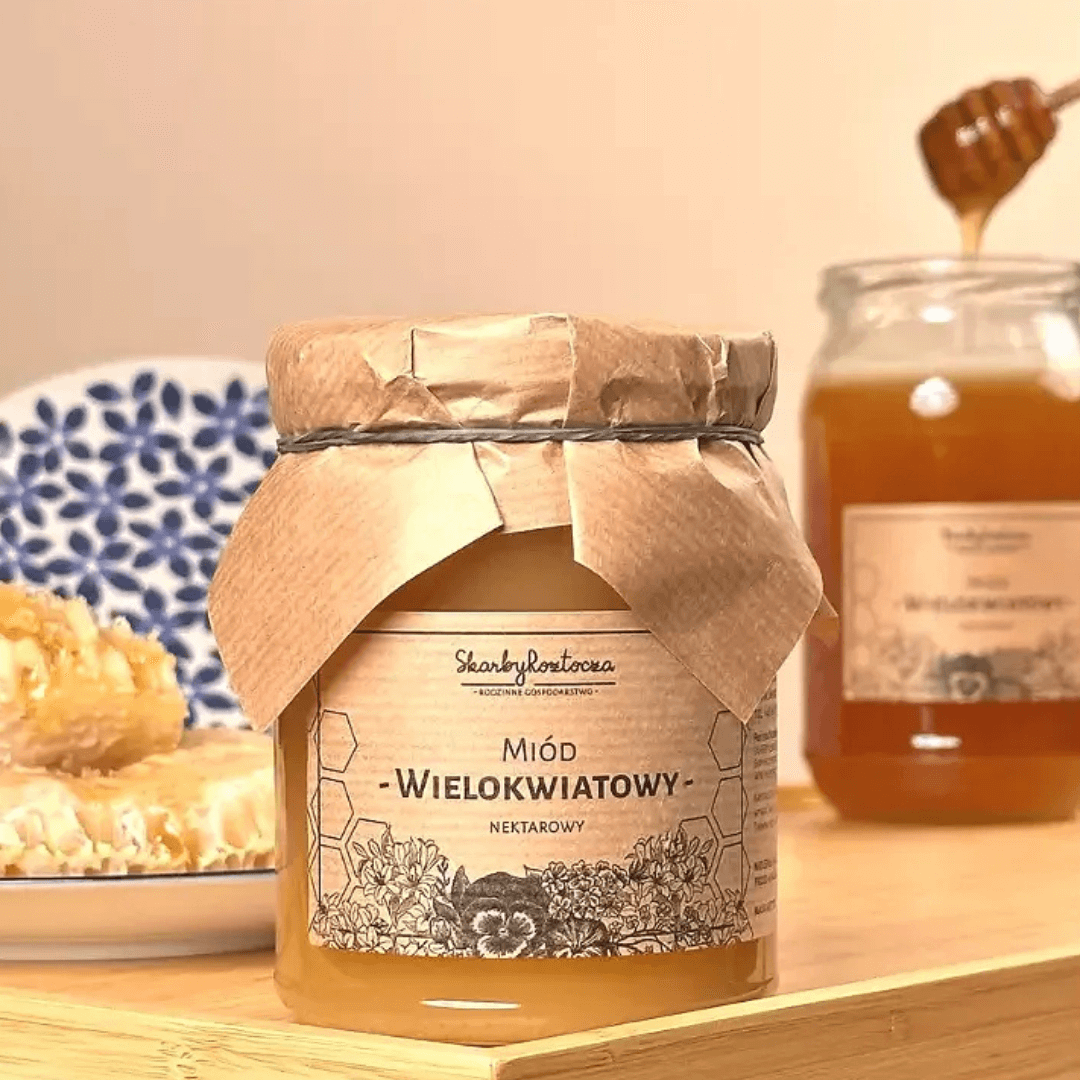
Multifloral Honey - this is one of the most versatile honeys. It has a delicate, slightly floral taste and moderate sweetness. This makes it pair well with most types of coffee – from mild lattes to classic cappuccinos. It is also a good choice for people who are just starting their adventure with coffee sweetened with honey. Furthermore, it contains antioxidants, enzymes, as well as vitamins and minerals, thanks to which it can support the body's immunity and have a soothing effect during colds.
Linden Honey - is characterised by a clear aroma and a light, herbal note. Added to coffee, it gives it an interesting, more complex character. It works great in coffees with milk, as its aroma blends well with the creamy consistency of the drink. What's more, linden honey is valued for its warming and immunity-supporting properties – it is often used for colds, as it can soothe the throat, support the body in fighting infections, and help in calming down and restful sleep.

Acacia Honey - is one of the mildest and most delicate honeys. It has a subtle taste and light colour, so it does not dominate the coffee aroma. It is ideal for people who only want to lightly sweeten the drink without significantly changing its character. Additionally, it is characterised by a relatively low glycaemic index compared to other honeys, which is why it is sometimes chosen by people caring about stable blood sugar levels.

Buckwheat Honey - much more intense and characteristic. It has a distinct aroma and deep taste that pairs well with strong coffees, such as espresso or coffee brewed in a moka pot. A small amount is enough to give the drink a distinctive accent. It should also be mentioned that buckwheat honey stands out with a high content of antioxidants and microelements, such as iron and magnesium, which is why it is often recommended to weakened people, supports the body's immunity, and can have a beneficial effect on the circulatory system.

Adding honey to coffee is a simple way to discover new flavours. Different types of coffee – bean, filter, or espresso – can combine completely differently with individual honeys. It is therefore worth trying different combinations and finding the one that best suits individual preferences.
6. How to add honey to coffee?
To fully enjoy the taste of honey, it is worth remembering one rule – do not add it to very hot coffee (max 40 degrees).
Ideally:
-
brew the coffee,
-
wait a moment until it cools down slightly,
-
add a teaspoon of honey and stir.
Thanks to this, you will preserve its aroma and natural properties.
7. Summary
Coffee syrups are an interesting way to diversify your daily drink. However, it is worth remembering that most of them are based on a large amount of sugar. If you are looking for a more natural alternative, try replacing sugar or syrup with honey. In addition to sweetness, it will introduce a unique aroma to the coffee and make even an ordinary cup of coffee something special. Furthermore, honeys have valuable nutritional properties that can support the body, providing natural ingredients and constituting a healthier alternative to highly processed sweeteners.
Sources/Bibliography:
- Szymanowska K., Witek B. Health-promoting and therapeutic properties of selected types of honey EBiŚ 2022, 1(77) ISSN 1643-8779, e-ISSN 2720-5789
- Bąkowska M., Janda K. Health-promoting properties of selected honeys Pomeranian J Life Sci 2018;64(3):147-151
- Biernacka K., Hoffman M., Piotrowska A., Health risks associated with the use of high-glucose syrup in food production. Food Engineering. Department of Functional, Organic Food and Commodities, Faculty of Human Nutrition and Consumer Sciences, Warsaw University of Life Sciences (SGGW)