

Curiosities from the life of the Queen bee
The queen bee is an incredibly fascinating figure, whose role in the honeybee colony is absolutely crucial. Although her main task is reproduction and egg laying, her influence on the life of the hive goes much further. The queen, also known as the mother, not only ensures the continuity of life in the colony, but also, through the pheromones she secretes, guarantees cohesion and harmony among all its inhabitants.
Do you want to delve into fascinating curiosities about the queen bee? We invite you to read our post, where you will discover the secrets of this exceptional ruler of the hive!
Table of contents:
1. The queen's main role - reproduction and egg laying
2. The queen's influence - pheromones, harmony, and colony cohesion
3. The queen as a symbol of leadership and continuity
1. The queen's main role - reproduction and egg laying
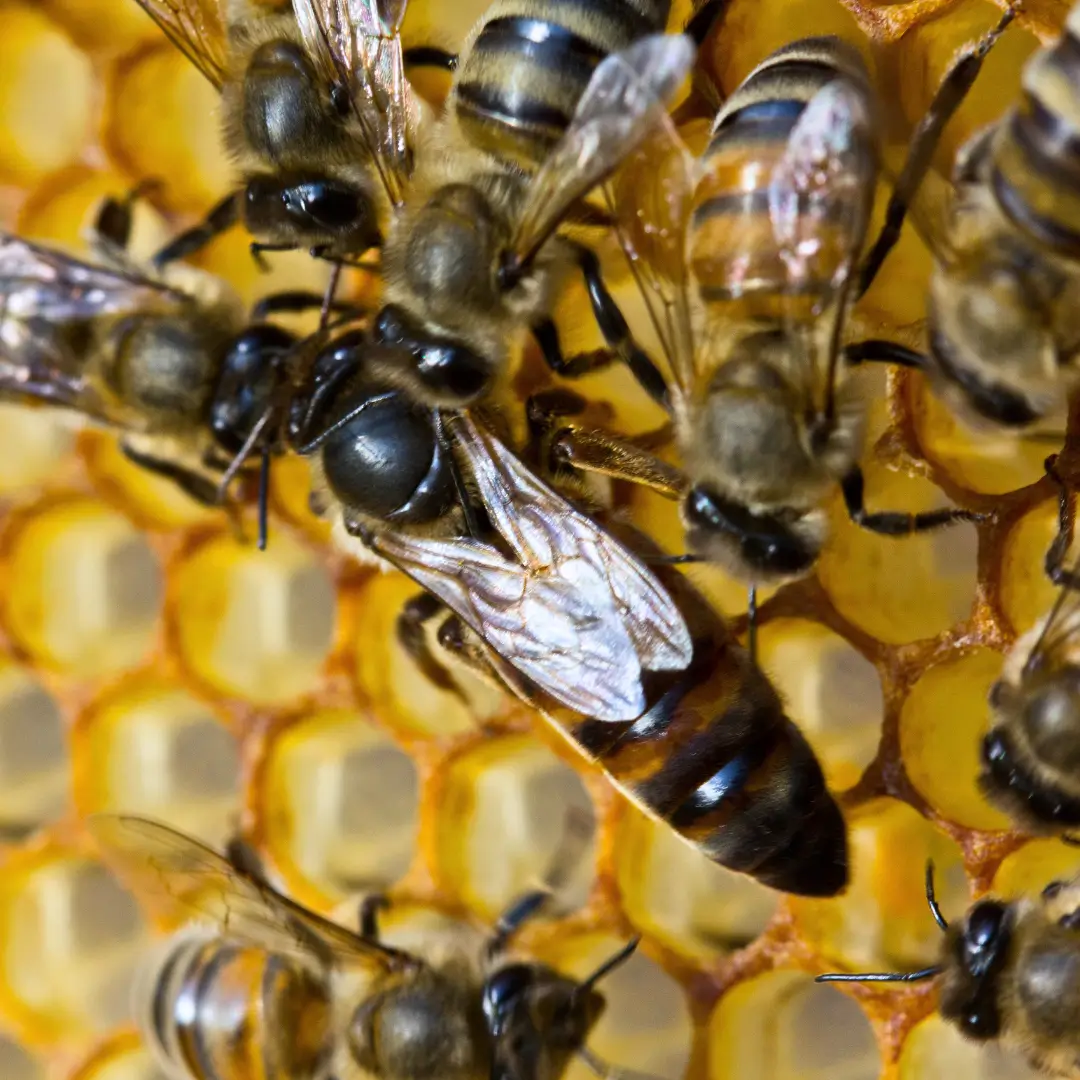
The queen bee performs a key function in the life of the bee colony, as she is the only fertile female capable of reproduction. Her main role consists of the constant laying of eggs, which become the beginning of the life of every bee in the hive. The queen can lay from 1,000 to 2,000 eggs a day, which is quite a feat, considering that her body does not differ significantly in size from the other bees. Thanks to this intensive work, the colony can develop and maintain its numbers at an appropriate level, which is essential for its survival and functioning.
The life of a queen begins in a similar way to the life of other bees – from an egg laid by her predecessor. However, she is distinguished by the way she is fed. When a young larva hatches from an egg, worker bees feed it with a special food – royal jelly. It is this diet that determines her future role in the colony. The substances contained in royal jelly cause the larva to develop into a queen rather than a worker. Under the influence of this exceptional diet, the future queen develops faster and reaches larger sizes than her sisters.
After reaching maturity, the queen takes part in a so-called nuptial flight, during which she is fertilised by the sperm of several drones. The mating flight is the only moment when the queen leaves the hive on her own initiative and moves a greater distance away from it. During this flight, the queen gathers a supply of sperm that lasts for her entire life – from that moment until the end of her mission, she no longer leaves the hive, and her only task is to lay eggs. The drones' sperm is stored in a special receptacle in her body and used gradually throughout her life to fertilise the eggs she lays.
The laying of eggs by the queen is an incredibly precise process. Each egg is carefully placed in a honeycomb cell. Depending on the needs of the colony, the queen decides whether the egg will be fertilised or not. Fertilised eggs develop into worker bees or queens, while unfertilised ones become drones – males whose only role is to fertilise a new queen during the nuptial flight. The queen can control which eggs she lays by reacting to the signals and needs of the colony. If the hive requires more workers to collect nectar, fertilised eggs are laid, from which workers will hatch. When more drones are needed, she lays unfertilised eggs.
The ability to lay eggs, and thus reproduce, is crucial for the survival of the colony. The queen performs this function for about 2 to 5 years, until her productivity begins to decline. Then, worker bees prepare to raise a new queen by selecting an appropriate larva and feeding it royal jelly. This process is called supersedure, and although it is not a direct challenge to the current queen, it marks the end of her reign. The older queen usually leaves the hive with a group of bees in search of a new home, and the new queen takes over her duties.
The queen's role as the mother of the entire colony and the only fertile female is the foundation of her existence. Thanks to her, honeybees can survive, develop, and effectively perform their tasks, which are essential for maintaining balance in nature and the production of honey, which is so valued by people.
2. The queen's influence - pheromones, harmony, and colony cohesion
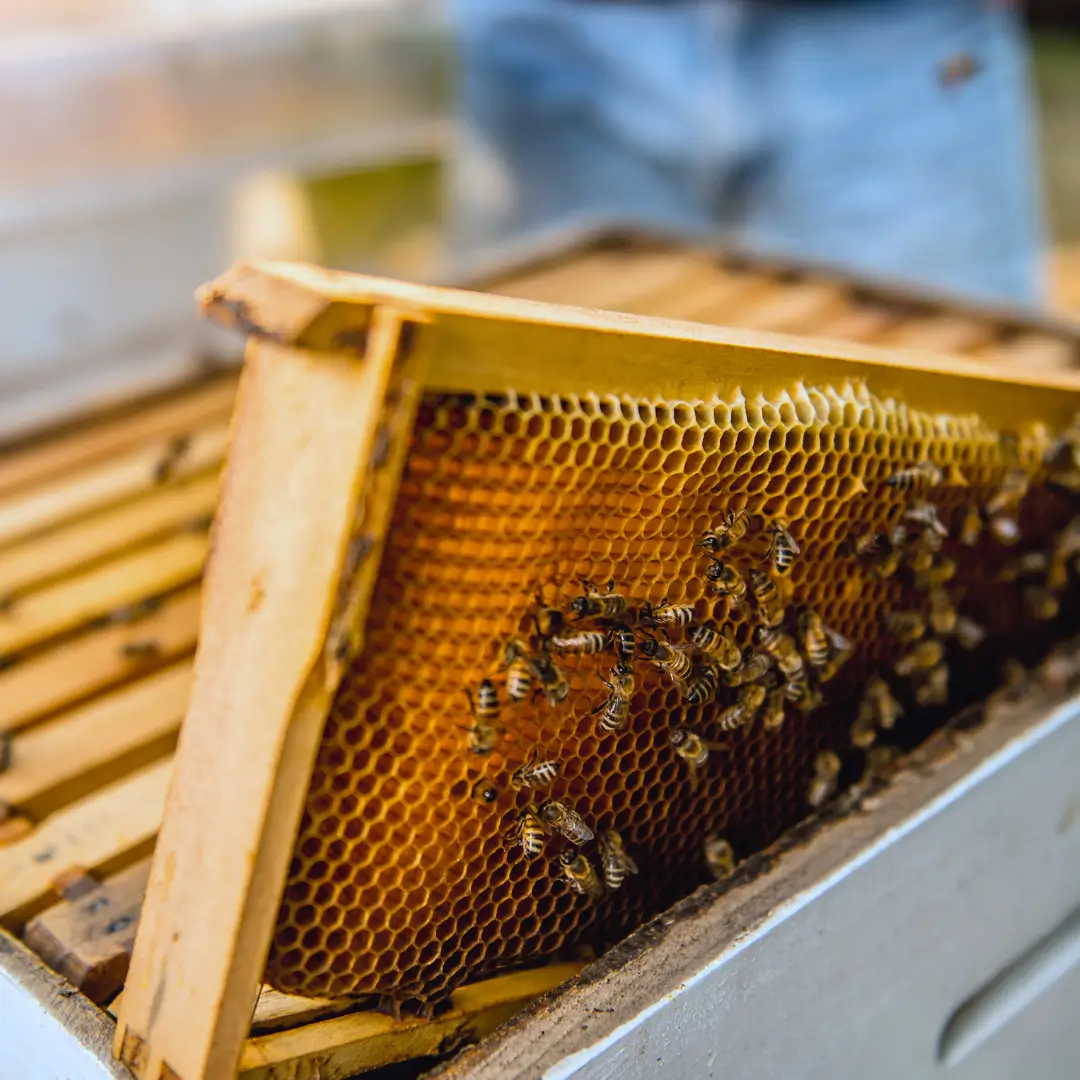
The role of the queen bee is not limited only to reproduction. Her influence on the entire community of honeybees is much greater and results from the pheromones she emits, which play a key role in maintaining cohesion and harmony in the colony. These pheromones, called queen pheromones, are specific chemical substances that are secreted by the queen and spread throughout the hive via contact between bees. They are of great importance for the functioning of the colony, playing both a communicative and regulatory role.
One of the most important effects of queen pheromones is their influence on the behaviour of worker bees. When workers sense the presence of pheromones, they are certain that their queen is healthy and active. It is these signals that keep the workers in a state of readiness for work, prompting them to perform their daily duties, such as gathering nectar, caring for offspring, or building honeycombs. Thanks to queen pheromones, workers know that their community has stable leadership, which allows them to focus on completing their tasks without worrying about the future of the colony.
Queen pheromones also perform a regulatory function, controlling the development of ovaries in worker bees. Under normal conditions, when the queen is present and secreting her pheromones, the workers' ovaries are inhibited and do not produce eggs. This means that only the queen is capable of reproduction, which prevents competition and unnecessary conflicts in the colony. In a situation where the queen's pheromones are no longer detectable, for example in the event of her death or weakness, worker bees may begin to develop their ovaries and lay eggs. This, in turn, leads to the creation of a so-called "drone-laying colony", where only drones develop from the eggs laid by workers, which is very unfavourable for the colony as it does not contribute to its development or survival.
The queen's pheromones also have an integrating effect. They help maintain unity in the colony, communicating to the bees that they all belong to one community united by a common goal – the protection and development of the colony. Thanks to this, the workers act in full harmony, performing their tasks with extraordinary precision and organisation. Every bee in the hive has its place and role, and the presence of queen pheromones ensures that all activities are coordinated and subordinated to the welfare of the entire community.
The lack of queen pheromones or their weakening can lead to serious problems in the hive. Bees become disoriented, may begin to behave chaotically, and some workers may try to take over the role of the queen. In extreme cases, when the queen is lost or her pheromones stop working, the entire colony may scatter or even collapse. Therefore, worker bees, sensing a weakening or lack of queen pheromones, immediately proceed to raise a new queen, feeding a selected larva with royal jelly to ensure the continuity and stability of the colony.
3. The queen as a symbol of leadership and continuity
The queen bee is a central figure not only in biological terms but also symbolically. In the bee community, she plays the role of a leader on whom the cohesion, stability, and continuity of life of the entire colony depend. Her presence gives the bees confidence and a sense of security, and her health and fertility are the foundation on which the future of the entire hive community rests.
The symbolic role of the queen as a leader does not, however, mean that she manages the colony in an authoritarian manner. Unlike human leaders, the queen does not issue orders or directly control the actions of individual bees. Her "leadership" consists of subtle chemical signals, i.e., pheromones, which influence the behaviour of workers, as well as her very presence in the hive, which is sufficient stimulus for the entire colony to act as one, cohesive organism. It is thanks to this unique chemical communication that worker bees know they have a responsibility not only for themselves but for the entire hive, and their actions are subordinated to the common good.
The queen, even though she does not make decisions in the traditional sense of the word, is therefore a symbol of leadership. Her presence unifies the entire colony, and her constant work, consisting of laying eggs, provides a guarantee for the community's survival. Furthermore, the bees seem to understand that their survival depends on the queen, which is why her protection and care are among the most important tasks of the workers. Any threat to the queen is treated as a threat to the entire colony, and the workers take immediate action to prevent any loss.
The death of the queen is a critical moment for the entire colony. Without her, the hive becomes chaotic, workers lose their orientation and may start laying their own eggs, which leads to the appearance of laying workers-worker bees laying eggs from which only drones develop. In such a situation, the colony is unable to survive for more than a few months. Worker bees, realising the danger, immediately take action to raise a new queen, even if it means sacrificing some resources.
4. Summary
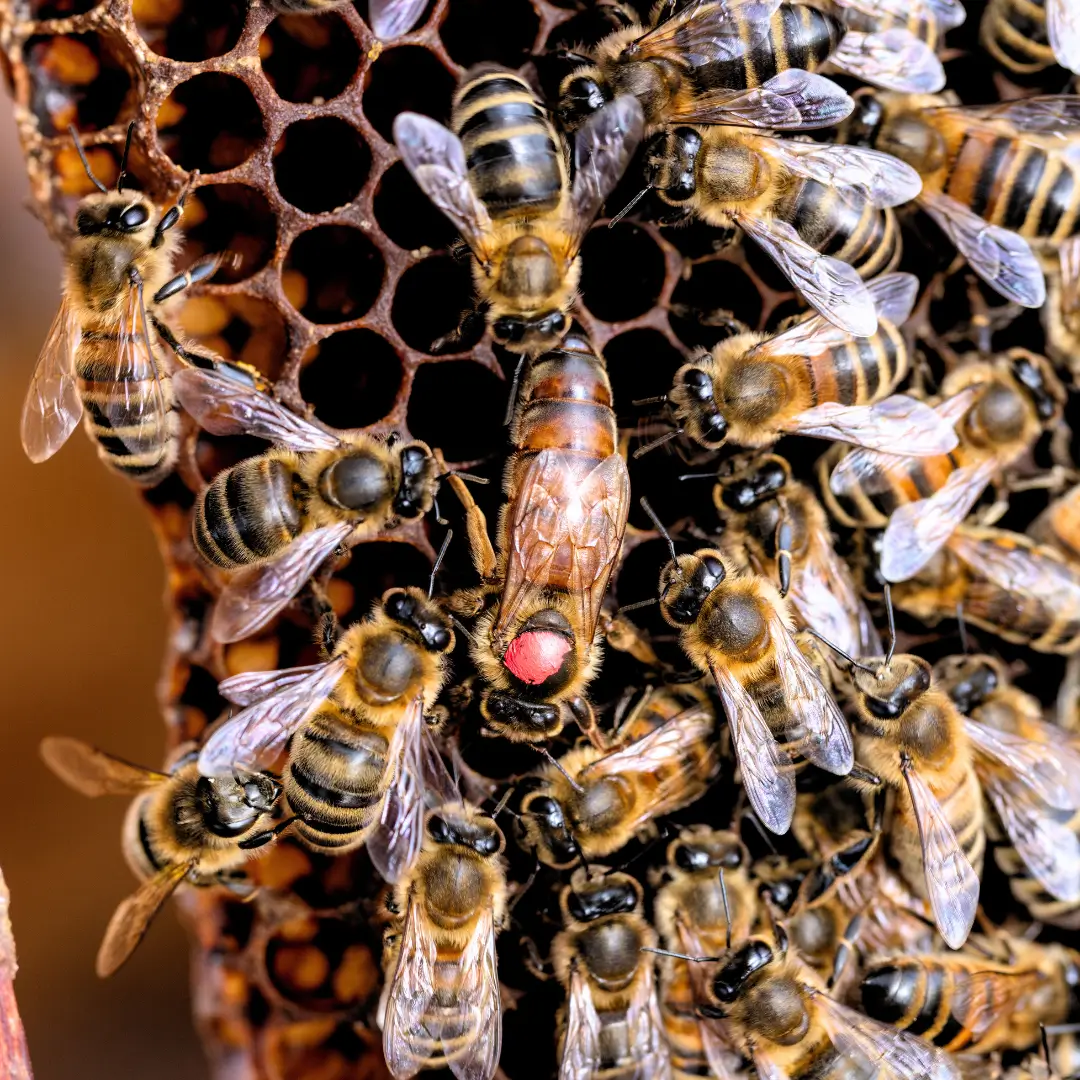
The queen bee is more than just the mother of the entire colony – she is the guardian of harmony and cohesion in the hive. Her ability to lay eggs ensures the continuity of life, and the pheromones she secretes maintain order and organisation among the worker bees. The queen is a symbol of leadership and stability, without which the colony could not exist. Thanks to her, life in the hive follows the rhythm of natural cycles, and the honeybee community functions in full harmony.
Source/Bibliography:
- Martyna Walerowicz Queen Pheromones, Pasieka24.pl Publishing House
- Krystyna Czekońska The Queen Bee, University of Agriculture in Krakow, Pasieka24.pl Publishing House