
What is the difference between Dandelion Honey and Dandelion Flower Syrup (May honey)?
In the world of natural beekeeping and herbal products, dandelion honey and syrup from dandelion flowers (often called May honey) are frequently confused or used interchangeably. Although both come from the same plant and share certain properties, they differ in several key aspects.
If you would like to learn more about these two products, we cordially invite you to read this short article. It is a great opportunity to discover their benefits and unique features.
Table of contents:
1. Production process
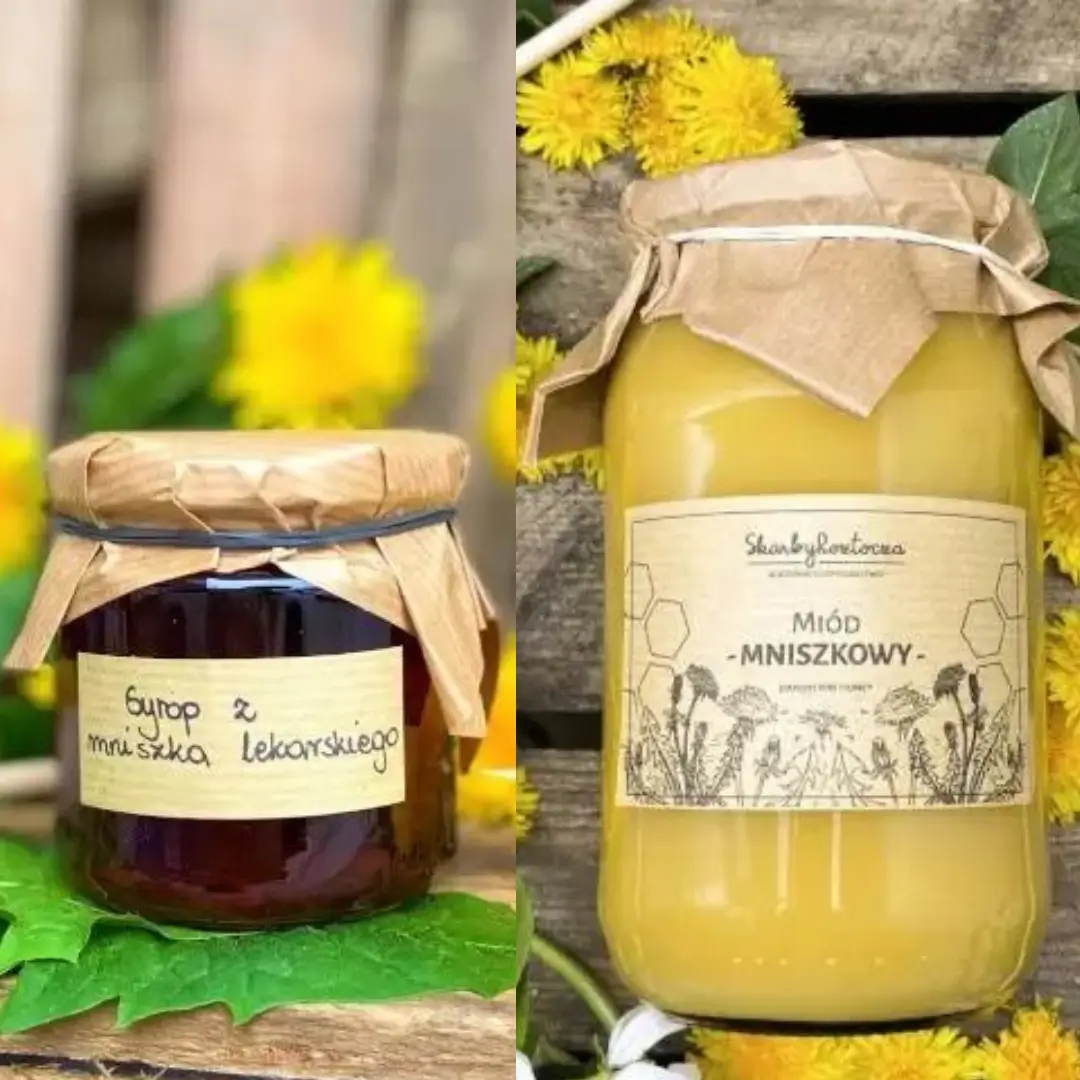
Dandelion honey and dandelion flower syrup, although both are related to the same plant – dandelion, differ significantly in terms of composition, production process, and health properties.
Dandelion honey is a beekeeping product, created thanks to the work of bees that collect nectar from dandelion flowers. The bees process the nectar in the hive, where it undergoes a natural process of fermentation and maturation. This process gives dandelion honey its unique properties – a wealth of enzymes, vitamins, and minerals that support digestive health, have anti-inflammatory effects, and strengthen immunity. Dandelion honey is a natural product whose taste and aroma depend on the environmental conditions in which the bees collected the nectar.
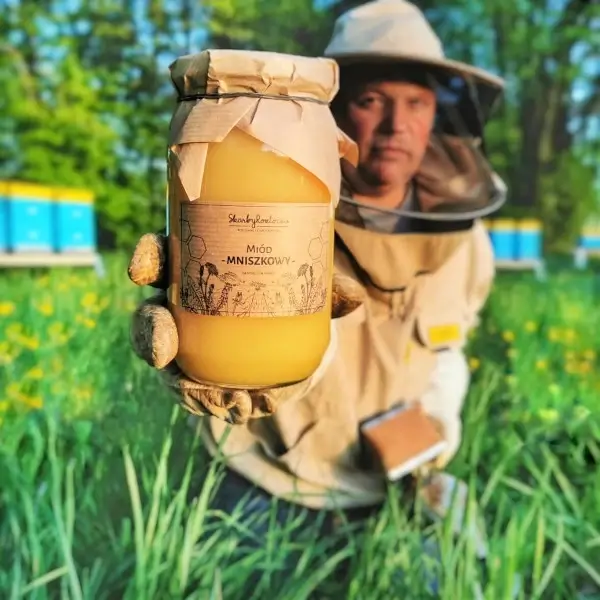
Dandelion flower syrup, also known as May honey, is a human-made product. Dandelion flowers are boiled in water with the addition of sugar or honey, which creates a thick syrup with an intense dandelion flavour. Dandelion syrup does not contain the enzymes and other nutrients typical of bee honey because it does not go through the processing stages in the hive. Nevertheless, dandelion syrup is valued for its flavour properties and can be used as a natural sweetener or an additive to tea, as well as a supportive remedy for colds thanks to the content of vitamins and bioactive substances derived from the dandelion.

2. Composition and taste
Dandelion honey and dandelion flower syrup differ not only in the production process but also in composition and taste, which affects their health and culinary properties.
Dandelion honey has a delicately sweet, floral taste that results from the natural process of nectar processing by bees. During this process, bees add enzymes to the nectar, which not only give the honey its unique taste but also enrich it with valuable nutrients. Dandelion honey contains natural sugars, such as fructose and glucose, as well as organic acids, amino acids, vitamins, minerals, and antioxidants. These ingredients mean that dandelion honey can support health by acting as an anti-inflammatory, strengthening the immune system, and supporting the digestive system. Its light consistency and delicate taste make it an excellent addition to many dishes, as well as a natural health support remedy.
Dandelion flower syrup (May honey) is characterised by a more intense, concentrated dandelion flavour. This is the result of boiling dandelion flowers, which release their essence into the syrup. In the syrup production process, sugar or honey is usually added, which affects its sweetness and consistency. Although this syrup does not contain enzymes or other nutrients typical of bee honey, it still retains certain health properties derived from the dandelion, such as supporting action during colds or a mild detoxifying effect. Dandelion syrup is thicker and sweeter than honey, which makes it an ideal addition to desserts, pancakes, or teas, especially if we want to add a more distinct, herbal accent to dishes.
3. Health properties
The health properties of dandelion honey and dandelion flower syrup are linked to their natural origin, but they differ in the intensity of action and the range of health benefits.
Dandelion honey possesses a wide spectrum of pro-health properties, resulting from the wealth of nutrients and enzymes added by bees during the production process. Its anti-inflammatory and antioxidant action makes it valuable support in the fight against free radicals, which can lead to inflammation and chronic diseases. Additionally, dandelion honey can support the digestive system, soothing ailments such as heartburn, reflux, or indigestion. Thanks to the presence of substances such as organic acids, amino acids, and antioxidants, this honey is often used in natural medicine as a means of strengthening the immune system and supporting the treatment of skin problems, such as wounds, burns, or acne.
Dandelion flower syrup also has its health properties, which are mainly related to the dandelion plant itself. Dandelion is known for its beneficial effect on the digestive system and the liver, thanks to which the syrup can support digestion, stimulate bile secretion, and have a cleansing effect on the body. Additionally, dandelion syrup has a diuretic effect, which can be helpful in eliminating excess fluids from the body and in cleansing the kidneys. However, unlike honey, dandelion syrup does not contain natural enzymes or nutrients typical of bee honey, which makes its health action less concentrated and largely dependent on the quality of the ingredients used and the recipe.
4. Application
Dandelion honey is a versatile product that can be used in many ways, both in the kitchen and in home care. Its delicate, floral taste works perfectly as a natural sweetener for tea, coffee, or lemonade. Thanks to its nutritional values, dandelion honey is an ideal addition to yoghurts, porridges, and baked goods, such as cakes, cookies, or breads. It not only enriches the taste of dishes but also adds health-promoting properties to them.
In addition to its culinary use, dandelion honey can also be used in homemade cosmetics. Its moisturising and regenerating properties make it a valuable ingredient in face masks, scrubs, or lip balms. Regular use of cosmetics with the addition of dandelion honey can help improve skin condition, moisturise it, and speed up the healing of minor wounds and irritations.
Dandelion flower syrup, also known as May honey, is a product that works great as an addition to drinks, e.g., tea, water with lemon, or lemonade. The intense taste of dandelion combined with sweetness makes it pair perfectly with hot drinks, giving them a unique aroma. Dandelion syrup can also be used as a healthy substitute for maple syrup on pancakes, waffles, or in yoghurts.
Thanks to its thick consistency, dandelion syrup is perfectly suited for drizzling over desserts, such as ice cream, cakes, or fruit salads. It can also be used for marinades and sauces, adding a sweet-bitter aftertaste to dishes. What is more, this syrup can be consumed on its own as a healthy snack or natural support during the cold season when the body needs additional immune support.
5. Summary
Both dandelion honey and dandelion syrup (May honey) are valuable products with diverse applications, yet they differ in their production method, composition, and properties. Dandelion honey is a natural bee product, rich in enzymes, antioxidants, and nutrients, making it not only an excellent addition to dishes but also effective support for health and natural care. On the other hand, dandelion syrup, prepared from dandelion flowers at home, offers an intense flavour and is a great addition to drinks, desserts, or sauces. Although this syrup does not contain bee honey or bee enzymes, it still possesses valuable health properties resulting from the dandelion itself. The choice between these two products depends on individual needs, taste preferences, and intended use.