

Does honey make you fat? Can you overdose on honey? The truth about calories, health benefits and moderation in using natural honey.
When we talk about diet and healthy eating, honey often takes centre stage. On one hand, it enjoys a reputation as a natural and healthier alternative to sugar, while on the other, some fear that consuming it may lead to being overweight or hinder the weight loss process.
Today we will take a closer look at the issue to discover, whether honey actually makes you fat, whether it is possible to overdose on it and whether it is beneficial for our weight and health.
Table of contents:
3. Conscious control and moderation.
4. Is honey more calorific than sugar?

1. Caloric content of honey.
Honey, although it is a natural product, is not calorie-free. In fact, it is a product with a relatively high calorific value. One teaspoon of honey weighs about 12g, which means it contains about 40 calories, which can be a significant contribution to our daily calorie balance, especially if we consume it in larger quantities. Therefore, if we care about maintaining or reducing weight, it is worth consuming honey moderately, consciously controlling the number of calories consumed.
2. Health benefits of honey.
However, it is worth noting that honey has many health benefits - it does not just provide empty calories. It is rich in a range of valuable nutrients, such as antioxidants, vitamins, minerals and enzymes. It also has anti-inflammatory and antibacterial properties, which means it can support health and help treat various ailments.
Honey can also be useful in the weight loss process. Its sweet taste can satisfy cravings for sweets, while providing the body with valuable nutrients. This way, instead of reaching for processed sweets or artificial sweeteners, it is better to choose natural honey as an alternative
3. Conscious control and moderation.
The key element in the context of consuming honey is conscious control and moderation. As with most food products, consuming too much honey can lead to excessive calorie intake and contribute to weight gain. However, when we consume honey with moderation, it can be a valuable addition to our diet, providing not only energy but also many valuable nutrients.
The amount of honey consumed depends on individual calorie needs and the overall diet. Honey is a high-calorie product, so it is important to consume it in moderate amounts, especially if you care about maintaining or reducing weight. Usually, it is recommended to consume one to two tablespoons of honey per day, taking this into account in the total number of calories consumed. It is also worth considering replacing other sources of sugar with honey to limit the intake of added sugar in the diet. In any case, it is important to consume honey with moderation and awareness of its calorific value. If you have doubts, it is always worth consulting a nutritionist.
*Fun fact - a teaspoon of honey, can already be burned during a 4-minute bike ride.
4. Is honey more calorific than sugar?
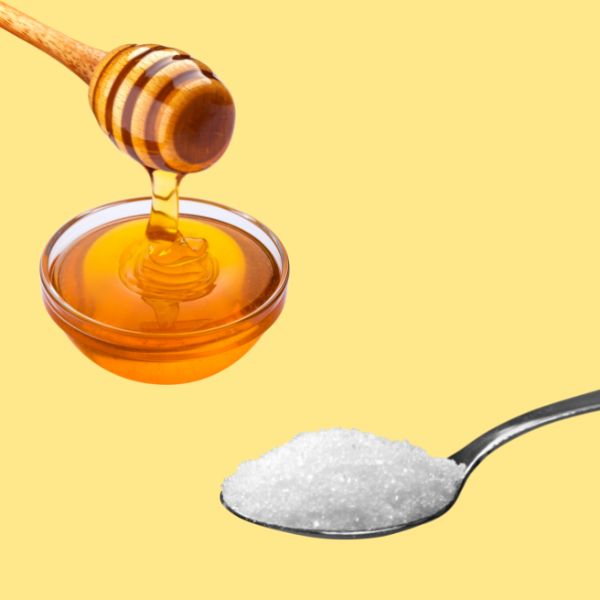
Yes, honey is more calorific than white sugar, but we usually consume it in smaller quantities. Honey is denser, heavier and sweeter, so we need significantly less of it to achieve the same sweetness. Consumed in small and reasonable amounts honey does not cause weight gain. Consumption of good quality honey causes - a slower - than in the case of sugar, increase in blood glucose levels.
Honey is primarily healthier than white sugar, it has plenty of goodness in the form of nutrients and health-promoting, anti-inflammatory and antibacterial properties.
5. Summary
Does honey make you fat? The answer is not straightforward. Depending on the amount of honey consumed and the overall calorie balance, it can both contribute to weight gain and support the weight loss process. The key is moderation and conscious control of the number of calories consumed. Additionally, it is worth remembering the health benefits that consuming honey can provide us when it is part of a balanced diet and a healthy lifestyle.