
Does honey raise blood sugar levels? The truth about honey's impact on glucose levels.
Honey is widely known as a natural alternative to sugar. However, many people wonder whether consuming honey can raise blood sugar levels as much as sugar does.
Today we will dispel all doubts and take a closer look at how honey affects our glucose levels. We invite you to read our entry dedicated to this topic.
Table of contents:
- Low glycaemic index.
- Chemical composition of honey.
- Individual reaction to honey.
- Which honey for people struggling with diabetes?
- Summary.
One of the main reasons why honey is considered a better alternative to sugar is the low glycaemic index of honey (GI). The glycaemic index is a measure that determines how quickly blood glucose levels rise after consuming a product. Honey has a lower GI than white sugar, which means it does not cause a sharp rise in blood sugar levels. If you are wondering which types of honey have the lowest glycaemic index, we invite you to the following paragraphs of the entry.
2. Chemical composition of honey.
Honey consists mainly of two sugars: glucose and fructose. These natural sugars are absorbed by the body in a different way than pure sucrose, i.e. white sugar. Thanks to the content of enzymes, vitamins and minerals that occur in honey, the body can better process these sugars, which may result in smaller fluctuations in blood sugar levels. Such a chemical composition of honey makes honey a definitely better alternative than ordinary white sugar.
3. Individual reaction to honey.
However, it is worth remembering that every organism reacts differently to consumed products. For some people, consuming honey can cause an increase in blood sugar levels, especially if they consume it in large quantities. Therefore, it is important for people with diabetes to monitor their individual reactions to consumed honey and consult with a doctor, to ensure that the consumption of honey will provide only positive effects for our body.
4. Which honey for people struggling with diabetes?
If you are looking for information on which honey should be chosen by people struggling with diabetes, we particularly encourage you to turn your attention towards acacia honey. Acacia honey is sweet and delicate in flavour, and its glycaemic index is relatively low. Therefore, it may be a better choice for people with diabetes who want to limit the rise in blood sugar levels after consumption.
Here are a few factors why acacia honey is one of the honeys recommended for people with diabetes:
- Low glycaemic index - acacia honey has a relatively low glycaemic index compared to other types of honey and white sugar. This means it causes a smaller increase in blood glucose levels after consumption compared to other sweeteners.
- Slowly absorbed fructose - acacia honey contains mainly fructose, which is absorbed more slowly by the body than glucose. Thanks to this, it can result in more stable blood sugar levels, which is beneficial for people with diabetes.
- Delicate flavour - acacia honey has a delicate, mild flavour that many people may enjoy. This may make it more easily tolerated by people with diabetes who avoid strongly sweet products.
- Richness of nutrients - like other types of honey, acacia honey contains many nutrients such as vitamins, minerals and antioxidants. Although nutritional values can vary depending on the specific acacia honey, its consumption can contribute to overall health and well-being.
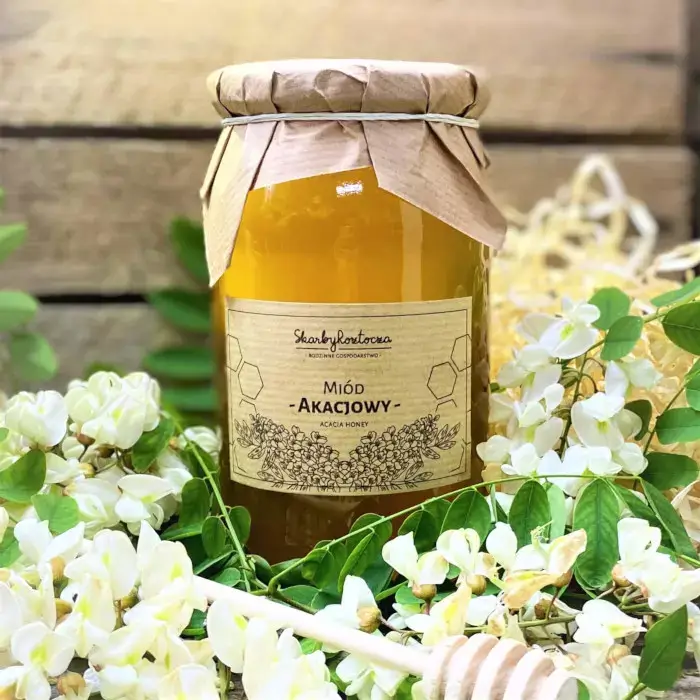
Honey has a lower glycaemic index than white sugar and contains more nutrients, which can make it a better choice for people with diabetes. However, the body's reaction to consumed honey can vary, so it is important to monitor blood sugar levels and adjust honey intake to individual health needs. In any case, consuming honey in moderate amounts can be beneficial for health and overall well-being.
It is also worth remembering to choose honeys from trusted sources and reliable beekeepers, preferably from your immediate local area. We can then support not only our own body but also the local economy and, above all, support the bees in our neighbourhood.