
Honey as a natural cosmetic for facial care
Honey has been known for centuries not only as a delicious addition to dishes or a natural sweetener, but also as an effective and gentle cosmetic. Its caring, nourishing, and antibacterial properties make it perfect for daily facial care.
If you are looking for natural ways to achieve radiant, moisturised, and cleansed skin, honey can become your best ally. We invite you to read this short post!
Table of contents:
1. Honey – what makes it so unique?
2. Which honeys work best as a facial cosmetic?
3. Honey face scrub – natural cleansing and smoothing
4. Moisturising and regenerating honey mask
5. Honey compresses – quick regeneration and skin soothing
6. Why is it worth including honey in your daily care?
1. Honey – what makes it so unique?
Honey is one of the most versatile natural products, valued not only in the kitchen but also in cosmetics – and for good reason. Its unique caring properties result from an extremely rich chemical composition that has a beneficial effect on the condition of the skin.
Honeys contain an average of 18% water,76% sugars and 6% other active substances, including proteins, peptides, enzymes, amino acids, vitamins, phenolic compounds (such as flavonoids and phenolic acids), and bioelements. It is this variety of ingredients that makes honey act in multiple ways on the skin: it moisturises, soothes, nourishes, regenerates, and protects.
The water in honey comes from nectar or honeydew and its amount varies depending on the type of honey – acacia, multi-flower, and rapeseed honeys contain the least water (approx. 18%), while heather contains the most (approx. 20%). A low water content means a higher concentration of active ingredients, making these honeys particularly valuable in the care of dry and tired complexions.
Natural humectant and protective barrier - the largest part of honey is made up of sugars – from 67 to 84%, mainly glucose and fructose. These simple sugars not only nourish skin cells but, above all, act like natural humectants, i.e. substances that bind water in the epidermis. Thanks to this, honey moisturises and softens the skin, improving its elasticity and firmness.
Interestingly, the fructose-to-glucose ratio is highest in acacia honey (1.4), which contributes to its exceptionally smooth texture and high capacity for maintaining moisture – features ideal for moisturising masks. Multi-flower or heather honey, with a slightly lower sugar ratio (1.2–1.3), also work well in skincare, although their effect will be slightly more balanced.
Richness of vitamins and enzymes - honey contains valuable B vitamins (B1, B2, B6), vitamin C, and minerals such as potassium, magnesium, zinc, and iron. These ingredients nourish the skin, support collagen production, brighten discolouration, and improve skin tone. Phenolic compounds and antioxidants protect the skin against premature ageing and oxidative stress by neutralising free radicals.
Enzymes and natural acids present in honey help in the gentle exfoliation of dead epidermis, making the complexion smoother, brighter, and more radiant. This makes honey excellent as an ingredient in natural enzymatic peels and cleansing masks.
Antibacterial and anti-inflammatory properties - one cannot forget about the strong antibacterial and anti-inflammatory properties of honey. It acts as a natural antiseptic, making it an effective support in the fight against imperfections, acne, and skin inflammation. It soothes irritations, accelerates the healing of minor wounds and redness, and with regular use, helps maintain the skin in good condition.
2. Which honeys work best as a facial cosmetic?
Not every honey works the same way – that is why it is worth choosing one that not only moisturises well but also strengthens the cleansing effect.
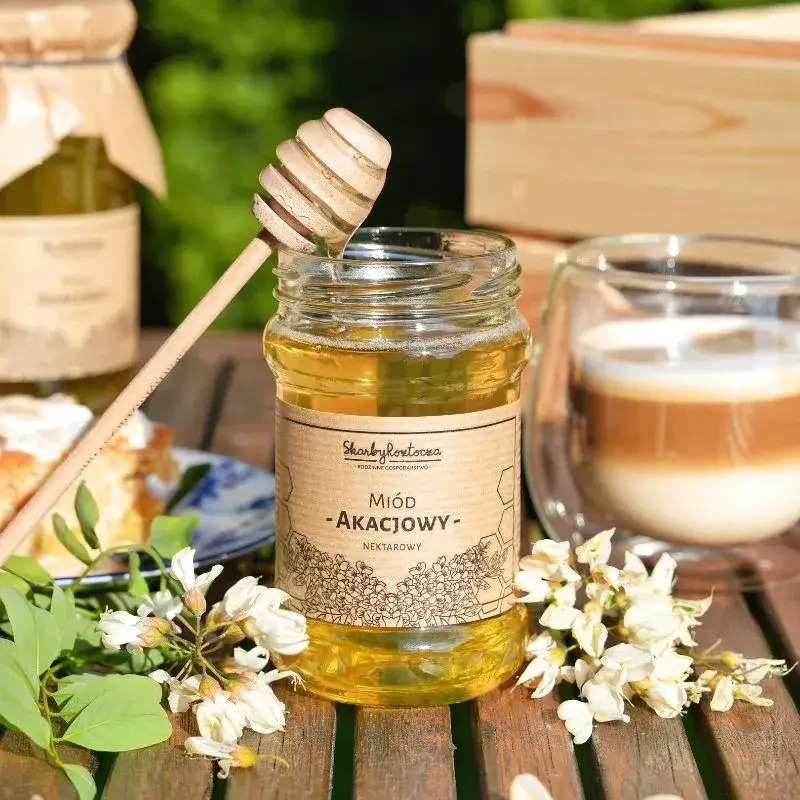
Acacia Honey - it is the best choice for facial care, especially for dry and sensitive skin. It contains a lot of fructose, which gives it an exceptionally smooth, liquid consistency. It spreads perfectly on the skin and gently moisturises. Its delicate, floral aroma further enhances the treatment.
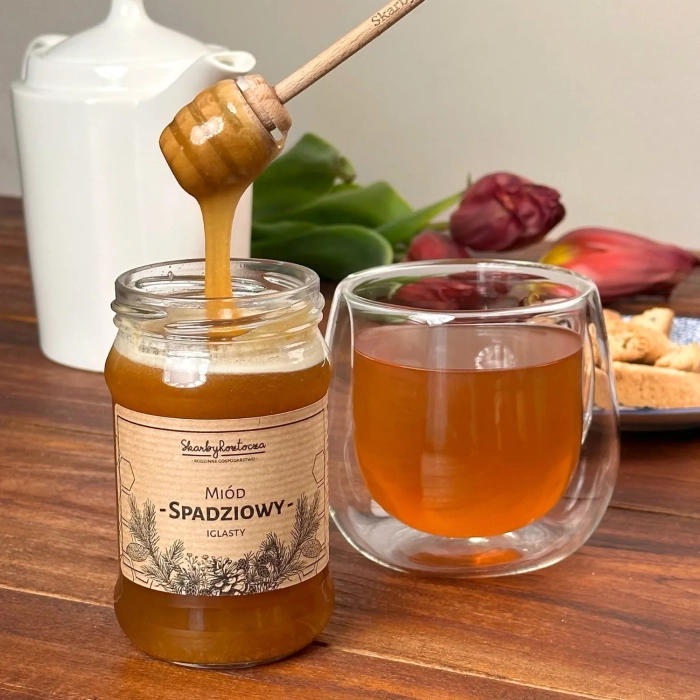
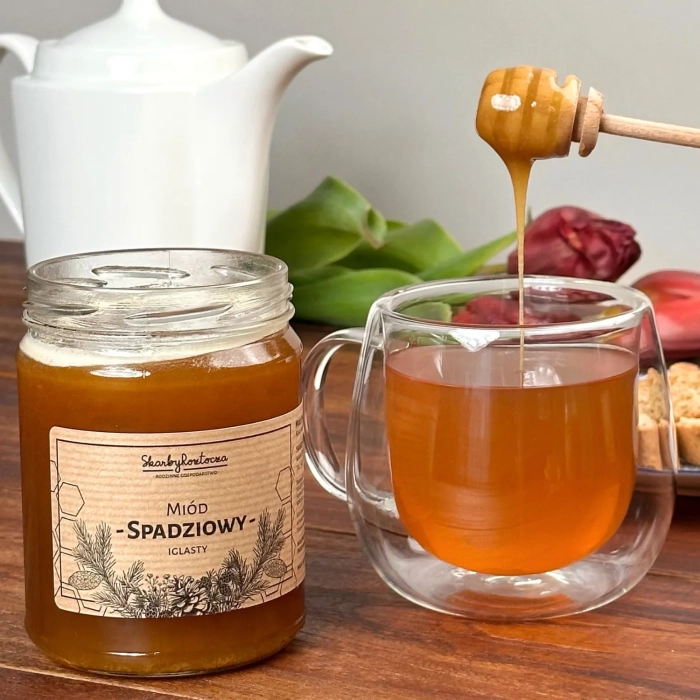
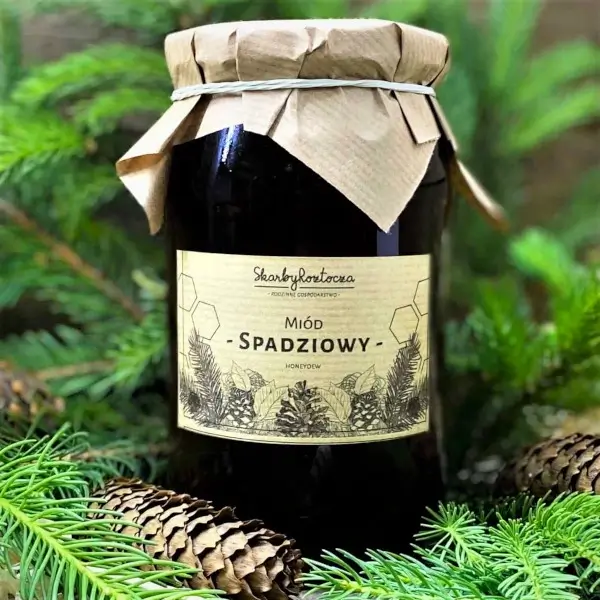
Coniferous Honeydew Honey - rich in minerals and antioxidants. It has stronger antibacterial and anti-inflammatory properties, making it perfect for oily, combination, and acne-prone skin. It helps cleanse pores, reduces inflammation, and accelerates the healing of minor skin lesions.
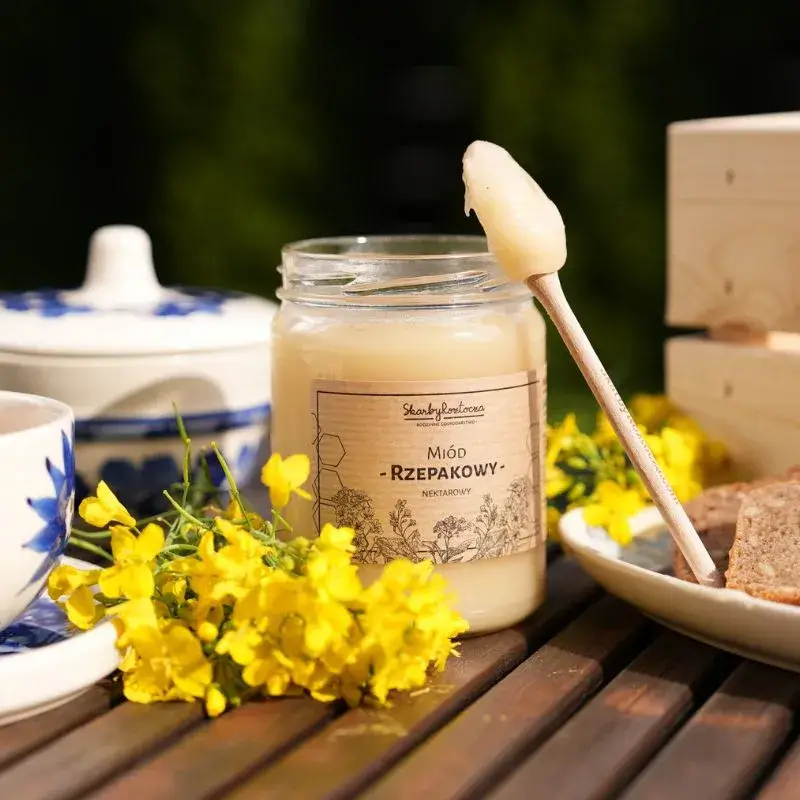
Rapeseed Honey - although less known in cosmetics, it deserves attention. It has a light colour, a delicate scent, and crystallises quickly – which makes it act slightly exfoliating on its own. Excellent for tired and dull skin, as it effectively smooths and brightens the complexion.
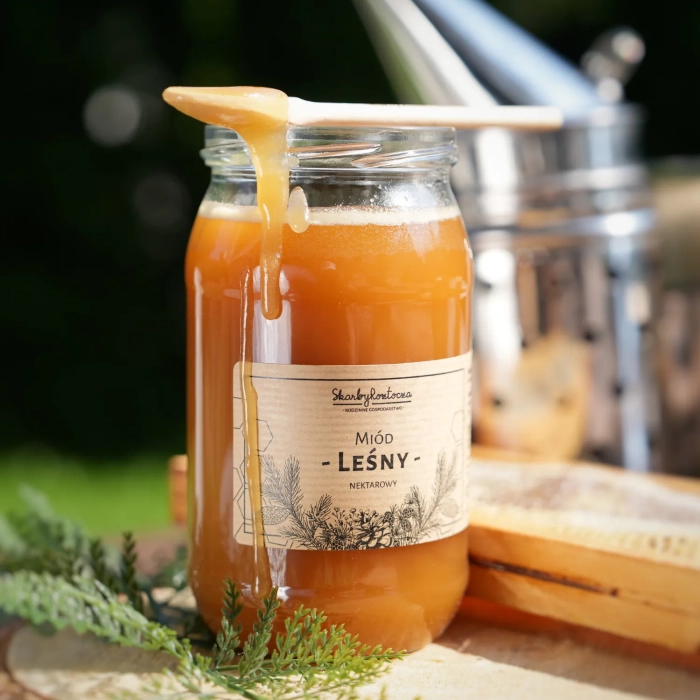
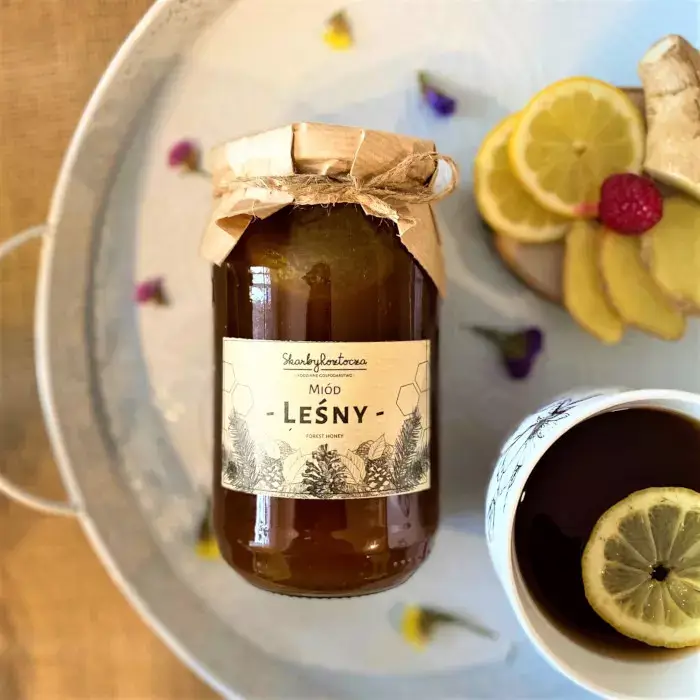
Forest Honey - works perfectly as an ingredient in masks, compresses, or scrubs, especially for problematic skin prone to acne, dryness, or redness. It supports the treatment of minor skin lesions, wounds, epidermal peeling, and even symptoms of eczema or psoriasis. It has a disinfecting effect, soothes irritations, and accelerates healing, while deeply moisturising and softening the skin.
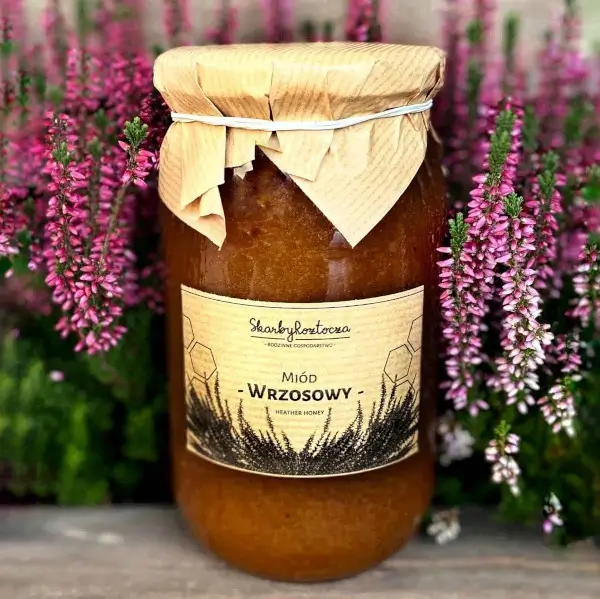
Heather Honey - is a unique, aromatic honey that works great in skin care thanks to its gelatinous consistency. Due to its high content of polyphenols, enzymes, and amino acids, it has anti-inflammatory, regenerating, and moisturising effects. It supports the healing of minor damage, soothes irritations, and improves skin elasticity. It is especially recommended for tired, sensitive skin in need of renewal.
3. Honey face scrub – natural cleansing and smoothing
Scrubbing is the basis of healthy skin, as it removes dead cells, unblocks pores, and improves microcirculation. A honey scrub is exceptionally gentle, so it is suitable even for sensitive and dry skin.
How to prepare the scrub?
Simply mix 1 tablespoon of honey with 2 tablespoons of finely ground oatmeal or cane sugar. Apply to a damp face and massage in circular motions for about a minute, then rinse with warm water. The skin will be soft, nourished, and full of glow.
4. Moisturising and regenerating honey mask
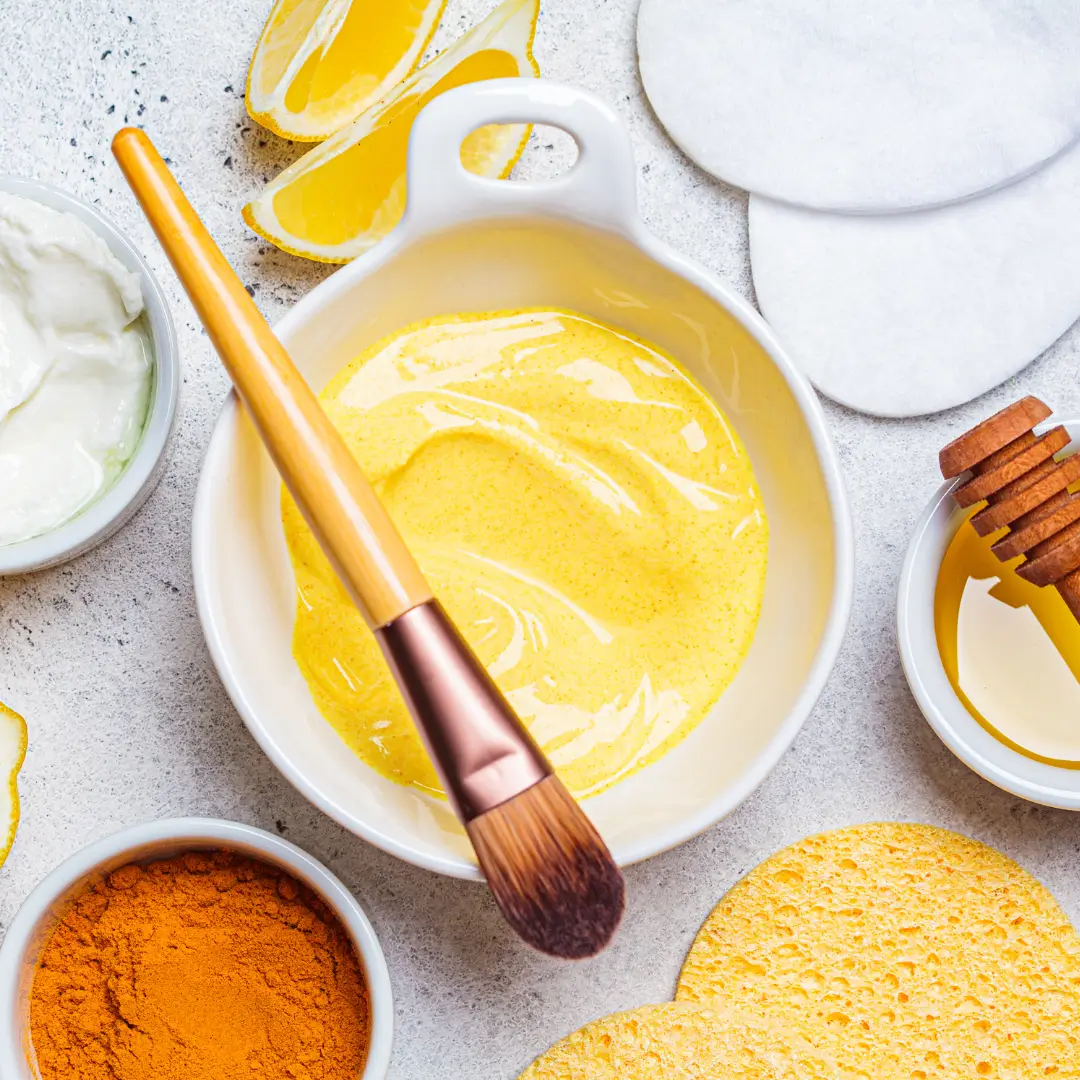
Honey in a mask perfectly moisturises and regenerates the skin, while simultaneously soothing irritations and reducing redness. It is the perfect way for a home spa that will nourish your complexion.
Mask recipe:
- 1 tablespoon of honey
- 1 tablespoon of natural yoghurt or Greek yoghurt
- a few drops of lemon juice (for oily and combination skin)
- or a bit of coconut oil (for dry skin)
Mix the ingredients, apply to the face for 15–20 minutes, and then rinse with lukewarm water.
The effect? Tight, radiant, and perfectly moisturised skin.
5. Honey compresses – quick regeneration and skin soothing
If your skin is irritated, tired, or needs immediate soothing, apply a honey compress. Apply a thin layer of honey to cleansed facial skin and leave for 10–15 minutes. Thanks to its properties, honey will soothe inflammation, accelerate regeneration, and moisturise the skin. It is also a great way to support the healing of minor wounds or redness after acne.
How to perform a honey compress?
- Cleanse your face thoroughly, preferably with a gentle micellar water or alcohol-free milk.
- Apply a thin, even layer of pure honey (preferably slightly liquid) to the entire face or only to problematic skin areas – e.g. cheeks, forehead, chin.
- Leave for 10–15 minutes, relax during this time and avoid touching your face.
- Wash off with lukewarm water and dry the skin with a soft towel.
After such a treatment, the complexion is visibly calmed, more elastic, soft, and radiant. Regular use – 1–2 times a week – allows you to notice an improvement in skin tone and structure
When is it worth reaching for a honey compress?
- After sunbathing - honey will soothe burning and irritation
- In case of dry skin - it moisturises and nourishes
- For acne and inflammation - it reduces redness and accelerates skin healing
- When the complexion is grey, tired, and lacklustre - it will restore its freshness and healthy appearance
6. Why is it worth including honey in your daily care?
Honey is a true treasure of nature – 100% natural, free from artificial additives and preservatives, making it extremely safe even for the most sensitive skin. Its gentle but effective action means it can be used by people of all ages and with various skin types – from dry and sensitive to combination and acne-prone. The extraordinary versatility of honey makes it work perfectly both as a stand-alone cosmetic and in combination with other natural ingredients, such as yoghurt, plant oils, clays, or oatmeal. Its rich composition – containing B vitamins, vitamin C, potassium, magnesium, iron, and powerful antioxidants – deeply nourishes the skin, accelerates its regeneration, and protects against the harmful effects of free radicals.
Additionally, honey exhibits strong antibacterial and anti-inflammatory properties, making it a natural ally in the fight against imperfections, acne, or redness. Regular use of honey in home care – in the form of masks, scrubs, or compresses – effectively improves skin condition without the need for expensive and chemical cosmetics. It is a simple, effective, and completely natural way to a beautiful, healthy, and radiant complexion.
Honey is a true elixir of nature – rich in simple sugars, vitamins, minerals, enzymes, and antioxidants, which comprehensively support skin condition. It has a moisturising, regenerating, and soothingeffect, while simultaneously supporting natural exfoliation of the epidermis and protection against harmful external factors. Thanks to the variety of honey types, we can choose the one ideal for our skin's needs – e.g. acacia for dry and sensitive skin, honeydew for oily and problematic skin, and forest for skin requiring regeneration.
What makes honey unique in cosmetics is its multi-directional action: it simultaneously moisturises, cleanses, nourishes, and supports the treatment of skin lesions. And all this 100% naturally – without chemicals, artificial additives, or preservatives. Therefore, it is worth it for honey to become a permanent feature not only in our kitchen but also in our daily skin care.
Sources/Bibliography:
- Borecka A., Use of honey in cosmetology and medicine, Pol J Cosmetol 2019, 22(3): 188-193
- Kędzia B., Hołderna-Kędzia E., The use of bee honey in cosmetology, Herbalism no. 1(5) / 2019