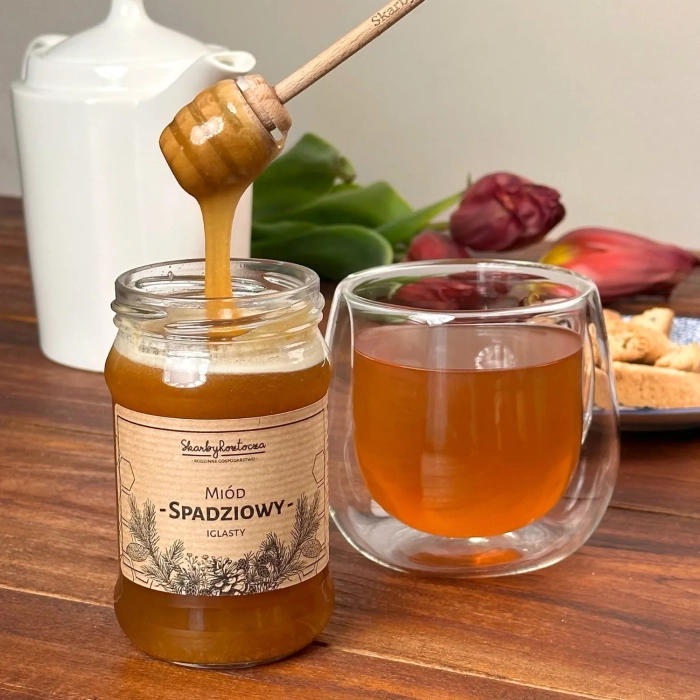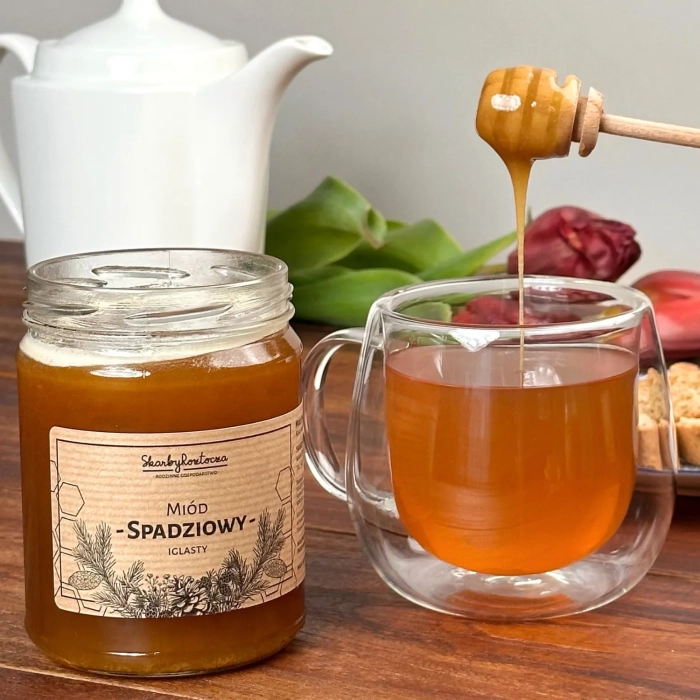

Honey for immunity
Table of contents:
1. Honey as medicine
2. Raw honey - properties
3. The power of phytonutrients
4. How to consume honey?
5. Which honey for immunity?
In times when we are particularly exposed to various viral infections, we must strengthen our immune system. So how can we strengthen our immunity with honey?
Honey as medicine
Honey as medicine has been used for thousands of years. It was used for various medical conditions, including eye diseases, asthma, throat infections, hepatitis, eczema, in traditional medicine, and many others.
According to research conducted by the Department of Immunogenetics, BuAli Research Institute, Mashhad University of Medical Sciences in Iran, "It has been observed that the sugar, nigerooligosaccharides, present in honey, have immune-boosting effects. Non-sugar components of honey are also responsible for immunomodulation."[1][2]
Flavonoids and polyphenols, which act as antioxidants, are two main bioactive molecules present in honey. Antioxidants help in neutralizing free radicals in the body. Research conducted by Michigan State University states that "honey is an immune system builder with antioxidant, antibacterial and anti-cancer properties".
It is also known that honey increases the production of lymphocytes T and B, antibodies, eosinophils, neutrophils, monocytes and NK cells during primary and secondary immune responses in tissue culture.[3]
Raw honey - properties
Raw honey improves the functioning of the digestive system due to the antioxidant, antifungal, antiviral and antibacterial properties of its nutrients. Some types of honey have as many antioxidants as fruits and vegetables. Antioxidants help protect the body from cell damage by free radicals.
The raw version of honey may also contain bee pollen and propolis, which may have additional benefits. A 2017 review of studies suggested that raw honey may have potential protective effects on the respiratory, gastrointestinal, cardiovascular and nervous systems, and may even have potential in treating cancer.
The nutrient content in raw honey varies depending on its origin and other factors. Generally speaking, one tablespoon or 21 grams of raw honey contains 64 calories and 17 grams of sugar. Raw honey also contains smaller amounts of the following micronutrients (vitamins and minerals): calcium, magnesium, manganese, niacin, pantothenic acid, phosphorus, potassium, riboflavin, zinc. Furthermore, raw honey is a source of various amounts of amino acids, enzymes and other beneficial compounds.
The power of phytonutrients
Phytonutrients are compounds found in plants that help protect them. The phytonutrients in honey are responsible for its antioxidant, as well as antibacterial and antifungal properties. They are also believed to be the reason why raw honey exhibits immune-boosting and anti-cancer properties. Heavy processing in regular honey can destroy these valuable nutrients.
How to consume honey?
> Drinking a glass of warm water with honey and lemon or quince juice before breakfast cleanses the body.
> Honey can also be consumed daily with herbal tea and apple cider vinegar, you can also add honey to coffee.
> You can add honey to a simple snack, e.g. drizzle it over pancakes or wholemeal toast.
Which honey for immunity?
After many years of learning about bees, beekeeping and the experience of our ancestors, we already know which types of honey will work best to support immunity. Especially during the autumn- winter season. The following should be mentioned here in particular:
Bibliography:
[1] https://europepmc.org/article/med/28539734
[2] https://www.walshmedicalmedia.com/open-access/a-decisive-review-contemplating-the-nutritional-prophylactic-and-therapeutic-efficacy-of-asl-honey-in-the-context-of-tib.pdf
[3] http://www.postepyfitoterapii.pl/wp-content/uploads/2014/11/pf_2014_067-070.pdf
[4] https://zywienie.abczdrowie.pl/cenny-miod-prosto-z-pasieki