
Honeycomb and oral health
In an era of returning to natural health care methods, honeycomb is gaining increasing popularity. This unique bee product, available in its pure form straight from the hive, is not only an exceptional taste experience but also natural support for oral health.
Why is it worth chewing honeycomb? What are the benefits? We answer below.
Table of contents:
2. Health benefits for the oral cavity
3. How to use honeycomb correctly?
1. What is honeycomb?
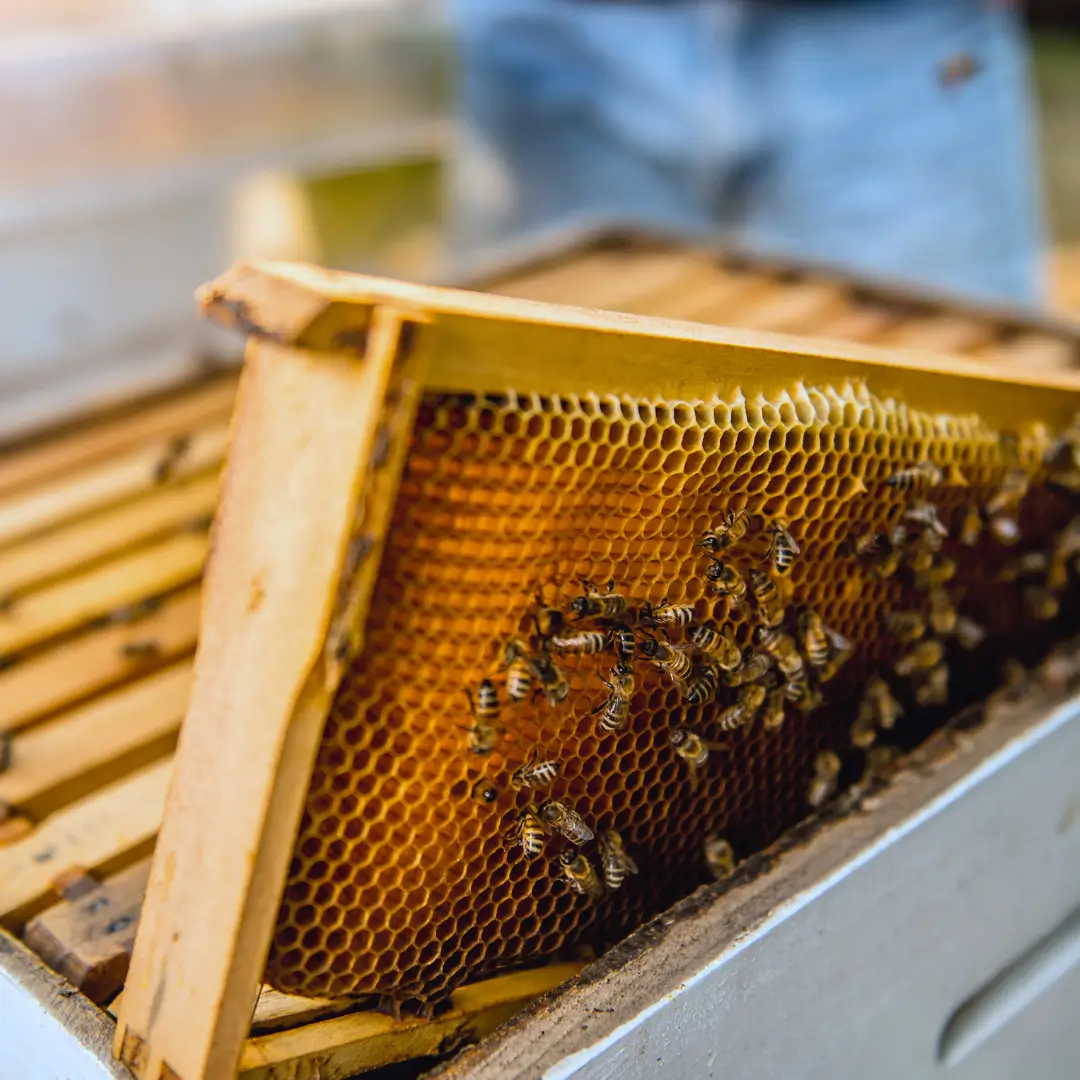
Honeycomb is a natural structure built by bees from wax, in which they store honey, bee pollen, and raise their young. The honeycomb cells have a characteristic hexagonal shape – not by chance, as it allows for maximum use of space and structural durability with minimal wax consumption.
Beeswax is produced by young bees, which form it into thin plates and use them to build subsequent layers of the comb inside the hive. Once the bees fill the cells with honey, they seal them tightly, creating natural packaging that protects the contents from moisture and air. In this way, the honey matures and stays fresh for a long time, without the need for any processing.
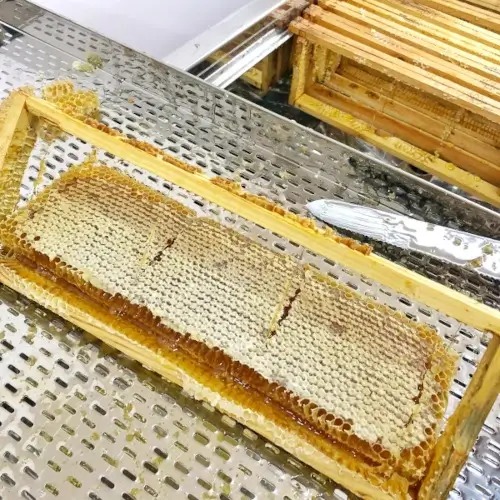
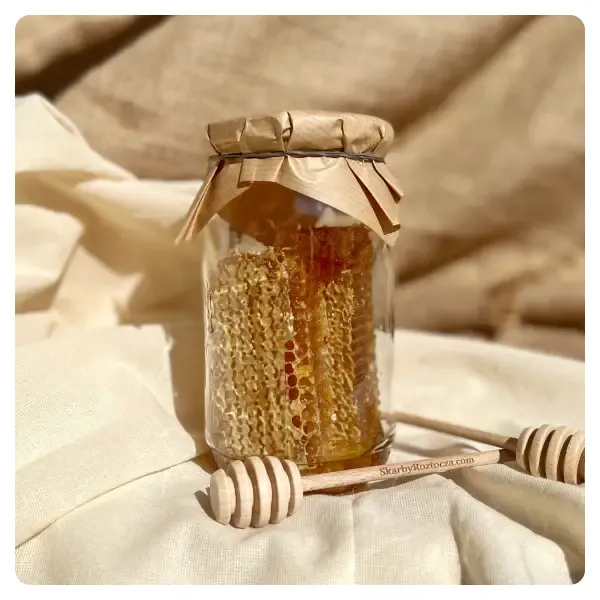
After being cut out, a fragment of the comb goes directly into a jar. It can be chewed like gum – enjoying both the intense taste of the honey and the beneficial effect of the wax on the oral cavity.
Honeycomb is not just a food product, but also a form of close contact with nature and the tradition of beekeeping – in a version that has not been altered by humans.
2. Health benefits for the oral cavity
Regular chewing of honeycomb is a simple, natural way to support oral health, which has been used for centuries in traditional folk medicine. Today, thanks to the growing interest in natural prevention, it is returning as an effective supplement to daily oral hygiene.
Disinfection and antibacterial effect - one of the most important properties of honey is its antibacterial effect. Honey contains enzymes produced by bees which, in contact with saliva, produce hydrogen peroxide – a natural disinfectant. While chewing the comb, these substances actively participate in cleaning the oral cavity, fighting microbes and inhibiting their development. Thanks to this, we reduce the risk of inflammation, bad breath, and tooth decay.
Strengthening gums and teeth - the process of chewing itself also has a beneficial effect on the gums. Gentle pressure and jaw movements stimulate microcirculation within the periodontium, which can affect its better blood supply and overall condition. As a result, gums become stronger, less prone to bleeding, and the risk of diseases such as periodontitis is significantly reduced.
Removing plaque and tartar - natural beeswax, from which the comb is built, acts as a mechanical toothbrush. Its structure helps in removing dental plaque and food debris from the surface of the teeth. Regular chewing of the comb can contribute to slowing down the formation of tartar and, in the long term – to maintaining a cleaner and healthier enamel surface.
It is also significant that chewing stimulates saliva secretion – extremely important for the natural protection of the oral cavity. Saliva not only cleans the mucous membranes, but also helps neutralise acids produced by cariogenic bacteria. Increased saliva production thus contributes to the protection of enamel, aids digestion and improves the overall microbiological balance in the mouth.
Support when quitting smoking - an interesting and often overlooked aspect is the fact that honeycomb can help people quitting smoking. The chewing reflex itself keeps the hands and mouth busy, which can reduce the urge to reach for a cigarette. Additionally, honey has a soothing effect on mucous membranes irritated by tobacco smoke, and natural ingredients support immunity and improve well-being during the difficult period of nicotine withdrawal.
Honeycomb thus works in multiple ways – not only as a healthy snack, but as real support in daily oral hygiene. Unlike artificial chewing gums, it contains no preservatives, flavourings, or sweeteners – offering only what is natural and beneficial.
3. How to correctly use honeycomb?
The basic principle is to consume honeycomb in small amounts. It is best to cut or break off a fragment about the size of one teaspoon of honey – this is the optimal portion for chewing at one time. Chewing should be done slowly and thoroughly so that the honey contained in the comb cells has time to be released and dissolve in the mouth. In this way, we not only enjoy the full natural taste, but also enable the active ingredients to have the maximum health effect on the teeth, gums, and mucous membranes.
As you chew, the honey gradually flows out of the comb, and the wax remains increasingly empty and hardens. This wax is natural, but very difficult to digest. Therefore, after the honey contained in the comb has been rinsed out and consumed, the chewed wax should be spat out – it should not be swallowed. Swallowing a larger amount of wax can lead to digestive discomfort because the human digestive system is not adapted to breaking it down.
It is worth remembering that honeycomb is a fully natural and raw product. It can crystallise, change colour or consistency depending on the type of nectar from which the honey comes, and the storage conditions. This is a natural phenomenon that does not negatively affect its quality or taste.
Regular, but moderate chewing of honeycomb can be a healthy habit that supports oral hygiene, as well as overall well-being. However, it should be remembered that honeycomb does not replace standard hygiene procedures, such as brushing teeth or using dental floss, but is a valuable supplement to them.
4. Summary
Honeycomb is not only a unique taste pleasure, but also effective, natural support for oral health. Chewing it supports hygiene, strengthens gums, cleans teeth, and has an antibacterial effect. It is a simple, daily ritual that can realistically affect the state of health – not only of the oral cavity, but of the whole organism.