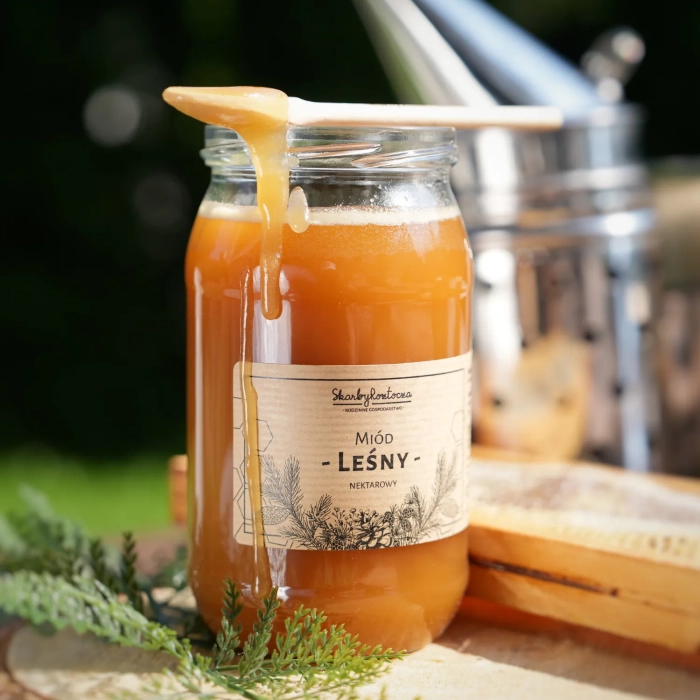

What is bee bread, how is it made, and why is it worth consuming?
If you haven't had the chance to try the recently popular antiviral treatment with bee bread yet, we heartily recommend discovering its precious properties.
We encourage you to deepen your knowledge regarding what exactly bee bread is, how it is made, and why it is worth using. We invite you to read this blog post.
Table of contents:
-
What is bee bread?
-
How is bee bread made?
-
Bee bread- properties
-
Bee bread - application
-
How to use bee bread?
-
Bee bread- where to buy?
1. What is bee bread?
Bee bread is one of the most expensive bee products produced by our bees. It is valued especially for its precious health properties. Despite its high price, it enjoys considerable recognition, not only among supporters of apitherapy but also among doctors.
2. How is bee bread made?
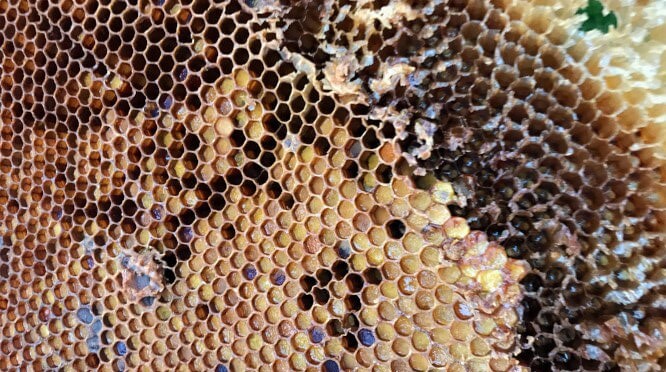
Bee bread is made from flower pollen brought to the hive by forager bees, which is not collected using a pollen trap as in the case of standard pollen loads, but is passed to a worker bee in the hive, which then places it in the wax cells of the frame, cleverly packing it with its mouthparts. During the collection of pollen from flowers, as well as during this process, the bees enrich the resulting bee product with enzymes from their salivary glands.
When the cell is almost full, young worker bees add a little royal jelly and honey to it, and the whole thing is sealed with a thin layer of beeswax. Prepared in this way, due to the constant temperature in the hive of approx. 30 degrees C, the airtight structure of the cell, and the presence of royal jelly, the product begins a lactic acid fermentation process, which refines it, preserves it, and enriches the pollen with further micro- and macro-elements and vitamins, and also makes it more easily digestible.
To obtain 1 kg of bee bread, it is necessary to clean from 5 up to as many as 30 frames. All activities are often performed exclusively by hand, which is why trace amounts of beeswax from the uncapping of the bee bread from the frames or, occasionally, parts of the frame may occur in it. Most bee bread is harvested during abundant pollen flows and at the end of the season when some frames are withdrawn and the size of colonies is reduced for overwintering. We hope that you now know how bee bread is made- this most valuable product from the hive.
3. Bee bread- health properties
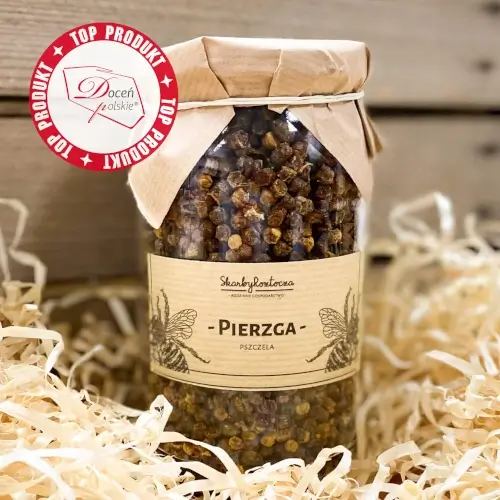
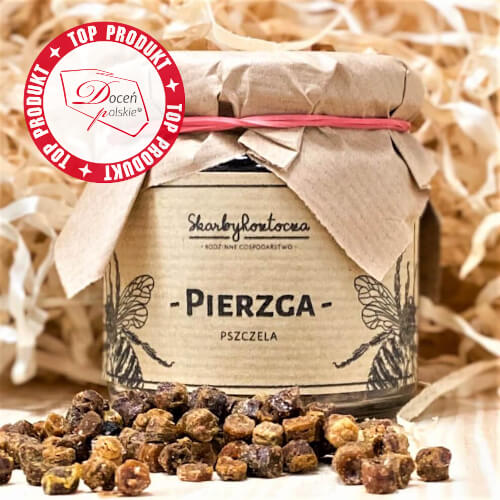
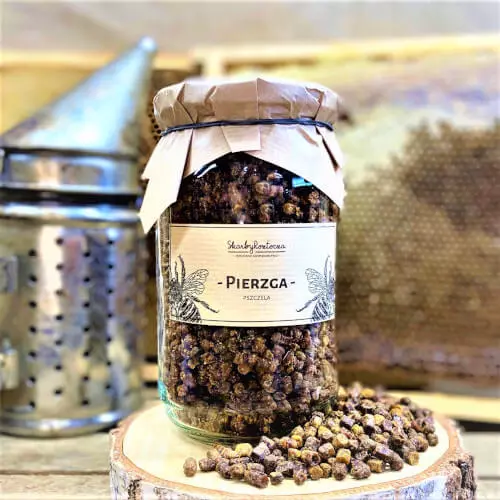
Bee bread is known for its health-promoting properties - its composition includes a range of vitamins (A, B1, B2, B3, B6, C, PP, E, D, H, K, B12) and minerals (iron, phosphorus, potassium, copper, sodium). Bee bread is usually purchased in the form of brown granules, sealed in an airtight jar to prevent moisture, which is its greatest enemy, and to protect the product from wax moths.
Bee bread is best stored in a dry, cool, and shaded place to preserve all health properties of bee bread. The best place will be a cool pantry, cellar, or garage, but if we do not have such conditions in our house or flat, a fridge will also be a good place (just remember to tighten the jar well).
4. Bee bread - application:
- It is excellent for regenerating the body, especially after surgery and medical procedures.
- It stimulates the nervous system in states of depression and has a strengthening effect in connection with the occurrence of so-called chronic fatigue syndrome.
- Thanks to bee bread, you can also detoxify the liver and minimise ailments related to the digestive system, such as ulcers, diarrhoea, and constipation.
- Due to the fact that bee bread is used not only orally but also on the skin as an ingredient in homemade masks, it is perfect for skin regeneration and to stimulate the body's collagen production.
- More precious applications can be found on our website: bee bread
5. How to use bee bread?
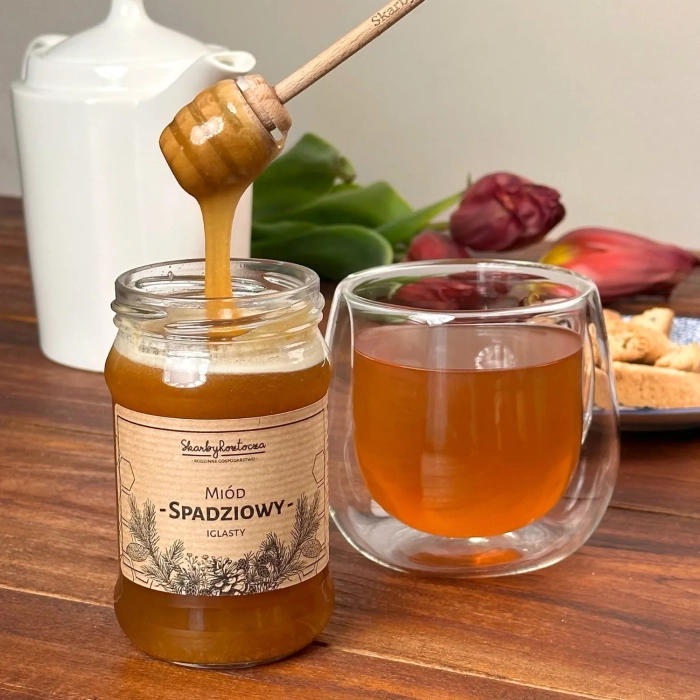
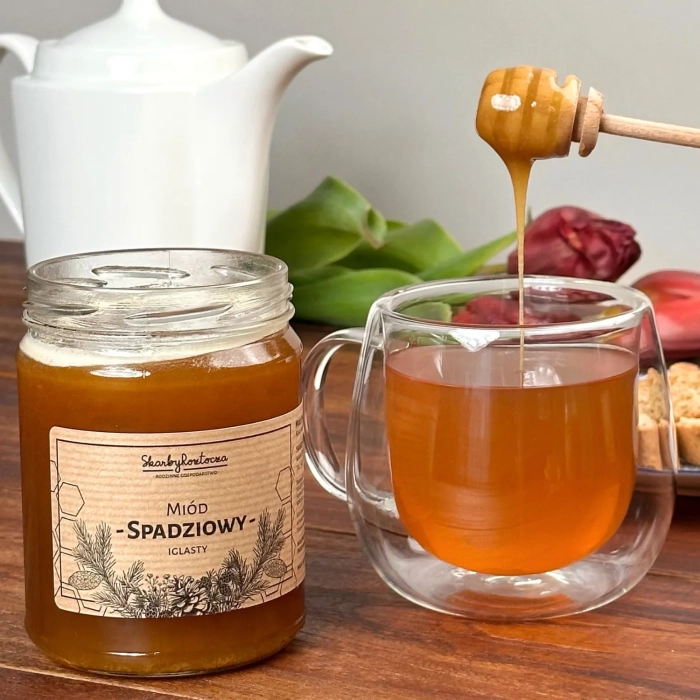
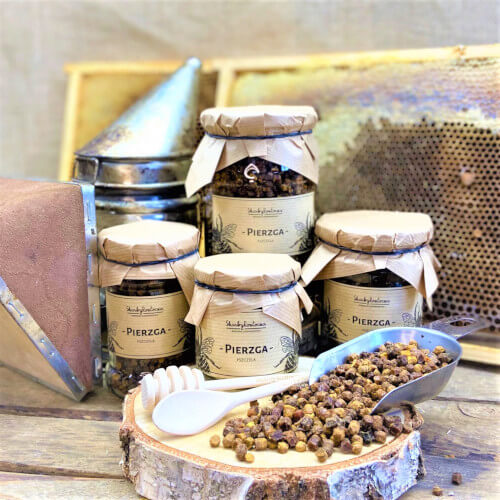
The recommended daily dose of bee bread for an adult should be approx. 10/15 g, which is about 1 teaspoon. Bee bread is an easily digestible product for our body that cannot be overdosed. It can be added to morning porridge, yoghurt, or tea, although the best results are achieved by pouring lukewarm water over 1 teaspoon (approx. 10g) of bee bread, leaving such a solution for 8-10 hours, and consuming it every morning on an empty stomach. It is important that the water is not hot - maximum 40 degrees Celsius, but we recommend lower, so that the bee bread does not lose its healing properties. It is recommended that such a treatment lasts at least 3 months. We also recommend combining this treatment with coniferous honeydew honey, which also has a very positive effect on our body's immunity. Scientific sources prove that in terms of absorbability, the above method is the most effective way of how to use bee bread.
6. Bee bread- where to buy?
If you are wondering what to look for when buying bee bread- it is worth paying attention to the seller. A company involved in the production of honey and bee products (including bee bread) will certainly know about their quality. We recommend looking for high-quality bee bread at nearby or trusted apiaries, or in proven organic shops. Mature bee bread, immediately after being taken from the hive, should be properly prepared during the production process- frozen, dried, and sorted. If you are wondering where to buy bee bread, we recommend trying our bee bread to find out how real bee bread should taste and look. Our confidence in its quality was confirmed by the certificate "Top Product- Doceń Polskie" during the 42nd certification of traditional Polish products. We would like to thank you for your trust and for appreciating our work with this distinction!
We invite you to our online shop to discover this form of apitherapy for yourself: Buy bee bread.