
What is the difference between bee bread and pollen?
In the mysterious world of bees, there are many treasures that offer us numerous health benefits. Bee bread and bee pollen are two of these precious gifts of nature, which are enjoying increasing interest due to their unique nutritional and medicinal properties. But what are the actual differences between them? We invite you to read this unique blog about what is the difference between bee bread and pollen?
Table of contents:
3. Nutritional values of pollen and its health benefits.
4. Nutritional values of bee bread and its potential health benefits.
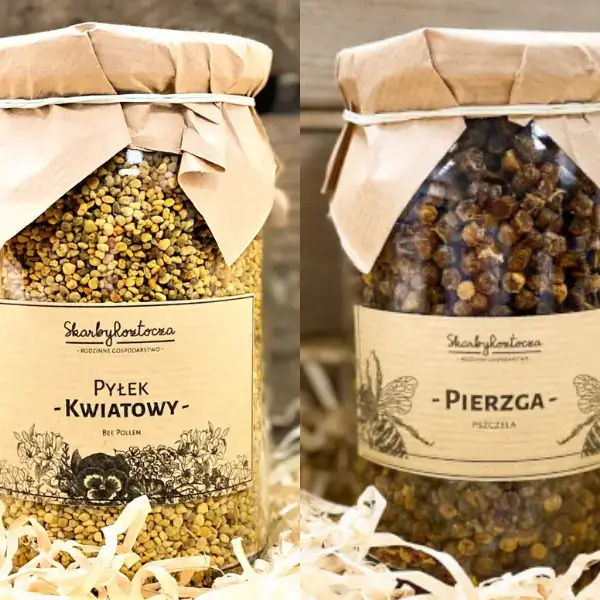
1. What is pollen?
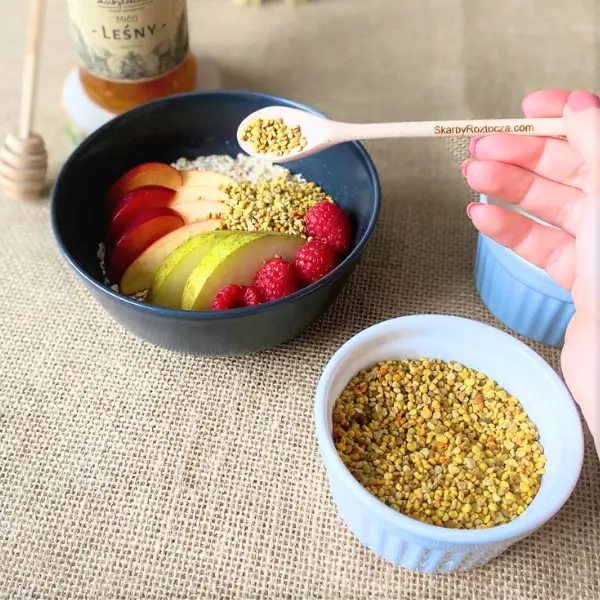
Bee pollen is collected by bees during their flights to forage in search of nectar. When a bee visits a flower, pollen is transferred to its body by the anthers, which are part of the flower's stamens. The bee then carries this pollen from the flower to the hive.
Bee pollen is stored in special honeycomb cells in the hive. These cells are dedicated to gathering and storing the pollen collected by the bees. Once delivered to the hive by the worker bees, the pollen is stored in the honeycomb cells in the form of loose pellets. The honeycomb cells are often located in the upper parts of the hive, where they are easily accessible to the bees. The pollen is stored in these cells in an orderly manner, allowing the bees easy access to it when needed. While the pollen is stored in the honeycomb cells, bees can use it to feed larvae, nourish young bees, and as a dietary supplement for adult bees.
2. What is bee bread?
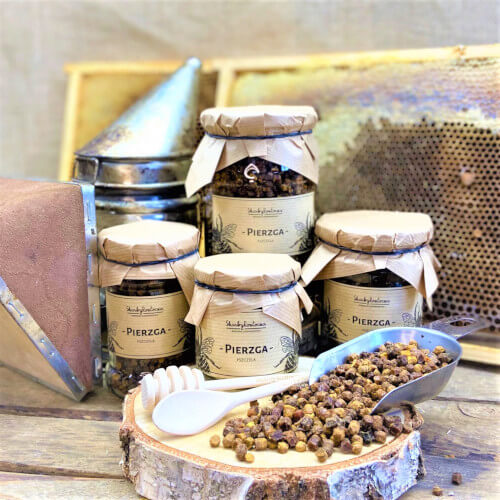
Bee bread is created as a result of a complex process of collecting and processing flower pollen by bees. This process begins with the collection of flower pollen by worker bees, which fly out of the hive in search of nectar and pollen from various flowers. When a bee visits a flower, the pollen becomes attached to its body by the anthers. Then, when the bee returns to the hive, it passes the collected pollen to other bees (workers), which handle its storage and processing.
As the cell nears completion, young worker bees introduce a bit of royal jelly and honey into it, after which the whole thing is sealed with a delicate layer of beeswax. This process, which takes place at a constant temperature of about 30 degrees Celsius in the sealed environment of the cell, allows lactic acid fermentation to begin. Thanks to the presence of royal jelly, this fermentation process refines the product, giving it additional nutritional value, preserving it, and enriching it with various micro- and macro-elements and vitamins. As a result, the pollen becomes more absorbable for the body in the form of bee bread.
3. Nutritional values of pollen and its health benefits.
- Nutritional values of pollen
Bee pollen is a rich source of many nutrients, including vitamins, minerals, and protein. It particularly stands out for its high vitamin B content, which is essential for the health of the nervous system and metabolism. In addition, bee pollen also contains other B-group vitamins that help in energy production, maintaining healthy skin, and improving brain function. Consequently, consuming bee pollen can support the overall condition of the body and improve its efficiency. Bee pollen also contains many other valuable nutrients. It contains minerals such as potassium, calcium, magnesium, iron, and zinc, which are important for bone and muscle health and immune system function. Bee pollen is also a rich source of protein, which is necessary for building and regenerating tissues, and enzymes that support digestion and nutrient absorption processes. Additionally, bee pollen contains fatty acids that can beneficially affect brain and heart functions.
- Potential health benefits of pollen
Research on the nutritional value and bee pollen has shown its potential health benefits, including antibacterial, antifungal, antioxidant, anti-inflammatory, chemopreventive, and anti-cancer effects. Additionally, bee pollen shows the ability to protect the liver and counteract the negative effects of radiation. Analysis of bee pollen grains, originating from various plants, revealed the presence of over 250 substances of nutritional importance. These components include proteins and amino acids, lipids and fatty acids, sugars, phenolic compounds, vitamins, and bioelements. Therefore, consuming bee pollen can bring numerous health benefits. In particular, due to its high protein content.
4. Nutritional values of bee bread and its potential health benefits.
- Below we present the most important nutritional values of bee bread
Bee bread is a rich source of high-quality protein, making it an excellent supplement for physically active people and those who need support in the process of tissue regeneration. It contains a range of vitamins, including vitamin A, B-group vitamins, vitamin C, vitamin D, and vitamin E. These vitamins play an important role in ensuring the proper functioning of the body, strengthening immunity, and supporting metabolic processes. Bee bread provides the body with many valuable minerals, such as potassium, calcium, magnesium, iron, zinc, and copper. These minerals are essential for bone health, muscle function, blood pressure regulation, and many other physiological processes. It also contains various fatty acids, including saturated and unsaturated fatty acids, which can support heart health, regulate cholesterol levels, and beneficially affect brain functions. It also contains digestive enzymes that aid digestion and nutrient absorption. These enzymes can improve the functioning of the digestive system and support gut health.
- Here are some potential health benefits:
Due to its rich nutritional composition, bee bread can be used as a natural dietary supplement. It works perfectly during body regeneration, especially after surgery and procedures. It stimulates the body's nervous system in depressive states and has a strengthening effect in connection with the occurrence of the so-called chronic fatigue syndrome. Thanks to bee bread, you can also detoxify the liver and minimise ailments related to the digestive system, such as ulcers, diarrhoea, and constipation. Since bee bread is used not only orally but also on the skin as an ingredient in homemade masks, it works perfectly for skin regeneration and to stimulate the body's collagen production.
5. Bee bread vs pollen - differences
Bee pollen and bee bread are two beekeeping products with different health and nutritional properties, but here we will focus on the aspects through which we can indicate differences between bee bread and pollen.
Bee pollen consists of small grains of flower pollen collected by bees and combined with nectar. It is rich in protein, vitamins, minerals, and fatty acids. It has anti-inflammatory, antioxidant, and immune-strengthening properties.
Bee bread, in turn, is bee pollen mixed with honey and royal jelly secreted by bees. It is even richer in nutrients than pollen, containing more protein, vitamins, minerals, and enzymes. It also has antibacterial, anti-inflammatory, and anti-cancer effects.
Both products are valued for their health benefits, but bee bread is more concentrated and can be more effective in treating various conditions. However, people with food allergies or intolerance to bee products should exercise caution when consuming these products.
Bee bread and bee pollen are two bee products with a rich nutritional composition and different health properties. Bee pollen is collected by bees from flowers and contains protein, vitamins, minerals, and fatty acids. Bee bread is bee pollen mixed with honey and royal jelly, its health value is even more concentrated and has a stronger antibacterial, anti-inflammatory, and anti-cancer effect. Both bee bread and bee pollen are valuable sources of nutrients that support health and well-being. Remember, however, to start treatments with bee products by consulting a doctor due to allergic/sensitisation considerations.
P.S. Do you like content in the form of videos? See our video on the difference between bee bread and pollen.