
What is the white coating on bee bread? A natural phenomenon or a cause for concern?
If you have purchased bee bread and noticed a white coating on it – do not worry. This is a completely natural phenomenon, which in reality can indicate the high quality and authenticity of the product.
In this article, we explain exactly what bee bread is, where the white coating comes from, and why it should not cause you concern. Enjoy!
Table of contents:
2. Where does the white coating come from?
1. What is bee bread?
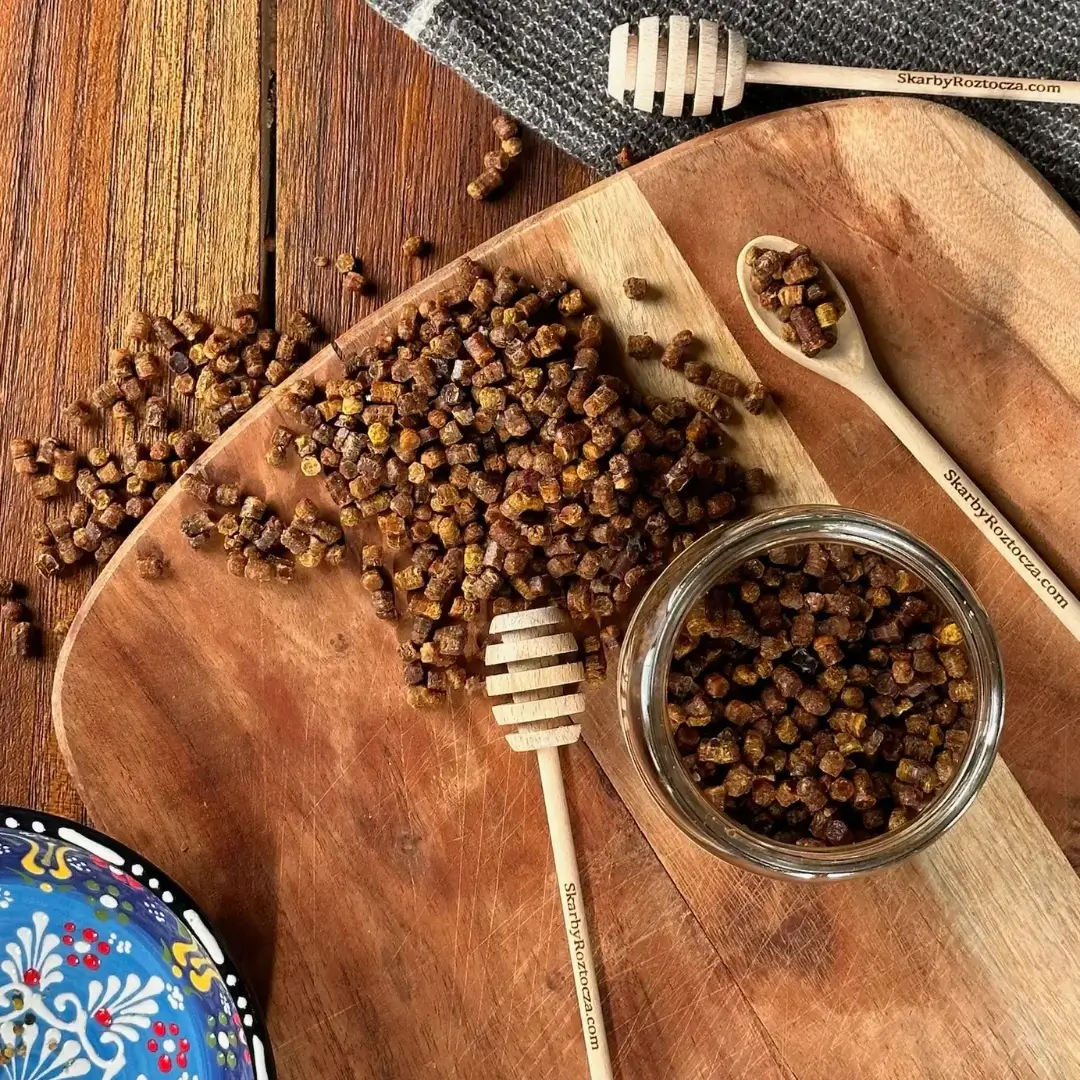
Bee bread is one of the most valuable and at the same time underrated treasures straight from the hive. Often confused with bee pollen, although it is significantly richer in nutrients and better absorbed by the human body. Bee bread serves as the primary source of protein for the bees themselves – especially during periods when they do not have access to fresh flower pollen.
The process of creating bee bread is incredibly fascinating and precise. It all starts with flower pollen – colourful, microscopic dust collected by bees from flowers. Bees transport it to the hive, mixing it along the way with a small amount of saliva and nectar, which creates a small, sticky ball.
After returning to the hive, the bees place these balls in the cells of the wax comb, carefully packing them layer by layer. Then, they cover them with a thin layer of honey, which isolates the material from the air. In this prepared environment, lactic fermentation – a natural preservation process that transforms raw pollen into bee bread – takes place.
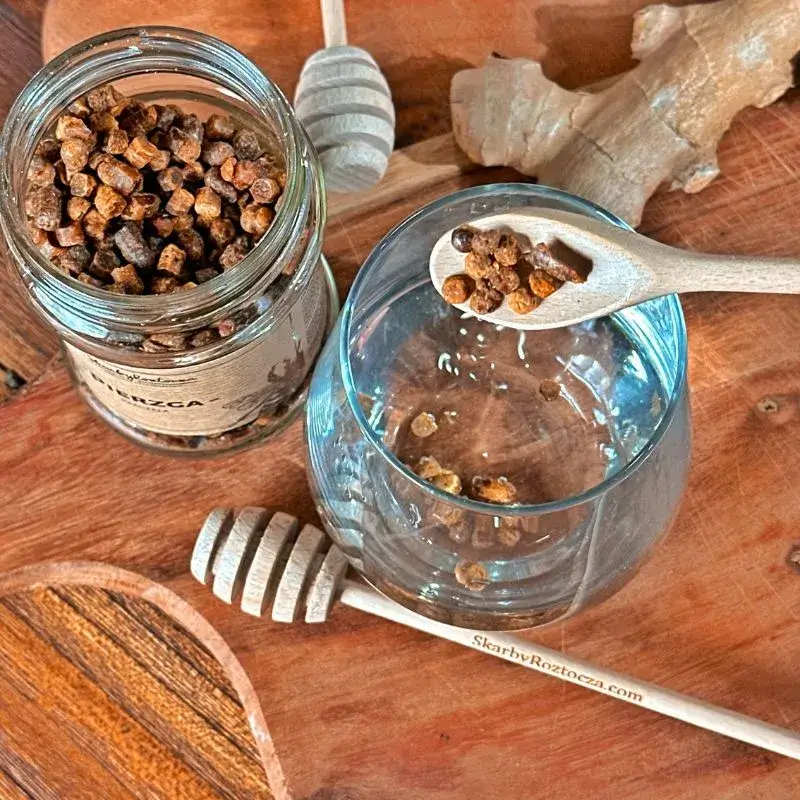
This fermentation works similarly to pickled vegetables – organic acids and enzymes are formed, which preserve the substance while increasing its nutritional value and bioavailability for the body. It is thanks to this fermentation that bee bread does not spoil, even over a long period, and does not require any additional preservatives.
2. Where does the white coating come from?
In the photo, which often raises questions, a dark part of the honeycomb with a white coating is visible. This coating is nothing more than the result of the presence of processed beeswax that remained after separating the bee bread from the frames.
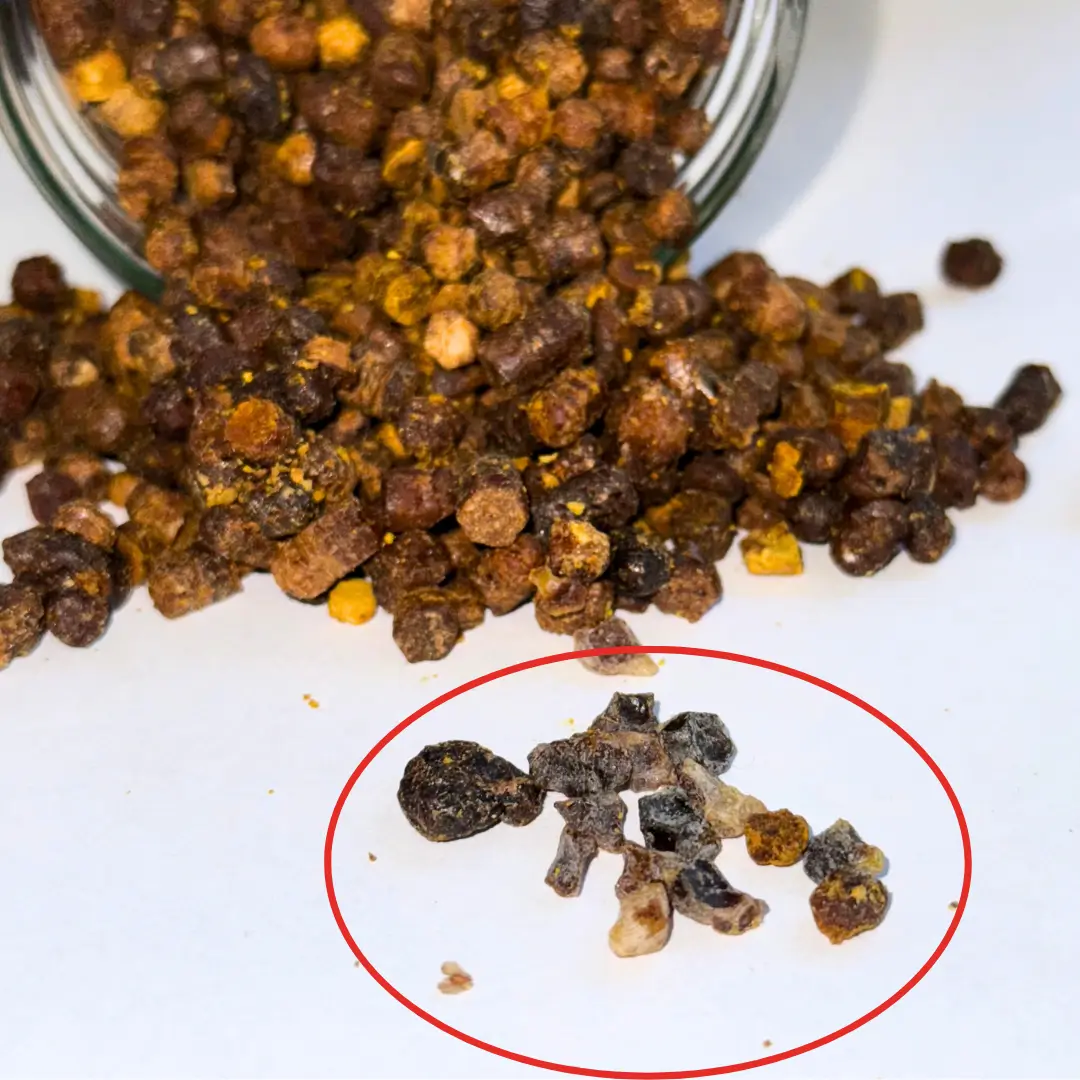
During the extraction of bee bread – especially in the traditional way – the frames are first frozen, which makes it easier to separate the bee bread from the wax. Despite the efforts of beekeepers, small wax particles may remain in the final product. When these particles rub against the dark granules of bee bread, lighter scratches appear on their surface – precisely this characteristic white coating.
Furthermore, beeswax itself can spontaneously cover with a white film over time – a phenomenon known as "wax bloom". It is most often the result of storing the product in a cool place. Wax elements in bee bread oxidise and change colour to a lighter, whiter shade. This is a natural reaction, not a sign of spoilage. On the contrary – the white coating is often considered proof that the wax has not been chemically processed or excessively purified.
3. Is the white coating safe?
Yes – definitely yes. The appearance of a white coating on bee bread may at first glance seem worrying, especially for those who are encountering this natural bee product for the first time. However, it is worth knowing that this is a completely natural and harmless phenomenon, which not only does not reduce the quality of the bee bread, but can even be seen as a confirmation of its authenticity.
Why does the white coating indicate naturalness?
In highly processed products obtained industrially, natural impurities – such as particles of wax or propolis – are removed through filtration or chemical cleaning. Unfortunately, this process often deprives bee bread of some of its valuable ingredients and affects its biological value.
This is why the presence of a delicate coating can be perceived as “a sign of nature” – proof that the bee bread has not been subjected to intensive purification processes and has retained its original properties, exactly as it was created in the hive.
More and more people are paying attention to the origin and processing methods of food. In the case of bee products – such as bee bread, propolis, or honey – naturalness, lack of refining, and direct extraction from the hive are desirable features. The white coating, instead of causing concern, should therefore be treated as a sign of quality and the artisanal nature of the product.
4. Summary
The white coating on bee bread is a natural effect of the presence of beeswax particles and its contact with the bee bread granules. It can also result from the natural process of wax oxidation. This phenomenon testifies to the authenticity of the product and the traditional method of its extraction. Not only does it not affect the quality of the bee bread, but it can even be considered its hallmark – proof that you are dealing with a product truly coming from the hive.
So, if you see a white coating on bee bread – you can rest easy. It is simply nature leaving its mark.