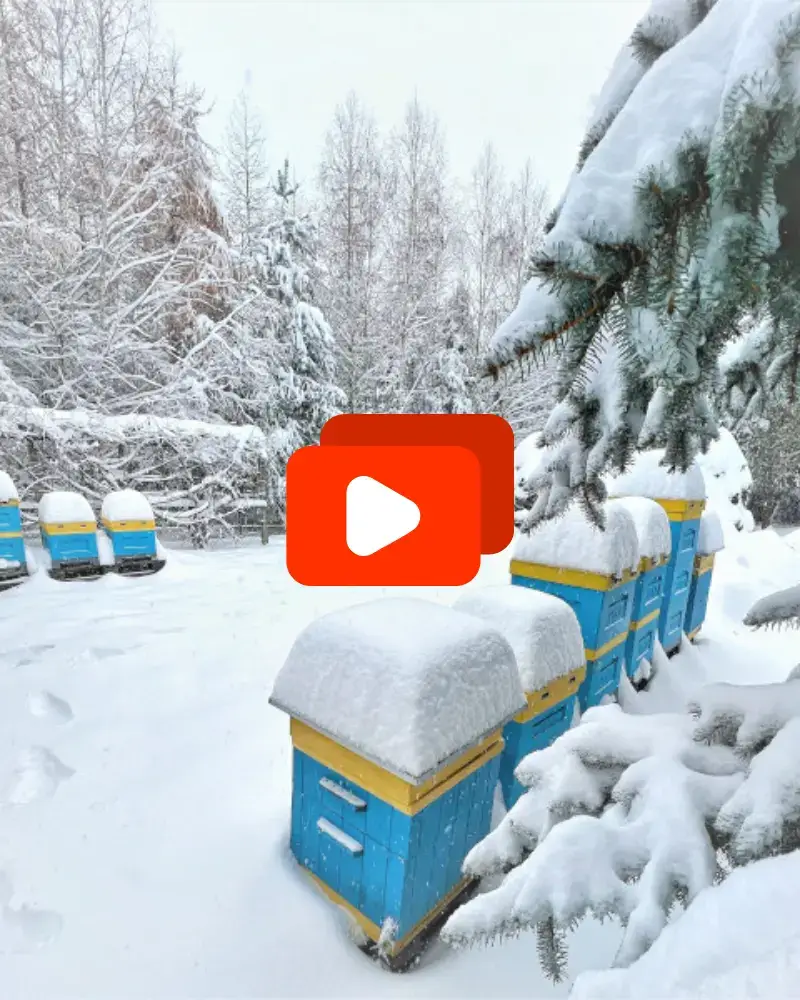

Subject: What does the life of bees look like in winter?
It might seem that since bees do not fly out of the hive, they might go into hibernation during the winter period. Nothing could be further from the truth. Our winged friends also work hard in winter to maintain the correct temperature in the hive. Bees huddle into a so-called winter cluster, in which they vibrate their wings to generate heat energy. The temperature in the centre of the bee colony is approx. 30 degrees Celsius and never falls below 22 degrees Celsius.
If you want to find out more about the life of our winged friends in winter, we invite you to read on!
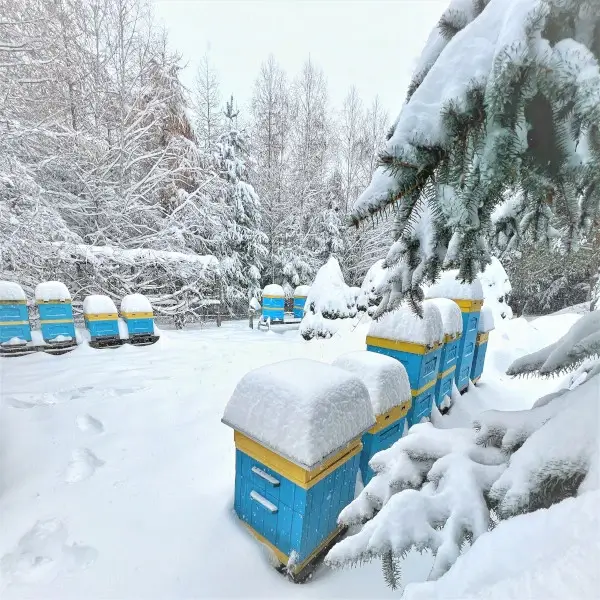
Table of contents:
- Preparing for winter.
- Forming the bee cluster (winter cluster).
- Consuming stores.
- The beekeeper's role.
- Summary.
1. Preparations for winter.
Bees not only collect honey, but also prepare for winter. In the autumn-winter period, they collect stores of pollen and nectar, which they use to produce honey. This process is called overwintering.
2. Forming the bee cluster (winter cluster).
During winter, the bee colony is surrounded by a bee cluster, focusing inside the hive. In this way, they create an insulating layer of heat that helps them maintain the right temperature inside the hive, even when it is very cold outside.
3. Consuming stores.
During winter, when access to food is limited, bees use the stores they gathered during the summer and autumn. They consume honey to obtain energy, and also use pollen stores as a source of protein.
4. The beekeeper's role.
Beekeepers play a key role in ensuring bees have the right conditions to survive the winter. They provide them with the right amount of honey and protect the hives from wind and moisture, so that the bees can focus on survival.
5. Summary.
The life of bees in winter is a fascinating process in which these amazing creatures must show cleverness and the ability to survive. Thanks to carefully thought-out preparations and cooperation with beekeepers, bees are able to overcome winter and prepare for a new season of gathering nectar and pollinating plants.
It is a true miracle of nature that is worth appreciating and protecting. One way to support bees in your area is to choose honey from local beekeepers. It is worth considering such a choice to take care of the ecosystem in your immediate surroundings and contribute to the development of apiaries.
P.S. Watch a short film from our apiary. Naturally, about what the life of bees looks like in winter.