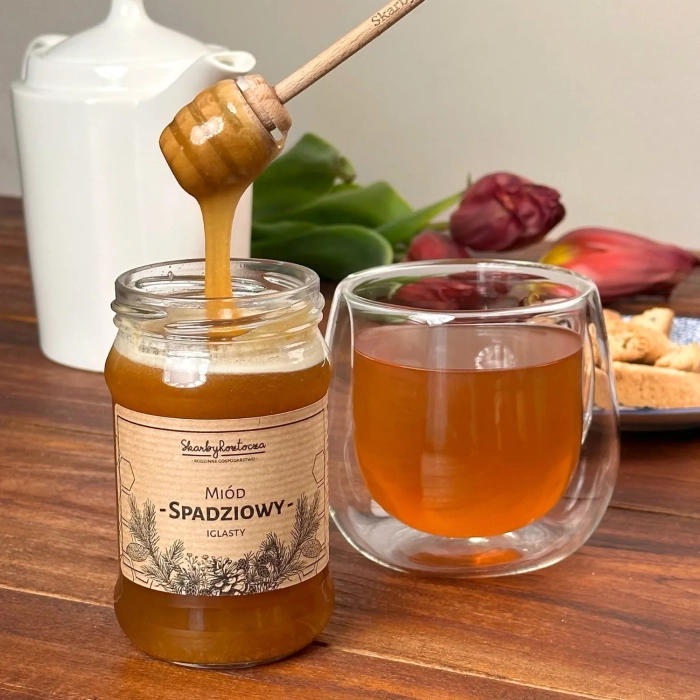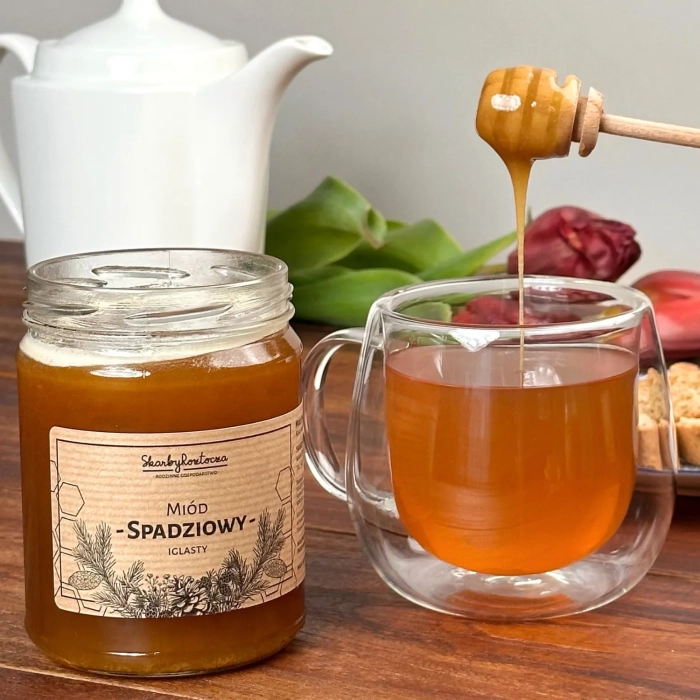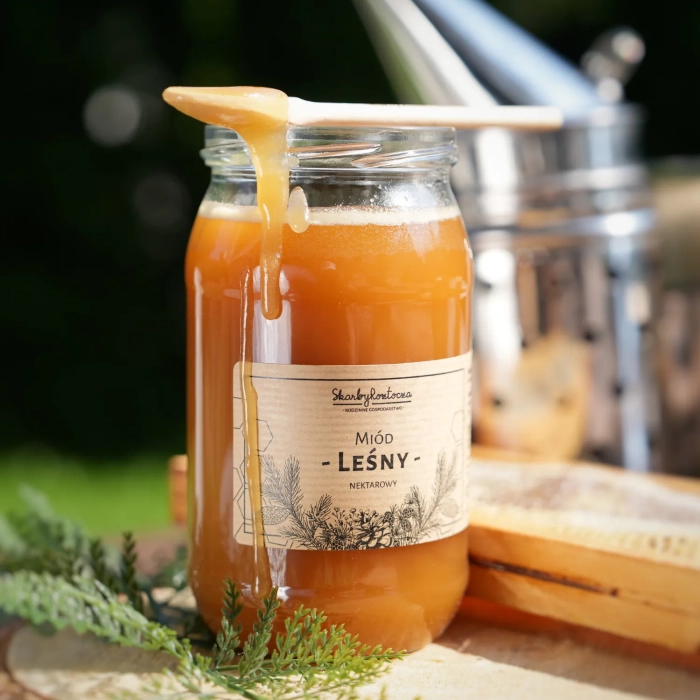

Which honey for tea
Which honey to choose for tea? Which honey is best for tea? Which honeys are best paired with tea?
We invite you to a dose of inspiring information about the combination of healthy honeys with this everyday beverage.
Table of contents:
1. Honey - a natural medicine since ancient times
2. Tea with honey - a healthy alternative to white sugar
3. Which type of honey to choose for tea?
4. Interesting recipes, tea with honey recipes.
5. Why should honey be added to tea only after the drink has cooled down?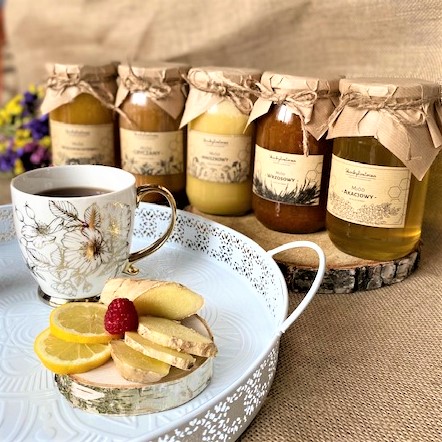
1. Honey - a natural medicine since ancient times
The medicinal properties of honey are no secret. Apparently, honey was used as an antibiotic ointment and digestive aid as far back as 8,000 years ago, and several ancient civilisations documented the use of honey as a natural medicine.
Egyptians used honey primarily as a topical ointment to speed up the healing of wounds. Hieroglyphs and papyri with recipes from around 1700 BC show how honey was used to protect surgical incisions from infection.
Greeks mixed it with water and wine to create an elixir to aid digestion. It was also mixed with other herbs and powders to form a paste applied to the eyes and ears to treat pain and infection.
According to traditional Chinese medicine honey is a balanced substance (neither 'warming' nor 'cooling') that can cure indigestion, stomach ulcers, and constipation. Honey and warm milk were also thought to soothe anxiety and insomnia.
Ancient Sanskrit texts also describe honey as a remedy for a range of ailments, including not only skin and stomach problems but also vision problems, respiratory diseases, and even blood sugar control.
2. Tea with honey - a healthy alternative to white sugar
If you do not prefer to follow in the footsteps of the Ancient Greeks or Egyptians and start applying honey directly to the skin or mixing it with wine, then consuming tea with honey is an equally tasty and practical way to reap the health benefits of honey.
Honey is also an excellent alternative to white sugar table sugar and zero-calorie sweeteners that provide little to no nutritional benefit and bring no unique flavour other than sweetness. But first, it is worth understanding the differences between the many types of honey available on the market and how your choice can affect the taste of the infusion. Although all honey consists mainly of fructose and glucose, each variety also contains amino acids, vitamins, minerals, and enzymes. The exact chemical composition depends on the type of flower nectar at the base of the honey. This composition also determines the colour and taste of the honey.
Experimenting with pairings tea with honey is an opportunity to discover new flavour combinations - finding the right complementary match can enhance the overall taste of your favourite tea.
3. Which type of honey to choose for tea?
Be sure to find out which honey is best to choose for tea, to extract the best health-taste values from such a healthy infusion:
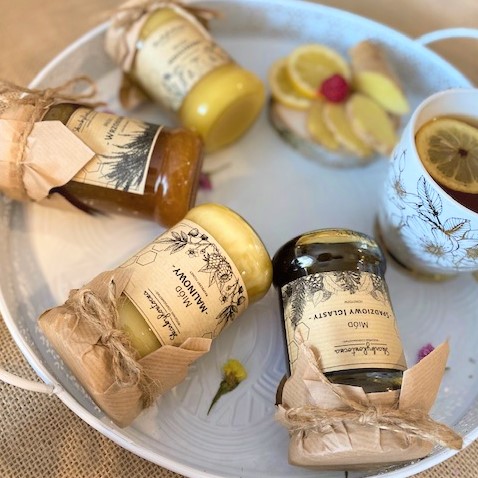
- For example, the tart and sometimes grassy taste of green teas can be reduced with a more floral honey, such as heather or phacelia. Raspberry honey also adds a pleasant, complementary flavour.
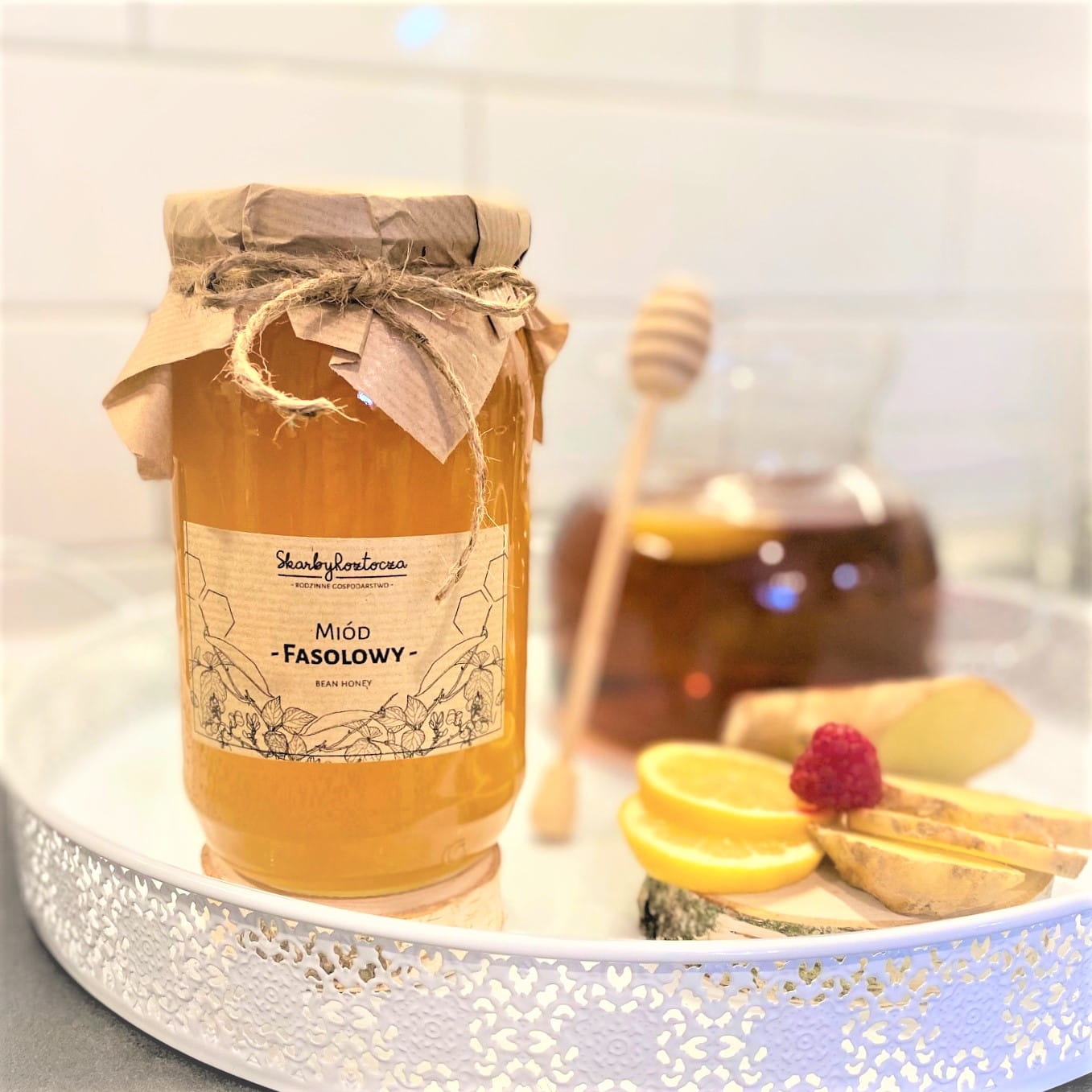
- The dark and roasted flavour of black teas can be brightened and enhanced by the citrus note contained in bean honey.
- White tea, already delicate, can easily be overwhelmed by stronger flavours and should be paired with a similarly light honey, for example acacia.
- Herbal tea can also be sweetened with your favourite honey; the best one for it is linden honey.
Honey can also be well combined with other flavours. For example, adding honey and a dash of cinnamon to tea adds warmth and richness of aromas, making this concoction an ideal drink for the cooler months.
Honey with a squeeze of lemon juice is perfect for an afternoon tea break.
Some of these combinations can also complement or enhance the therapeutic properties of honey. For example, ginger can help soothe an upset stomach, highlighting the benefits of honey as a digestive aid and balancing its sweetness with a bit of spice.
4. Interesting recipes, recipes for tea with honey
Green tea with ginger
1 tablespoon of green tea leaves
2 tablespoons of ground fresh ginger root
1 tablespoon of lemon juice,
1 tablespoon of phacelia honey
Spicy honey tea
1 tablespoon of Earl Grey tea leaves
1 cinnamon stick
4 cloves
2 tablespoons of bean honey
1 tablespoon of fresh lemon juice
5. Why should honey be added to tea only after the drink has cooled down?
Important! It is worth remembering to add honey to tea only after the drink has cooled down sufficiently. The tea should be at a temperature no higher than 40 degrees Celsius. This is extremely important for preserving the natural health properties of real honey. A suitable tool for handling different honey consistencies may be our honey cutlery set.
Honey is a clever addition to tea because, in addition to a touch of sweetness, it also provides antioxidants and other compounds that help prepare the body to fight infections. However, it should be remembered that honey is best used as a preventive measure and not as a cure-all.
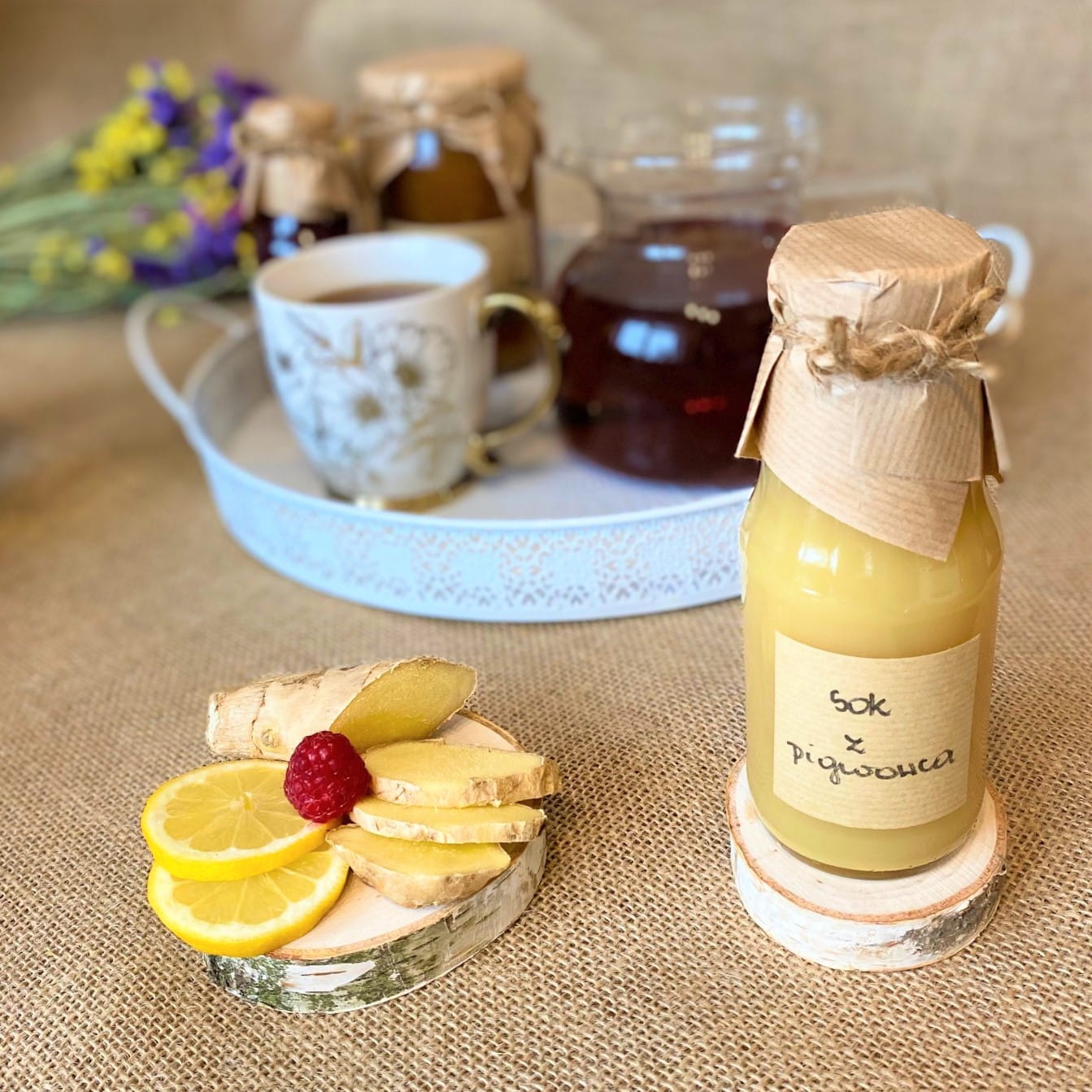
We also recommend to your attention our favourite addition to tea- Japanese quince juice - naturally cloudy, cold-pressed, directly from the fruit, without added sugar. An ideal replacement for imported lemons, which has as much as 7 times more vitamin C than the popular lemon.
Bibliography, Sources:
https://healthywithhoney.com/honey-in-history-prehistory-ancient-egypt-ancient-china/
https://www.ncbi.nlm.nih.gov/pmc/articles/PMC3758027/
https://www.researchgate.net/publication/313785968_Health_Benefits_and_Traditional_Uses_of_Honey_A_Review