
Why does honey not crystallise?
Honey is a product with many health-promoting properties and a diverse flavour, yet over time its consistency changes, becoming crystallised. But why do some honeys remain liquid for a long time?
Today we will look at this phenomenon and explain why some honeys remain liquid. We invite you to read.
Table of contents:
1. The process of honey crystallisation.
2. Factors affecting crystallisation.
3. Water content as a factor affecting honey crystallisation.
4. Why some honeys remain liquid.
5. Which honeys stay liquid for the longest?
6. Which honeys crystallise the fastest?
1. The process of honey crystallisation.
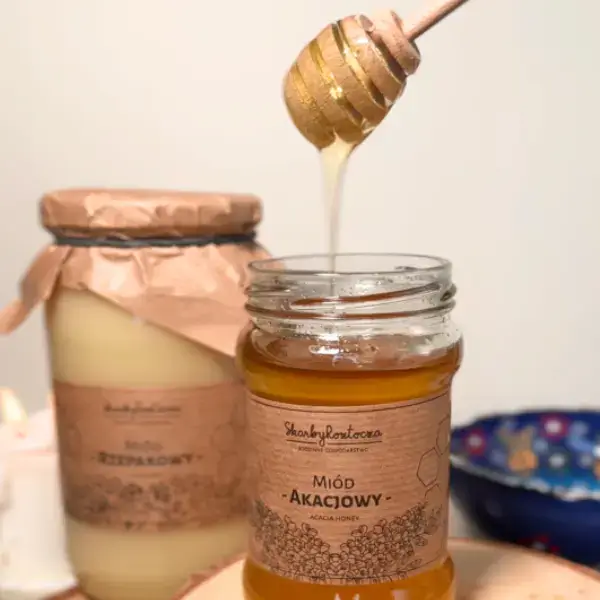
Honey crystallisation is a natural process that occurs when the sugars in honey (mainly glucose and fructose) crystallise and form solid structures. The process of honey crystallisation is visible as a change in honey consistency from liquid to thicker, creamy, or solid, depending on the type of honey and storage conditions.
2. Factors affecting crystallisation.
Referring to the topic, we present the main factors affecting honey crystallisation.
- Glucose and fructose content
Honeys with a higher glucose content tend to crystallise faster than those with more fructose. Glucose is less soluble in water than fructose, which promotes the formation of crystals.
- Storage temperature
Honey stored at lower temperatures is more prone to crystallisation. Low temperatures favour the crystallisation process, which is why honey stored in the fridge can crystallise faster.
- Processing method
Processes such as filtration, aimed at removing microorganisms, pollen, and other particles from honey, can affect its tendency to crystallise. Heavily filtered honeys often crystallise more slowly.
- Regional factors
The type of plants from which the nectar is gathered can also influence honey's tendency to crystallise. Certain types of honey, such as rapeseed honey or dandelion honey, tend to crystallise faster than others.
3. Water content as a factor affecting honey crystallisation.
Water content in honey plays a key role in the crystallisation process. Honey is a mixture of natural sugars dissolved in water. The lower the water content in honey, the more concentrated this sugar mixture is. With regard to the topic, we would like to present water content as a factor affecting honey crystallisation.
- Less water, more sugar
In honeys with a lower water content, the sugar-to-water ratio is higher. This means that sugar molecules are more concentrated, which in turn promotes the crystallisation process. In conditions where sugars are present in large amounts, they have a greater tendency to form crystals.
- Greater mobility of molecules
In honeys with a higher water content, sugar molecules are surrounded by more water molecules, making them more mobile. When the water content is lower, sugar molecules have less room to move, which increases the likelihood of them clustering and forming crystals.
4. Why some honeys remain liquid.
Referring to the topic, we present why some honeys remain liquid.
- High fructose content
Honeys that contain more fructose than glucose tend to remain liquid for longer. Fructose is more soluble and less prone to crystallisation than glucose.
- Low count of microorganisms
Honeys that contain fewer microorganisms are less prone to crystallisation. In the case of filtered honeys, the number of microorganisms is limited, which can delay the crystallisation process.
- High storage temperature
Honeys stored at higher temperatures tend to remain liquid for longer. Higher temperature makes it harder for sugars to crystallise.
5. Which honeys stay liquid for the longest?
In connection with the above considerations, a fairly natural question arises concerning our Polish honeys: Which honeys stay liquid for the longest? The following should be mentioned above all:
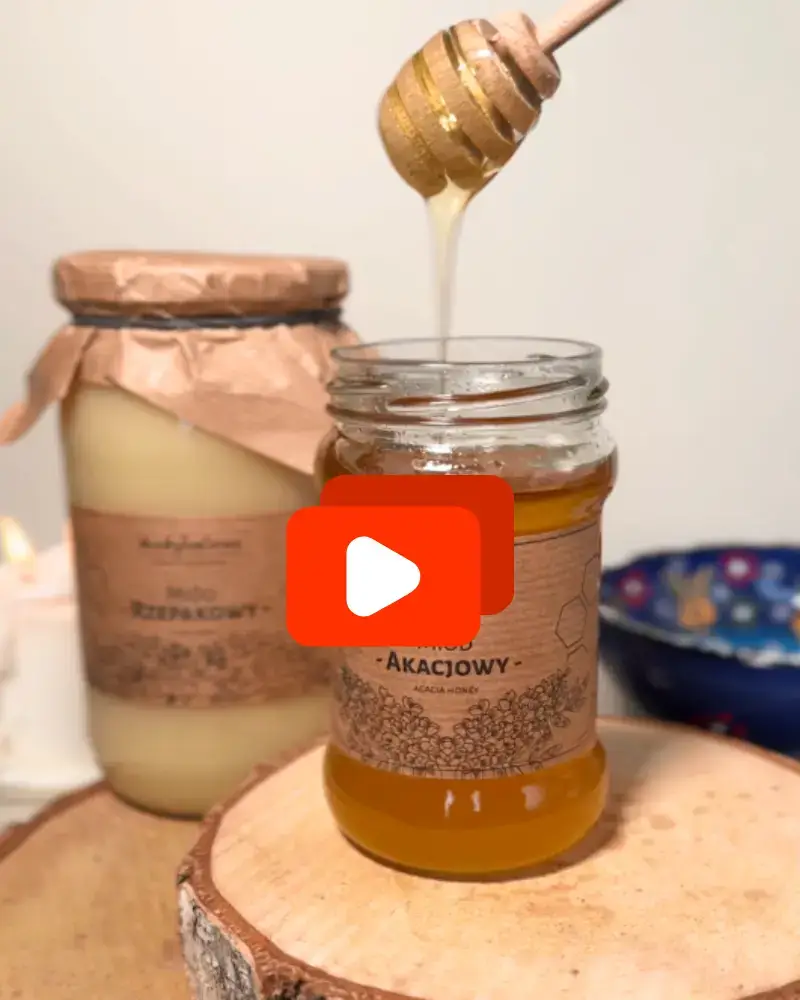
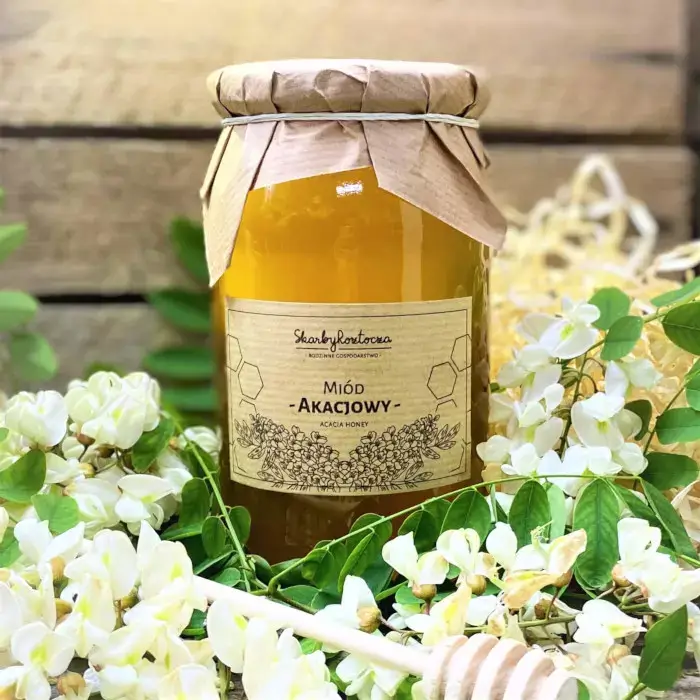
Acacia honey -the crystallisation time can be as long as 1.5 years due to the predominance of fructose in its composition.
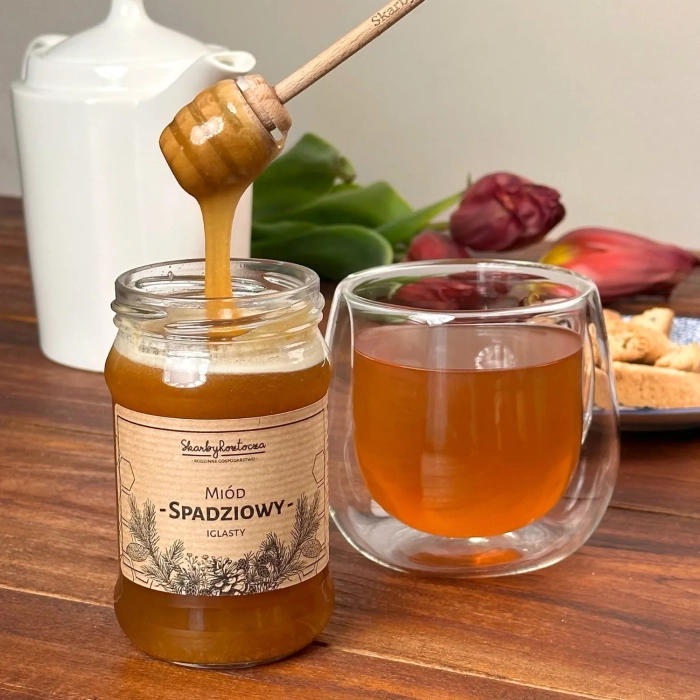
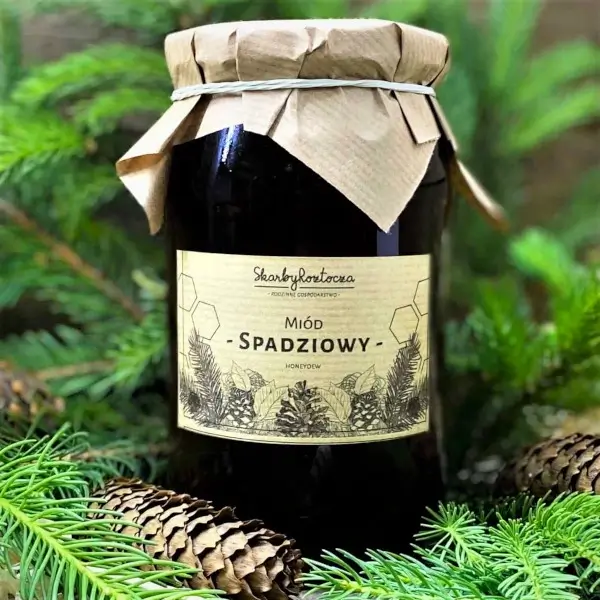
Honeydew honey (especially coniferous) - because the honey is not a traditional blossom honey but honeydew, its crystallisation time can be
6. Which honeys crystallise the fastest?
Crystallisation is a natural process typical for real honeys, however, the time it takes varies for each type of honey. The honeys that crystallise the fastest are high-glucose ones - excellent examples will therefore be:
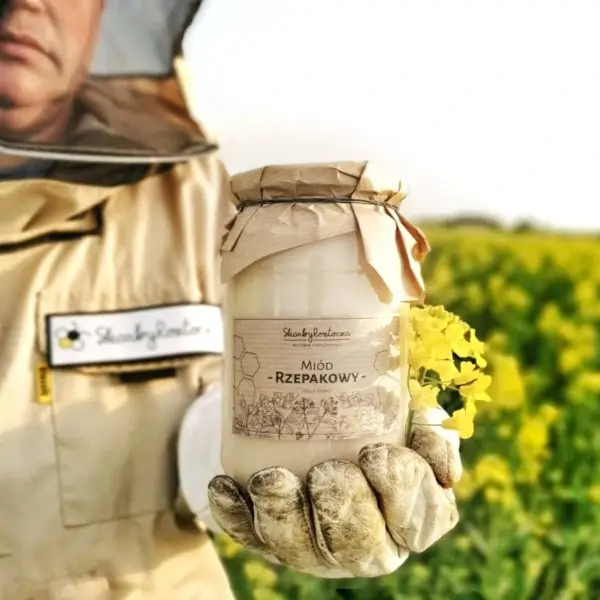
Rapeseed honey - it can crystallise as early as a few days after pouring, or even in the hive!
Dandelion honey -within a few weeks.
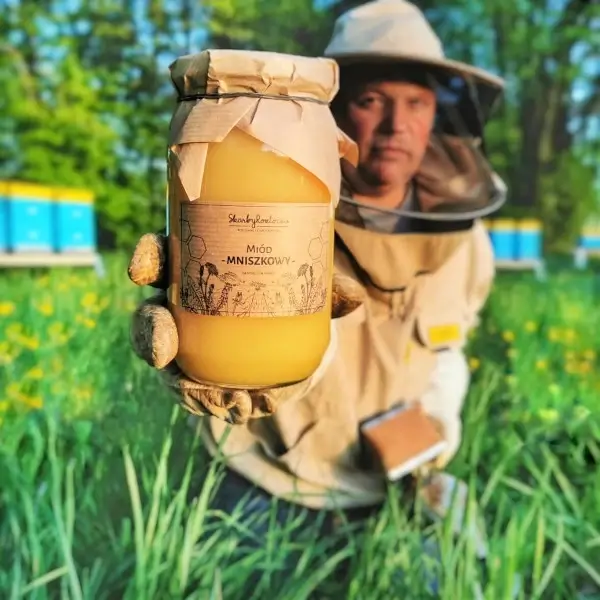
Multifloral honey (spring) -within a few weeks, due to the rapeseed nectar content.
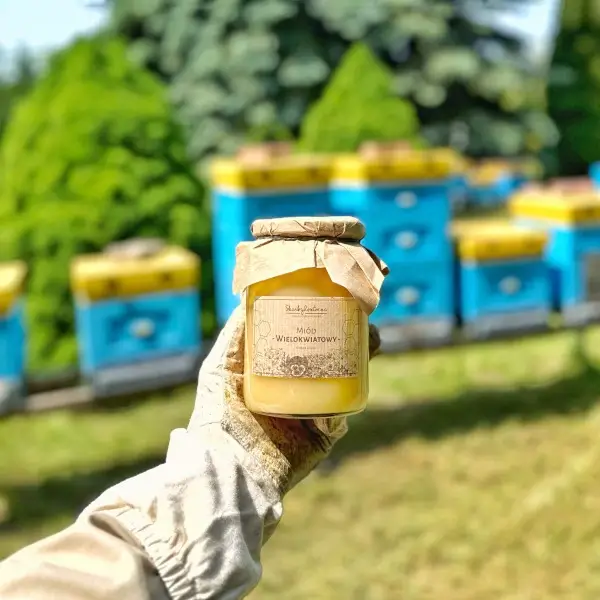
Maple honey - increasingly rarely found among our native forage
7. Poor storage of honeys.
Poor storage of honeys, for example high temperature, favours the activity of microorganisms that can cause honey fermentation. During fermentation, sugars in honey are converted by microorganisms into alcohol and other chemical compounds, which leads to a change in the taste and consistency of the honey.
High temperature can cause destruction of the properties of enzymes naturally present in honey, which help in its maintenance and prevent decomposition. Destruction of enzymes can lead to a loss of the nutritional and health values of the honey.
High temperature can also lead to an increase in humidity around the honey container, which favours the development of mould and microorganisms that can spoil the honey.
8.Overheating honeys.
A decrystalliser is a device used to reverse the process of honey crystallisation by heating it to an appropriate temperature that stimulates the dissolution of crystallised honey. Usually, this temperature is close to the temperature at which honey is found in the hive, which is about 35-40°C. Decrystallisers allow for gentle and controlled heating of honey, ensuring its fluidity without affecting its quality, taste, and nutritional properties.
Some beekeepers who want to quickly dissolve crystallised honey allow the decrystalliser to heat up too much, which results in overheating honeys.
Heating honeys above their natural temperature in the hive can have adverse effects. This can lead to loss of nutritional value, changes in the taste and aroma of the honey, as well as degradation of natural enzymes. In the event of overheating, honey may lose its natural characteristics and even remain liquid for a longer period of time, which can lead to the loss of its characteristic consistency and texture. Therefore, it is important to use decrystallisers that allow for gentle heating of the honey under appropriate temperature conditions, identical to those prevailing in the hive in the natural environment, ensuring the preservation of the honey's natural properties and quality.
9. Summary.
Honey crystallisation is a natural process that depends on various factors, such as sugar content, water content, storage temperature, and the degree of filtration. Although some honeys may crystallise faster than others, there are also those that remain liquid for a longer time. Regardless, however, of whether the honey is crystallised or liquid, its nutritional value and taste remain unchanged, which makes it still a valuable and healthy food product.
See also our video on whether every honey must crystallise: