
Why is it worth having Elderflower Syrup in your pantry?
Among the natural products that are increasingly returning to favour, elderflower syrup holds a special place. It is not only a tasty addition to drinks and desserts but also a natural health-supporting remedy valued for centuries.
Why is it worth always having it at hand in your pantry? We invite you to read this short blog to find out more!
Table of contents:
1. What exactly is elderflower?
3. An aromatic addition to drinks and dishes
4. Long shelf life and convenient storage
1. What exactly is elderflower?
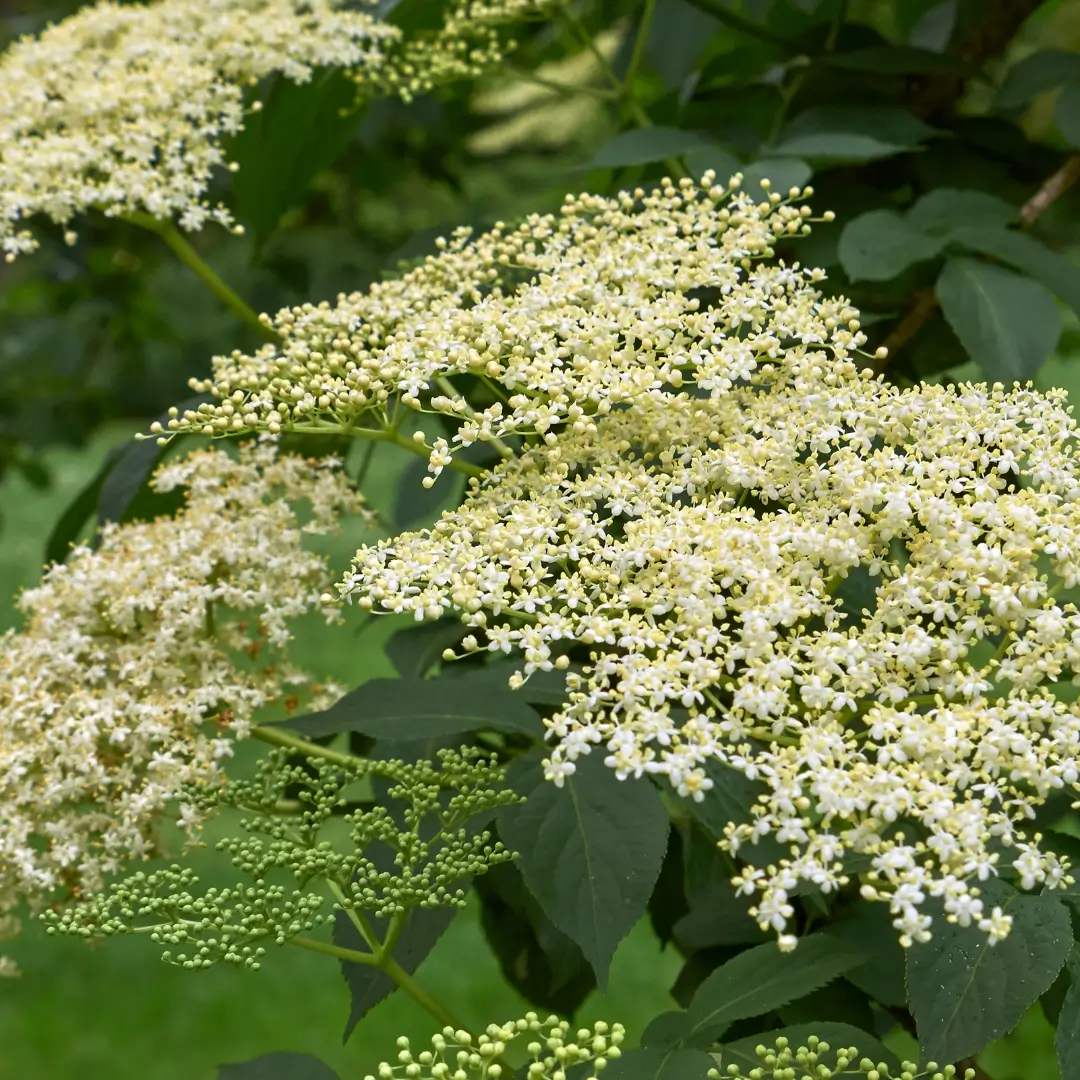
Elderflower is the characteristic, creamy-white inflorescence of the shrub called black elder (Sambucus nigra). This plant grows wild on the edges of forests, by country roads, and in hedgerows, but it is also increasingly cultivated in gardens. It is distinguished by large, flat umbels composed of dozens of tiny flowers with an intense, sweet-herbal scent.
Black elder blooms for a short time – usually from the end of May to mid-June – which is why the flower harvest season is very limited. They are harvested by hand, most often on sunny, dry days when the flowers are in full bloom and have the most intense aroma. Their appearance attracts attention – delicate, almost lace-like inflorescences take on a light, creamy colour and can reach a diameter of up to 20 cm.
In the kitchen and traditional processing, elderflowers are primarily used to prepare syrups, lemonades, tinctures, and jellies. After harvesting, they can be dried or processed fresh. The characteristic, slightly honeyed, floral taste of elderflowers gives drinks and dishes a unique depth – difficult to replicate artificially.
It is worth adding that the black elder shrub itself has been surrounded by an aura of mystery for centuries and revered in many European cultures. It was believed to protect homes from evil and bring good luck – which is why it was often planted near homesteads.
2. Health properties of elderflowers
Elderflowers have held an important place in traditional herbal medicine for centuries. They are one of those natural plant raw materials that combine the pleasure of use with real health support. Nowadays, we are increasingly turning to natural ways of supporting the body, and elderflower syrup fits perfectly into this trend.
Elderflower primarily contains vitamin C, vitamin A (in the form of beta-carotene), and B-group vitamins such as B1 (thiamine), B2 (riboflavin), and B3 (niacin). In addition, its composition also includes mineral compounds (including potassium, calcium, magnesium) as well as numerous flavonoids and antioxidants that support the body's natural defence processes.
The flowers of this plant are particularly valued for their anti-inflammatory, antiviral, and antibacterial properties. This makes the syrup prepared on their basis a natural support in the fight against infections – especially of the upper respiratory tract. The bioactive compounds contained in it, such as flavonoids (e.g. rutin and quercetin), essential oils, phenolic acids, and plant mucilage have a soothing effect on the mucous membranes, supporting the body in fighting infections.
Elderflower syrup - health-promoting properties:
- supports the body's natural defence mechanisms,
- has a diaphoretic effect, which is helpful during a fever,
- soothes a dry and tiring cough,
- provides relief for a scratchy throat and laryngeal irritation,
- helps shorten the duration of a cold or viral infection.
For this reason, it is worth reaching for elderflower syrup both preventatively, and during the first symptoms of illness – especially in the autumn-winter season, when our immunity is put to the test.
Regular consumption of a small amount of syrup (1 teaspoon daily) can help strengthen the body and reduce susceptibility to infections.
Importantly, elderflower syrup is gentle and safe, also for children (of course, after consultation with a paediatrician). Its natural, sweet taste makes it willingly accepted even by the youngest – unlike many pharmaceutical preparations.
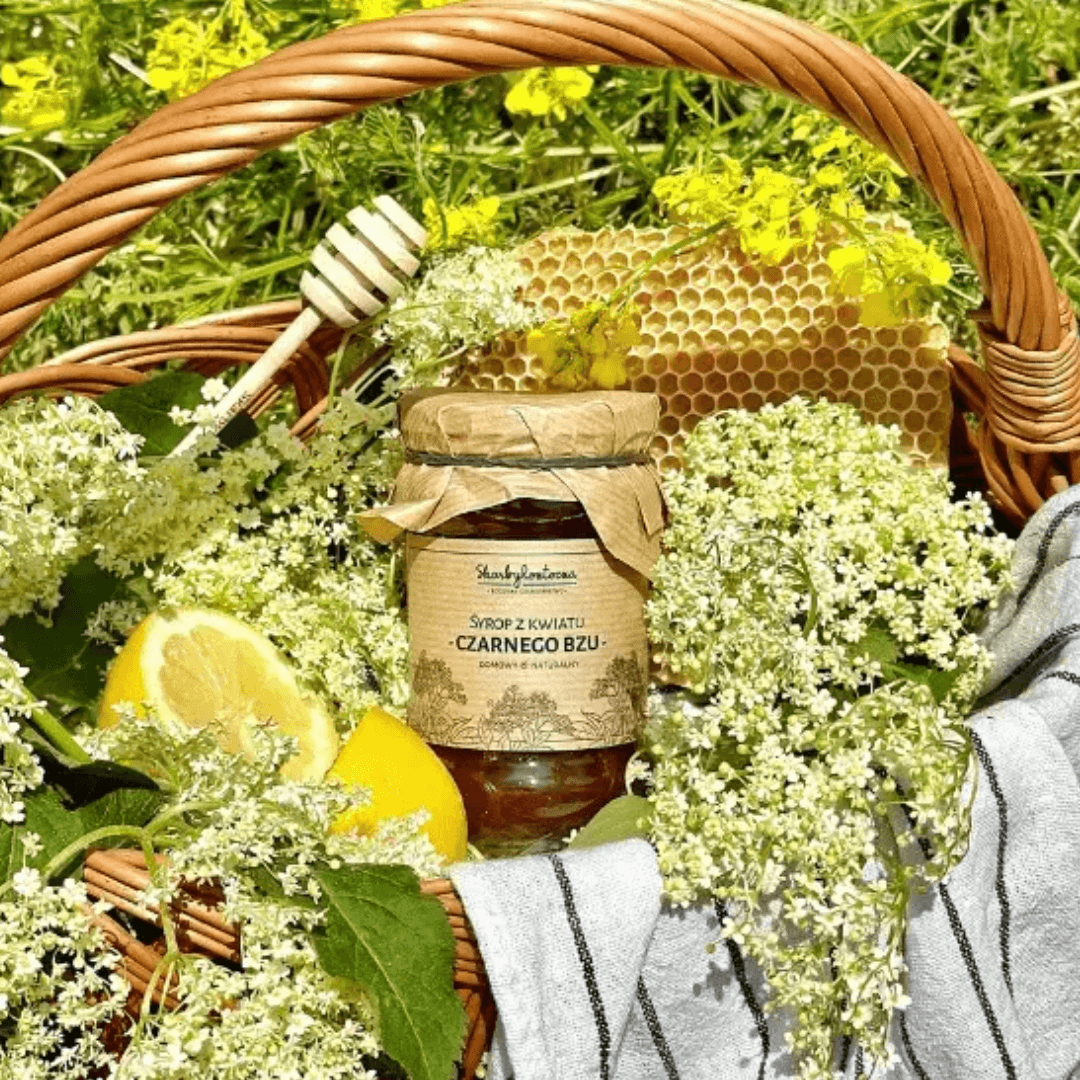
3. An aromatic addition to drinks and dishes
Elderflower syrup delights not only with its delicate, natural taste but also with its unique aroma, which is associated with summer, sun, and blooming meadows. It is precisely its sweet, slightly honeyed and floral taste that makes it so versatile in the kitchen – both for everyday use and on special occasions.
Ideal for drinks – hot and cold
Elderflower syrup goes perfectly with various types of beverages.
It can be used:
- for warming tea – instead of honey or sugar, especially on cold, winter evenings,
- for water with lemon and ice – it then creates a refreshing, slightly herbal drink for hot days,
- for homemade lemonade – just water, a few slices of lemon, mint leaves, and a bit of syrup are enough to get a drink like from a cafe,
- for prosecco or tonic – by adding a few drops of syrup to sparkling wine, you will create an elegant, aromatic drink in the "Hugo" style – especially popular in Alpine countries.
For desserts and breakfasts
Elderflower syrup also works great as an addition to:
- pancakes and waffles – instead of artificial toppings or maple syrup,
- yoghurts and muesli – just a few drops are enough to naturally sweeten and add a floral aroma,
- homemade ice cream and sorbets – as an ingredient or topping,
- jellies, fruit soups, and panna cotta – gives a delicate, elegant taste
For baking
It is also an interesting ingredient for baking – added to cakes, icing, or cream, it enriches the taste and aroma, making a simple bake something truly special.
Interestingly, elderflower syrup can also be combined with more savoury flavours. A few drops added to a vinaigrette sauce, a poultry marinade, or a glaze for vegetables roasted in the oven will introduce a subtle sweetness and a note of herbal aroma. It pairs beautifully with citrus, mint, ginger, as well as lavender and white wine.
4. Long shelf life and convenient storage
One of the greatest advantages of elderflower syrup – besides the taste and properties – is its long shelf life and convenience of storage. It is a product that you can easily always have at hand, without the need for special storage conditions or the rush to use it up.
A well-prepared syrup, sealed in an airtight bottle and stored in a cool, shaded place (e.g. in a pantry or kitchen cupboard), can stay fresh for even 12-18 months. This is all thanks to the natural preservative properties of sugar and the appropriate pasteurisation process.
After opening the bottle, it is recommended to store the syrup in the refrigerator. Even then, however, it retains its taste and functional qualities for several weeks.
This makes it an ideal "always worth having at home" type of product – both for an unexpected infection and when we simply want to improve our mood with something delicious and natural.
5. Summary
Elderflower syrup is a product that combines everything we look for in a home pantry – natural ingredients, health properties, unique taste, and long shelf life. It can be used both during the cold season and on a daily basis – as an aromatic addition to drinks, desserts, or even savoury dishes. It is worth always having it at hand to easily take care of immunity and add a touch of nature to the daily menu. It is a small but very valuable element that will work in every kitchen – all year round.
Source/Bibliography:
- Nawirska-Olszańska A., Maksimowski D., Zubaidi Alfyan M., Oziembłowski M., Elderflowers (Sambuci flos L.) as a source of health-promoting ingredients. Plants, fungi, natural products and the prevention of lifestyle diseases 15th Franciscan Herbal-Pharmaceutical Conference, 12 October 2024
- Kołodziej B., Drożdzal K., Antioxidant properties of elderflower and elderberry fruits obtained from the wild FOOD. Science. Technology. Quality, 2011, 4 (77), 36 – 44