
Wild bilberry juice – support for vision and the circulatory system
In the era of increasing health awareness, natural products are returning to favour. One such treasure of nature is wild bilberry juice, which has been used in folk medicine for centuries. Wild bilberry is a real antioxidant bomb, with a beneficial effect on, among others, vision and the circulatory system.
Want to learn more about this miracle of nature? We encourage you to read this post!
Table of contents:
2. Wild bilberry juice and eye health
3. Heart and circulation under protection
4. Who should specifically reach for wild bilberry juice?
5. How to consume wild bilberry juice?
1. Why wild bilberry?
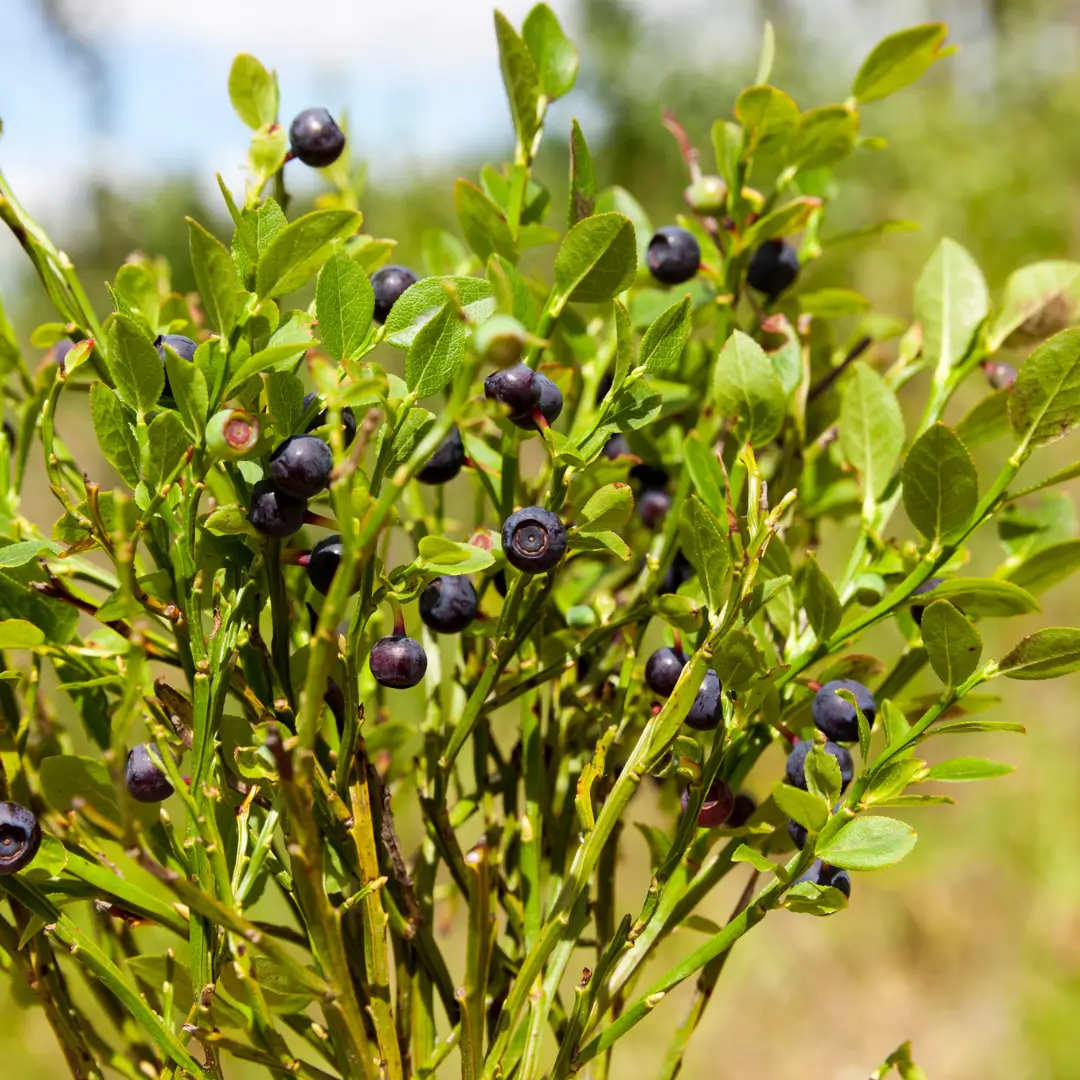
Wild bilberry (Vaccinium myrtillus) is a wild-growing plant that can be found mainly in the coniferous and mixed forests of Europe. It grows in its natural environment, on acidic soils, often in shaded corners of the forest floor. Its fruits are harvested seasonally – mostly by hand – which makes every fruit carry with it authenticity, freshness, and purity of origin. This is a product that cannot be fully "recreated" in industrial conditions – wild bilberry is and will remain unique.
Although wild bilberry fruits are small, their nutritional value is impressive. They are particularly valued due to the high concentration of valuable natural substances, such as:
Anthocyanins – that is, plant pigments from the flavonoid group, which are responsible for the intensely dark navy blue, almost black colour of the fruit. Their presence is not just a matter of aesthetics – anthocyanins are natural antioxidants that protect cells from oxidative stress.
Vitamin C – known as a strong antioxidant and natural preservative. It plays an important role in the functioning of the body, and its presence in wild bilberry fruits means that the juice pressed from them has a distinctly fresh, slightly tart taste and greater durability without the need for additional chemical agents.
Vitamin A – present in wild bilberry in the form of provitamins (carotenoids), supports numerous physiological processes and takes part in the proper functioning of many systems in the body.
Dietary fibre – a natural component of many forest fruits, also present in bilberries. It supports the proper functioning of the digestive tract and supports digestive processes. Importantly – even in the form of juice, some of the fibre remains in the final product, especially if it is cold-pressed.
Wild bilberry also delights with its taste. It is a combination of sweetness and delicate, forest tartness – a distinct and deep flavour that is hard to confuse with any other fruit. This intensity of aroma and natural colour make wild bilberry juice not only a functional food product but also a unique culinary pleasure. It can be consumed on its own or as an addition to desserts, yoghurts, cocktails, or even savoury dishes.
2. Wild bilberry juice and eye health
Anthocyanins – a natural shield for the eyes
The most valuable ingredient in wild bilberries are anthocyanins – strong antioxidants from the flavonoid group, which give the fruit its characteristic dark purple colour. In the context of vision health, they play an exceptional role.
Improve vision in low light (so-called scotopic vision) - anthocyanins have a positive effect on the functioning of photoreceptors in the retina of the eye, especially rods, which are responsible for vision after dark. Thanks to this, regular consumption of wild bilberry juice can improve visual comfort in the evening and at night, e.g. while driving a car or working in low light.
Support the regeneration of rhodopsin – the visual pigment - rhodopsin is a protein essential for the proper functioning of the retina. It is responsible for converting light into nerve impulses. Anthocyanins support its faster reconstruction after exposure to light, which is of particular importance with frequent changes in lighting, e.g. between a monitor screen and natural daylight.
Protect retinal cells from oxidative stress - thanks to their antioxidant properties, anthocyanins neutralise free radicals that can damage the delicate structures of the eye. This is important especially in the prevention of degenerative diseases, such as age-related macular degeneration (AMD), which affects an increasing number of people in middle and old age.
3. Heart and circulation under protection
Wild bilberry is a fruit exceptionally rich in flavonoids, and particularly anthocyanins – plant compounds with strong antioxidant and anti-inflammatory effects.
Their regular consumption is associated with a number of beneficial effects for the circulatory system:
Improvement of blood vessel elasticity - anthocyanins have a positive effect on the vascular endothelium, improving their elasticity and permeability. Thanks to this, blood can flow more freely, which reduces the risk of micro-clots and inflammation within the vessels.
Supporting blood pressure regulation - compounds present in wild bilberry can support the natural balance of blood pressure, especially with long-term, regular consumption. Reducing arterial stiffness and improving their extensibility has a direct impact on lowering the risk of hypertension.
Anti-inflammatory and anti-clotting action - chronic inflammation in the body is one of the main causes of cardiovascular diseases, such as atherosclerosis. Flavonoids help suppress inflammatory processes, while simultaneously inhibiting excessive platelet aggregation, which translates into a reduced risk of blood clots.
Lowering the level of "bad" LDL cholesterol - too high a level of LDL cholesterol promotes the deposition of atherosclerotic plaques in the arteries. Substances present in wild bilberry can support the reduction of these types of lipids in the blood, while supporting the increase of so-called "good" HDL cholesterol.
4. Who should specifically reach for wild bilberry juice?
Wild bilberry juice can be a valuable element of the diet for people of all ages, but it is particularly recommended for those whose vision and visual comfort are exposed to daily strain. It is worth reaching for it if you are:
People spending a lot of time in front of a computer screen, such as office workers, students, graphic designers, or programmers, for whom long hours of work at a monitor cause eye fatigue and discomfort,
Drivers, especially those who often drive after dark or in difficult weather conditions, where quick visual adaptation and good visibility are crucial,
Seniors, whose visual capacity naturally decreases, and the risk of eye problems increases with age,
People noticing the first symptoms of deteriorating vision, such as a feeling of eye fatigue, increased sensitivity to light, or problems with image sharpness,
Everyone who wants to take care of their health in a natural way, by choosing products with a simple composition, without additives and preservatives, and at the same time rich in valuable nutrients.

5. How to consume wild bilberry juice?
The optimal daily portion of juice is usually from 30 to 50 ml. That is not much – less than half a small cup – but it is enough to provide the body with a solid dose of anthocyanins, vitamins, and other bioactive ingredients. It is best to consume the juice regularly, every day – this is the key to obtaining a lasting effect and real support for the body.
Wild bilberry juice can be drunk on its own, as a morning "health shot" – a simple ritual that takes no more than a dozen or so seconds. People sensitive to the intense, slightly tart taste can dilute it in a small amount of water or add it to lukewarm tea – it pairs particularly well with herbal or green tea.
It also works great as an addition to fruit cocktails, smoothies, natural yoghurts, or homemade porridges. Even a small amount gives the drink an intense colour, an acidic accent, and a boost of natural nutrients. On summer days, you can add the juice to water with ice and a mint leaf – obtaining a refreshing drink without a gram of artificiality.
In the kitchen, wild bilberry juice can also be used more creatively – as an ingredient in homemade salad dressings, a base for sauces for meats, and even for desserts – e.g. as a topping for ice cream, panna cotta, or pancakes.
It is worth remembering that although wild bilberry juice is a natural product, its action is most effective with regular and moderate consumption. You do not need to drink large amounts – the key is consistency and the quality of the product.
6. Summary
Wild bilberry juice is not only a tasty addition to the daily diet, but above all natural support for vision and the heart. Rich in anthocyanins, vitamins C, A, and fibre, it helps protect the eyes from oxidative stress, improves vision after dark, supports retinal regeneration, and also strengthens blood vessels and regulates blood pressure. Regular consumption of a small amount of juice – preferably 100% and without additives – can bring real health benefits. It is a great choice for people working at a screen, drivers, seniors, and everyone who wants to take care of themselves in a natural and conscious way.

Source/Bibliography:
Barański., Bartosz-Czuba D., Boncol M., et al. Good from the forest, or nature from the kitchen. State Forests Information Centre, 2nd Edition, Warsaw 2021
Michael A. Ruggiero et al.,A Higher Level Classification of All Living Organisms„PLOS One”